How Our Used Brewery Equipment Program Works: 8 Steps from Inspection to Ready-to-Brew
Factory-quality brewing systems at a smarter investment level
When you buy used brewery equipment, tanks or packaging lines, you’re not just buying stainless steel – you’re buying process stability, safety and future expansion capacity.
Micet’s used equipment program is built around one simple promise:
Every tank or system we deliver has been inspected, refurbished, tested and verified before shipping – so you get factory-level quality at a significantly lower investment, without sacrificing safety, performance or reliability.
This article walks you through, step by step, how our used equipment program works for:
Used brewhouse systems
Used fermentation and bright beer tanks
Used kombucha, winery and distillery vessels
Used beer packaging and support equipment
From “Random Second-Hand” to an Engineered Used Solution
Traditional second-hand equipment buying is risky:
you see photos, maybe a short video, transfer money, and hope it works when it arrives.
Micet’s used equipment program changes that model:
We treat every used tank or system as an engineering project, not as loose scrap equipment.
Each unit is checked against process requirements, not just visually looked at.
We combine used vessels with new controls, valves, CIP and utilities where necessary to balance cost and risk.
So instead of buying “whatever is available”, you get a designed, documented and tested used equipment solution tailored to your brewery, kombucha plant, distillery or winery.
How We Refurbish and Certify Used Brewery Equipment
Before any used brewery equipment is offered to you, it goes through a strict refurbishment and quality control process in our factory. This helps you avoid hidden risks, reduce installation issues and put the system back into production as quickly as possible
1. Step One – Project Brief & Application Analysis
Everything starts from your process, not from our stock list.
We ask a few key questions:
What are you producing? (beer, kombucha, spirits, wine, RTD, etc.)
Current and target capacity? (HL per batch, per month, per year)
Existing equipment on site? (brewhouse size, cellar volume, packaging)
Space, utilities and local standards? (power, steam, water, drainage, safety rules)
Investment range, timeline and expansion plan?
Based on these answers, our engineering team identifies:
Which process steps can be safely covered by used / refurbished equipment
Which steps should be new or upgraded (especially safety, hygiene, control and precision areas)
Whether a hybrid new + used solution will give you the best balance of cost, reliability and future expansion
Only after that, we start matching you with suitable used tanks, brewhouses or lines in our program.
2. Step Two – Initial Selection & Incoming Inspection
Every tank or system entering Micet’s used equipment program goes through a structured incoming inspection. We never ship “as-found” equipment directly to you.
For each unit we check:
Each unit is then graded and assigned a suitable refurbishment scope. Tanks or equipment that do not pass our minimum standards are simply rejected from the program, not resold.
3. Step Three – Defining the Refurbishment Scope
Not all projects need the same level of refurbishment.
We design 3–4 typical refurbishment levels depending on your risk profile and budget:
3.1 “Clean & Verified” Level
For low-pressure, low-risk applications (e.g. cold liquor, simple buffer tanks)
Focus on deep cleaning, descaling and internal passivation
Replace critical seals, gaskets and low-cost valves where needed
Perform leak tests and basic functional checks
This is the most economical way to reuse non-critical vessels safely.
3.2 “Standard Refurbished” Level
Most of our used brewery equipment and used fermentation tanks fall into this scope:
Full internal and external cleaning, mechanical polishing where needed
Acid pickling and passivation of the internal stainless surfaces
Replacement of worn or obsolete valves, fittings and gaskets
Removal or replacement of corroded nozzles and small components
Pressure and leak tests on tanks and jackets according to design
Testing of cooling jackets, agitators and key instrumentation
Repainting or touch-up of carbon steel support structures (where applicable)
This gives you a tank or system that is ready for hygienic production, with a clear understanding of what is used and what is new.
3.3 “Upgraded / Hybrid Level”
For critical process steps (e.g. brewhouse, main fermentation, CIP, packaging), we often propose an upgraded hybrid refurbishment:
Tank body or frame is reused and refurbished
New valves, pumps, safety devices and instrumentation are installed
New controls (PLC, HMI, PID or basic panels) are designed and wired
Piping is redesigned to suit your layout and process
CIP connections and cleaning patterns are optimized for your product
This level is typical for:
Used brewhouses configured with new control panels and pumps
Used unitanks combined with new glycol piping and manifolds
Used fillers or cappers paired with new conveyors, coders and inspection devices
You still benefit from the price advantage of used stainless steel and frames, but critical parts operate like a new system.
Accessories & Upgrade Options
We can modify used fermentation tanks to fit your existing cellar layout and process design.
Process Accessories
PRV, sampling valves, carbonation stone, racking arm, level gauge, thermowell
Control & Monitoring
Temperature sensors, basic control panels, PLC integration options
CIP & Cleaning
CIP spray balls, CIP return connection, CIP set integration
Mechanical Modifications
Add/remove nozzles, change leg supports, adjust outlet height, add ladders or platforms
4. Step Four – Mechanical Refurbishment & Surface Treatment
Once the scope is defined and approved, the actual mechanical work begins.
4.1 Structural & Weld Repairs
Straightening minor dents where necessary
Re-welding or reinforcing damaged connections
Installing new nozzles or reorienting existing ones to match your layout
Checking and tightening all leg and frame connections
We focus on restoring mechanical integrity without overspending on purely cosmetic changes—unless you request them.
4.2 Internal Cleaning, Polishing and Passivation
For all process-contact surfaces, especially in brewery, kombucha, winery and distillery applications, we ensure:
Removal of old product residues, beer stone, tartaric deposits or scale
Mechanical or chemical cleaning depending on condition
Acid pickling and passivation of internal stainless steel to restore corrosion resistance
Local polishing of welds and rough spots where necessary to improve cleanability
The goal is to give you an internal surface that supports reliable CIP and microbiological safety.
Hygiene & Safety Testing
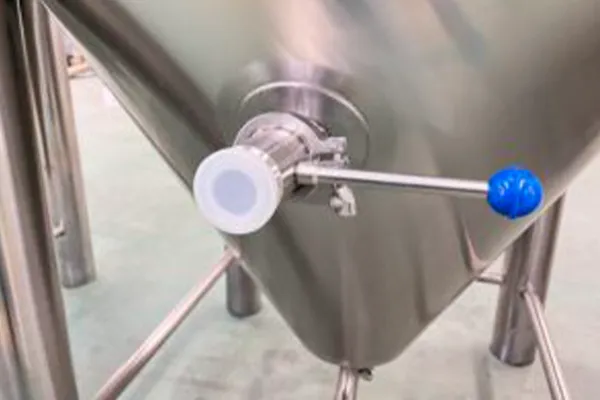
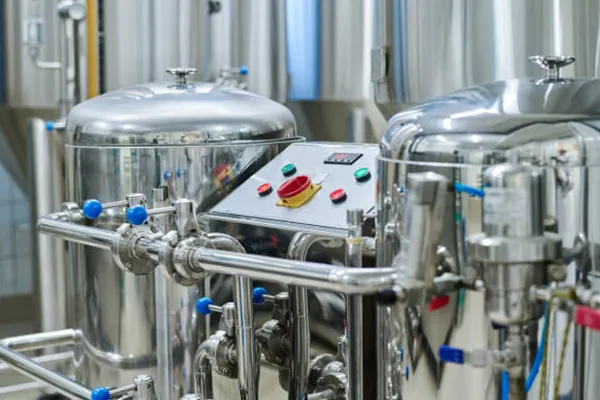
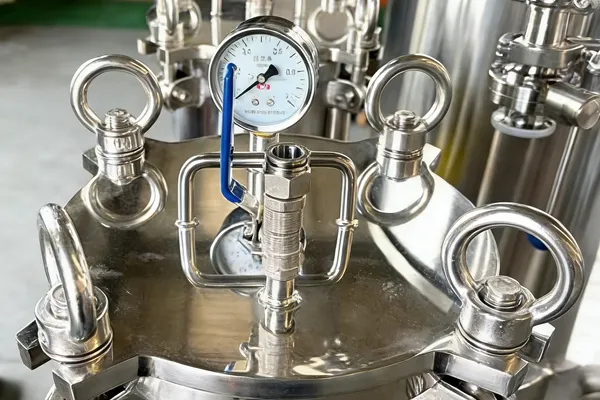
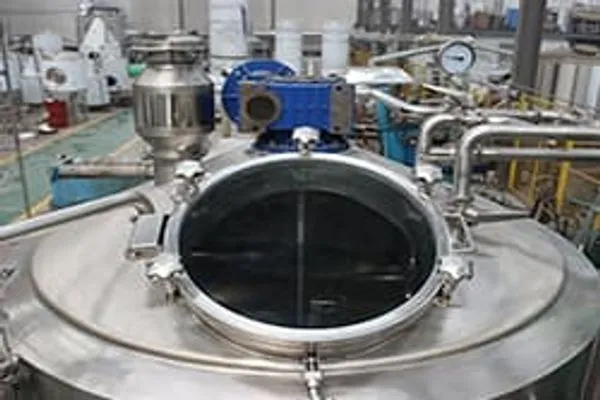
We perform pressure testing, weld inspection, polishing and internal acid cleaning on all key tanks and pipelines, then provide test records and photos so you clearly understand the real condition and hygiene level of each used brewery system before shipment.
Inspection & Pressure / Leak Test
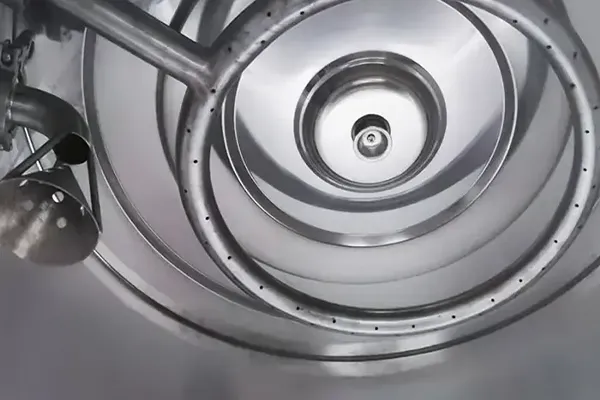
Internal Cleaning, Descaling & Acid Passivation
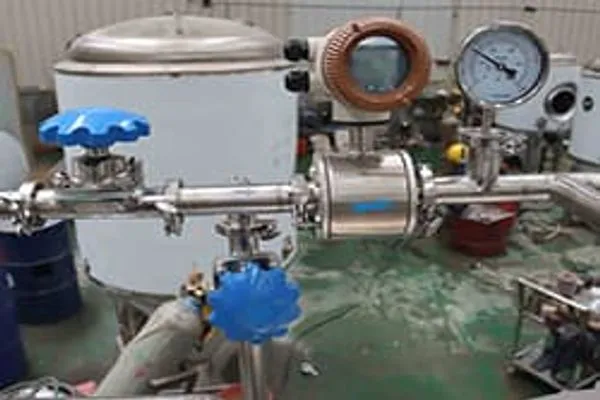
Valve, Fitting & Control Check / Replacement
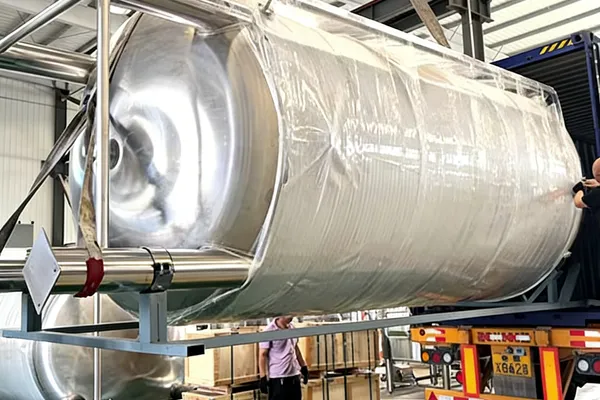
Final QC, Photos and Packing
5. Step Five – Functional Testing & Quality Verification
Before any used tank or system leaves our factory, it undergoes functional testing according to its application and pressure design.
5.1 Tanks & Vessels
For fermentation tanks, bright beer tanks, kombucha tanks, wine tanks and support vessels we perform:
Water pressure tests on tank shell and jackets (e.g. 0.4 MPa / 4 bar for jackets, 0.2 MPa / 2 bar as typical working pressure, or as per design)
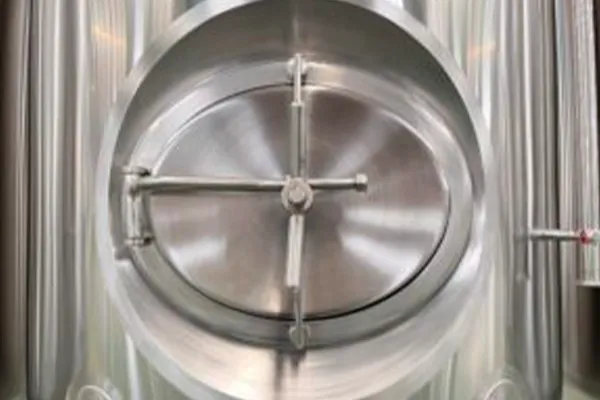
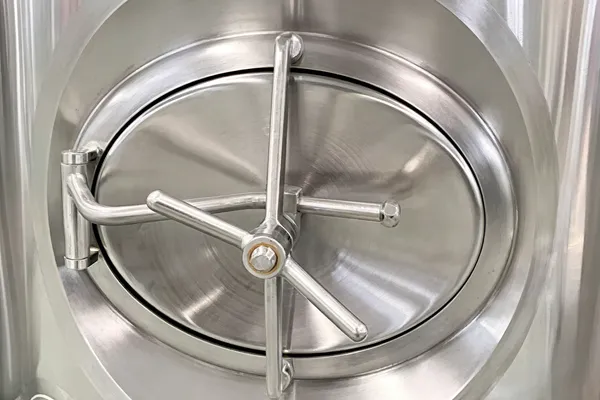
Leak checks on all welds, connections, manways and fittings
Verification of level gauges, sample valves and temperature sensors
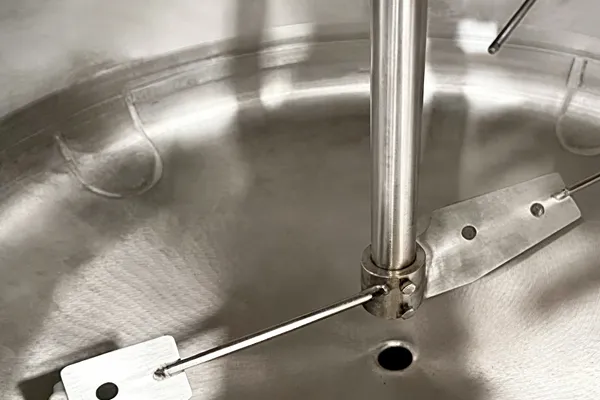
Verification that all CIP spray balls and internal cleaning devices function correctly
5.2 Brewhouse & Process Systems
For used brewhouses and process skids:
Test pumps, motors and agitators under water circulation
Confirm correct flow direction and performance
Check heating elements, steam jackets or direct-fire systems for proper operation
Simulate basic brewing sequences (heating rates, transfers) where practical
5.3 Packaging & Filling Equipment
For used fillers, cappers, cask/keg lines and small packaging systems:
Run dry or water tests to verify mechanical movement and basic speeds
Check key seals, cylinders and actuators
Verify control panel functions, emergency stop and safety interlocks (where applicable)
Whenever possible, we record photos and test data so you can see how the equipment performed at our factory, not only in a brochure.
Hygiene & Safety Testing
We perform pressure testing, weld inspection, polishing and internal acid cleaning on all key tanks and pipelines, then provide test records and photos so you clearly understand the real condition and hygiene level of each used brewery system before shipment.
Pressure Testing
Tanks, jackets and pipelines are pressure-tested to ensure no leaks and safe operation.
Weld Inspection & Repair
Key welds are inspected and reworked where needed to meet brewing hygiene and strength requirements.
Polishing & Internal Acid Cleaning
Surfaces are polished and internally acid-cleaned (passivated) to restore smooth, hygienic stainless steel.
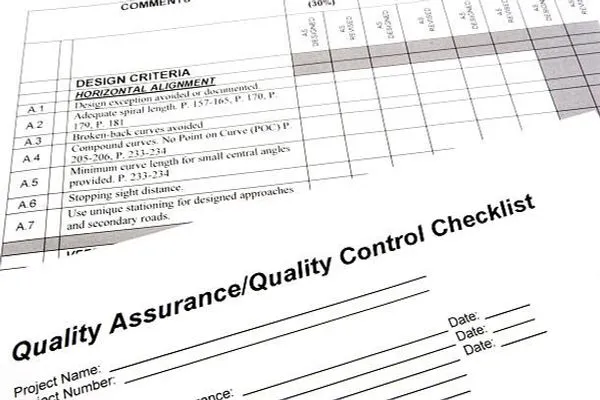
Testing Records & Photo Report
We provide basic test records and photos so you clearly see the equipment condition before shipment.