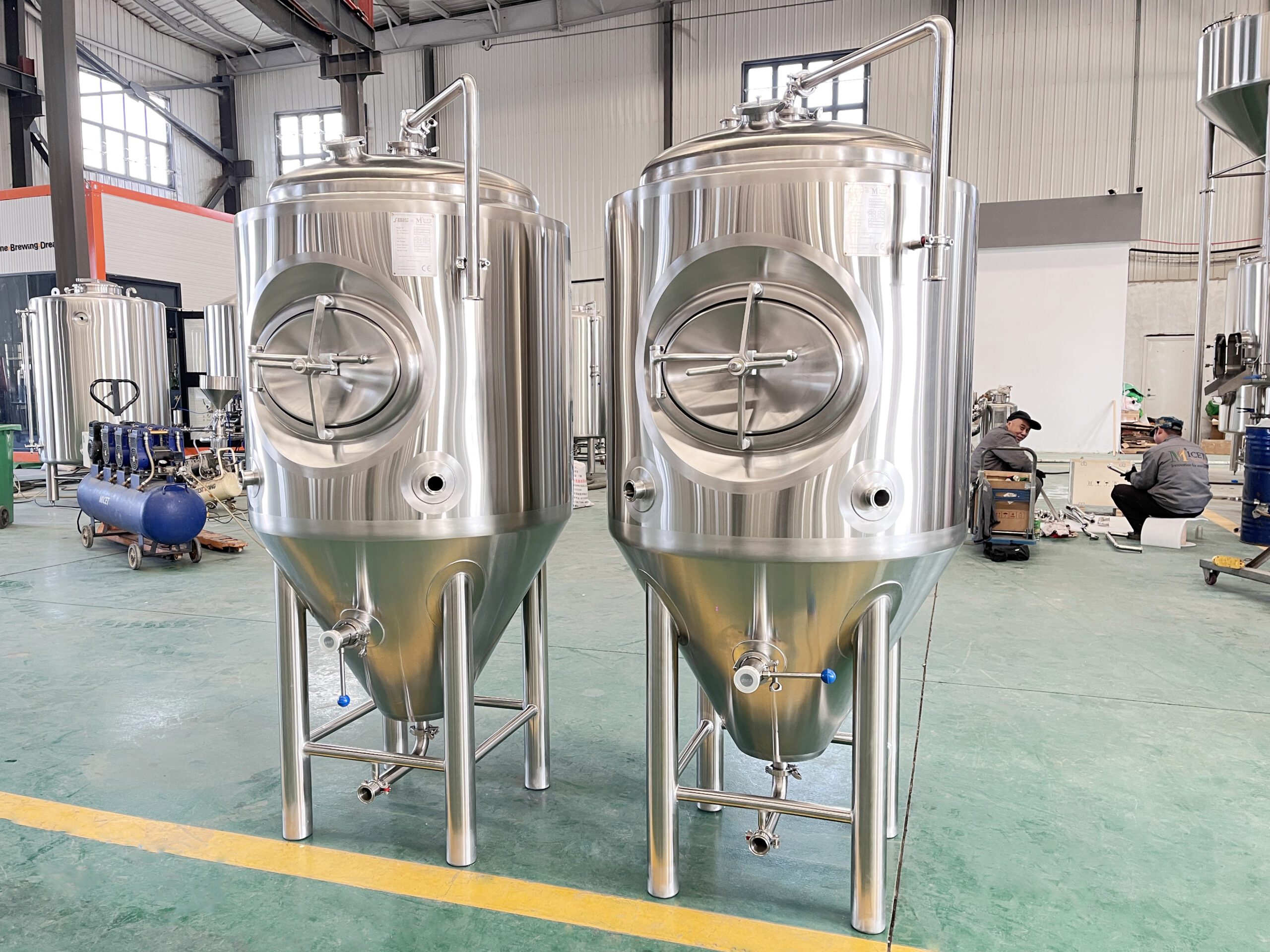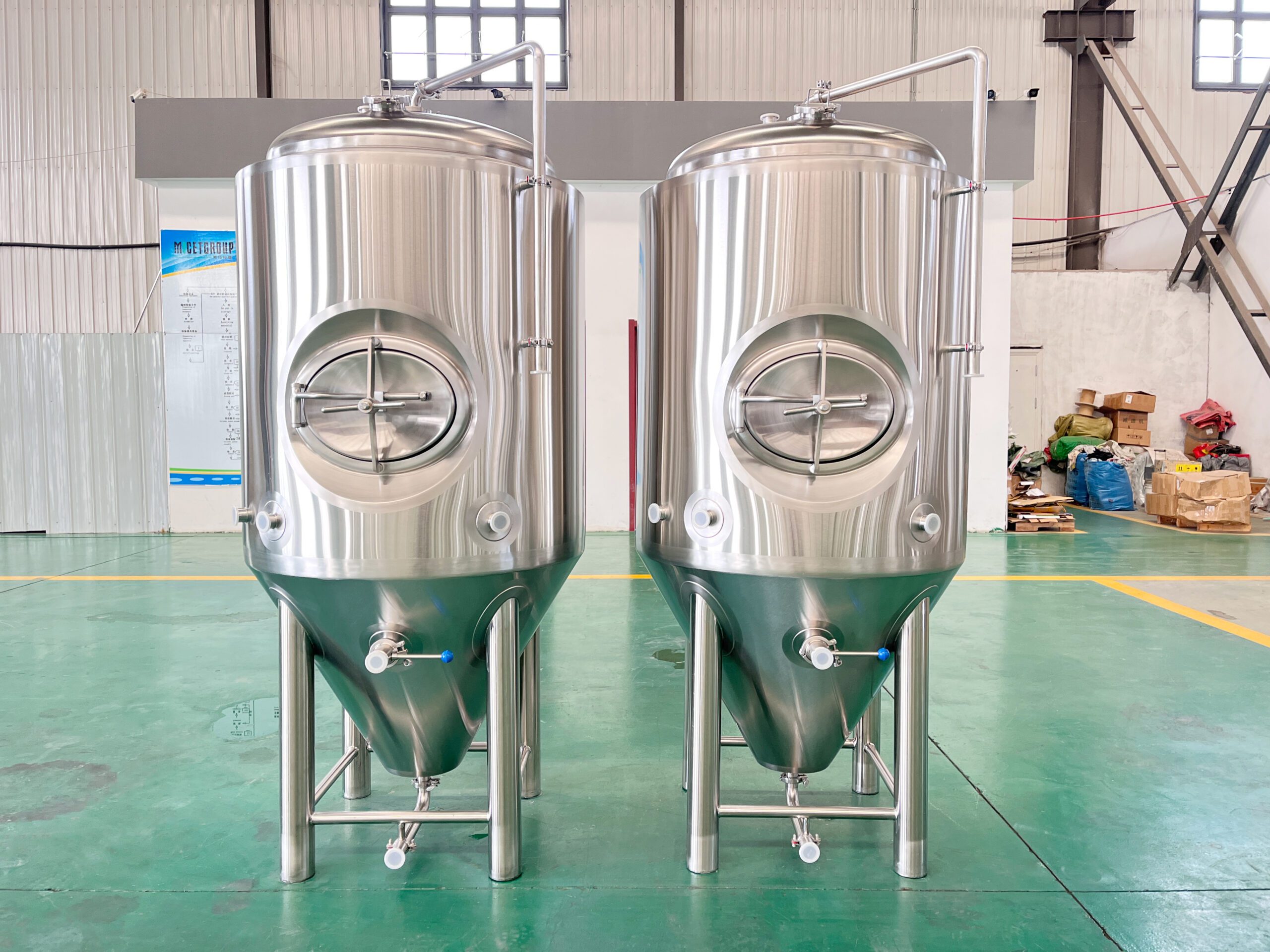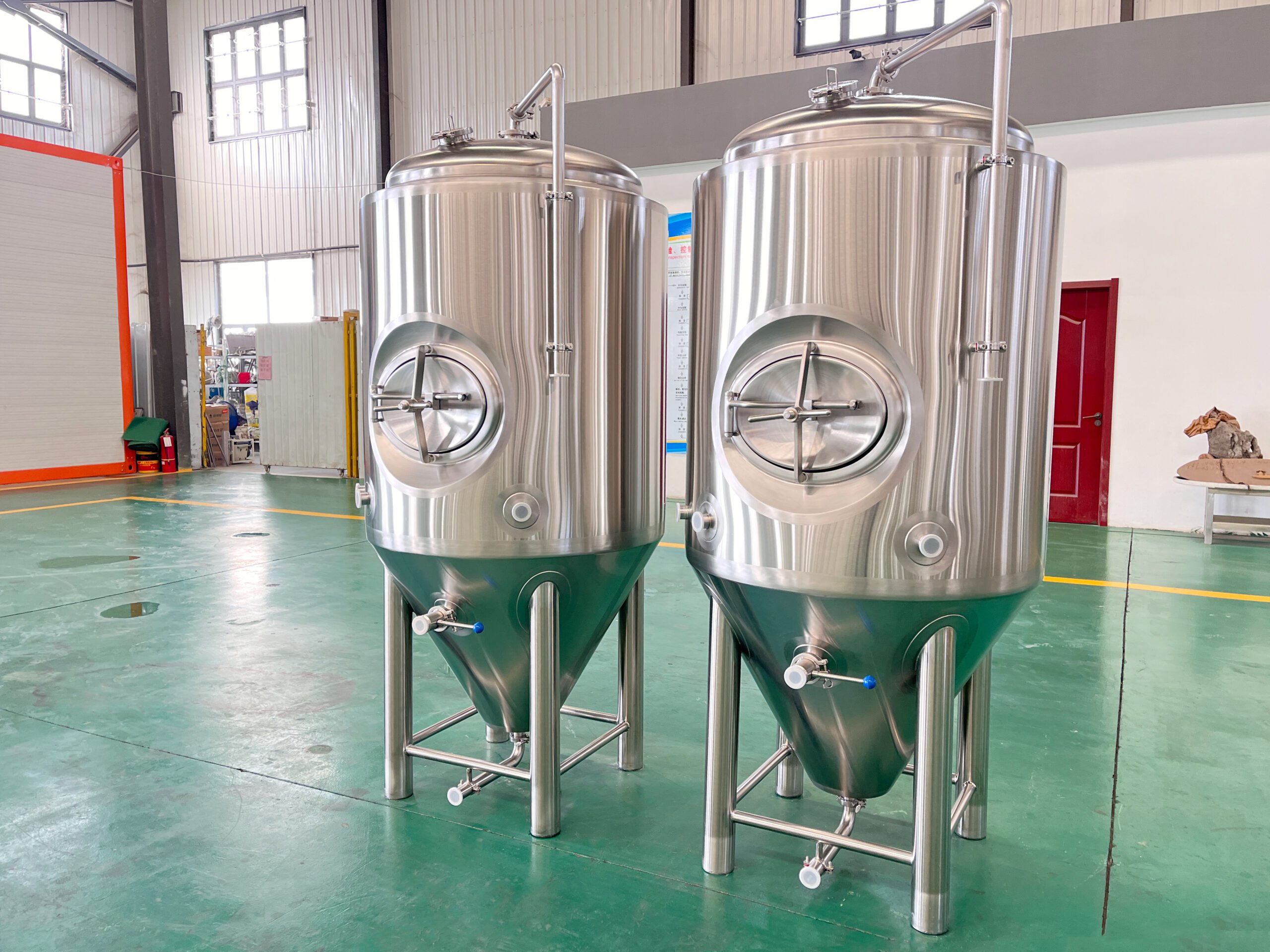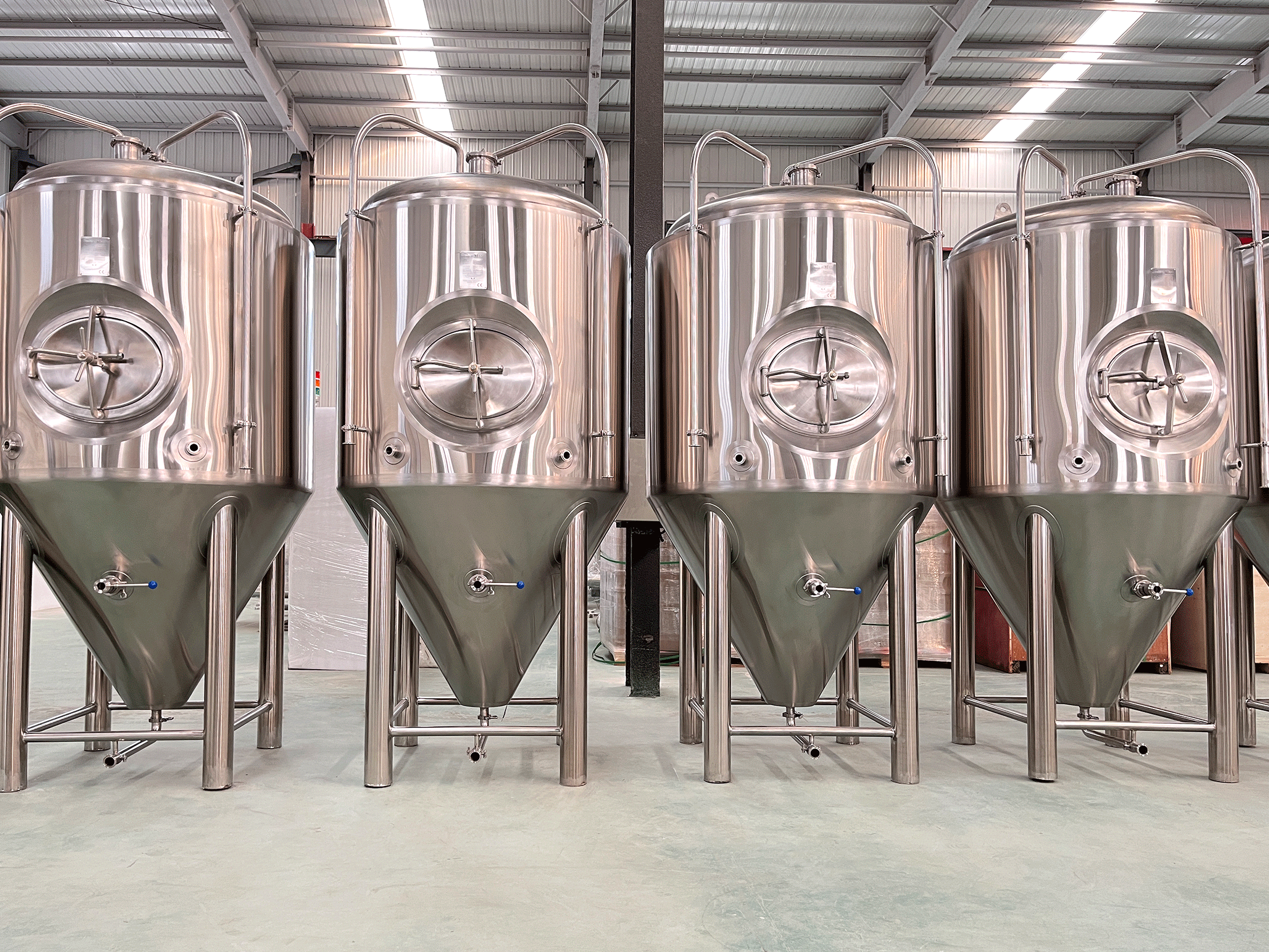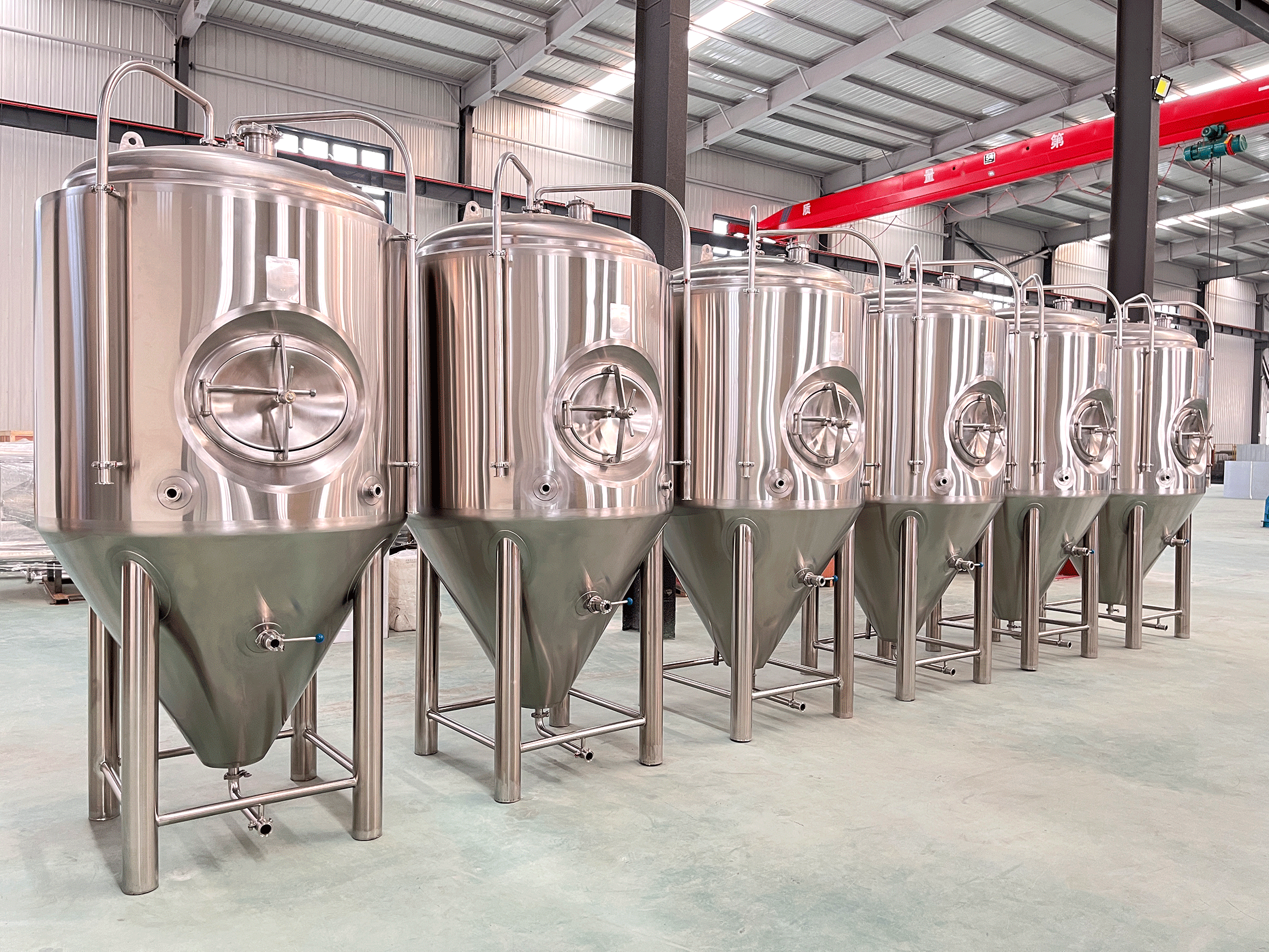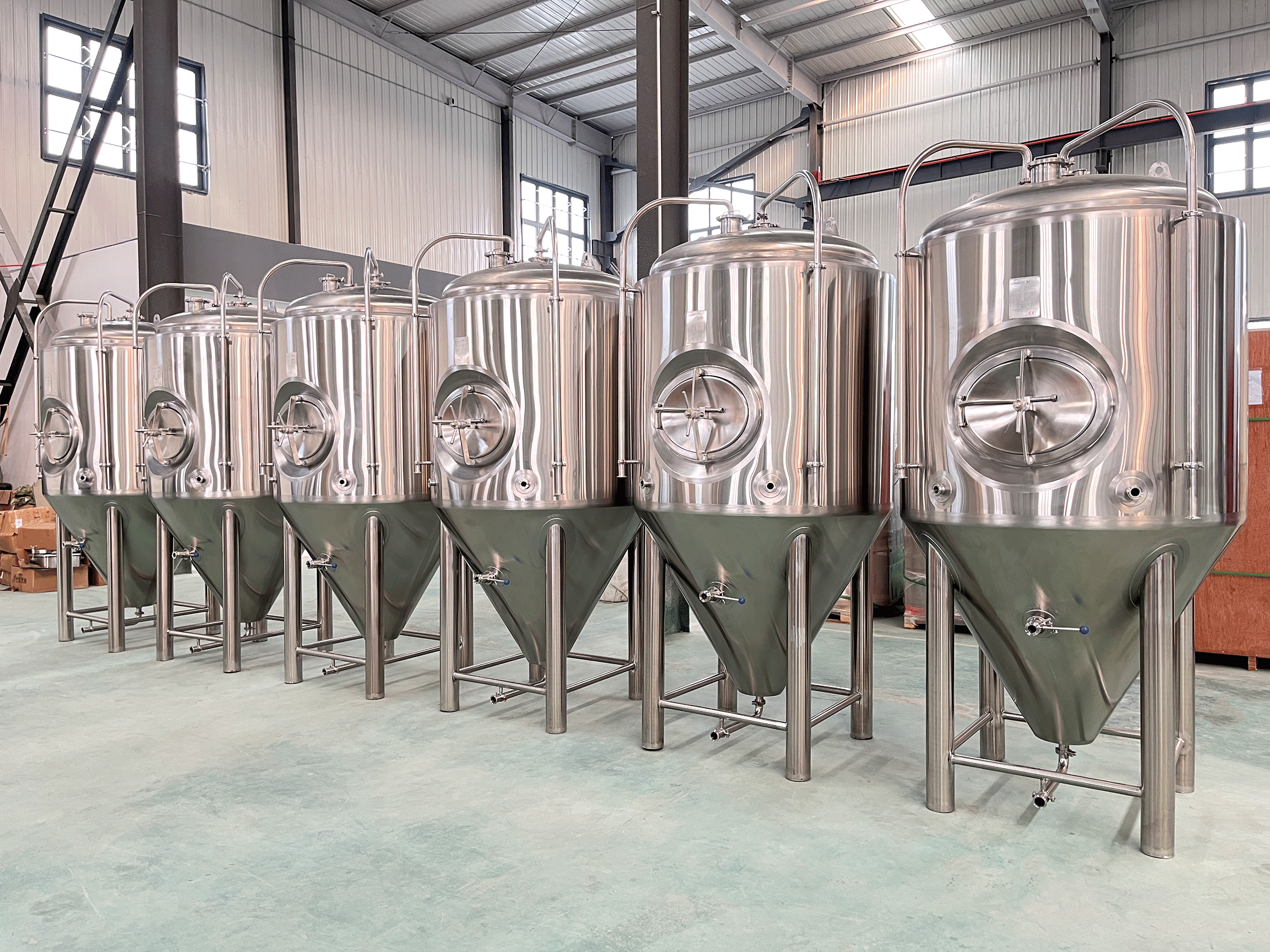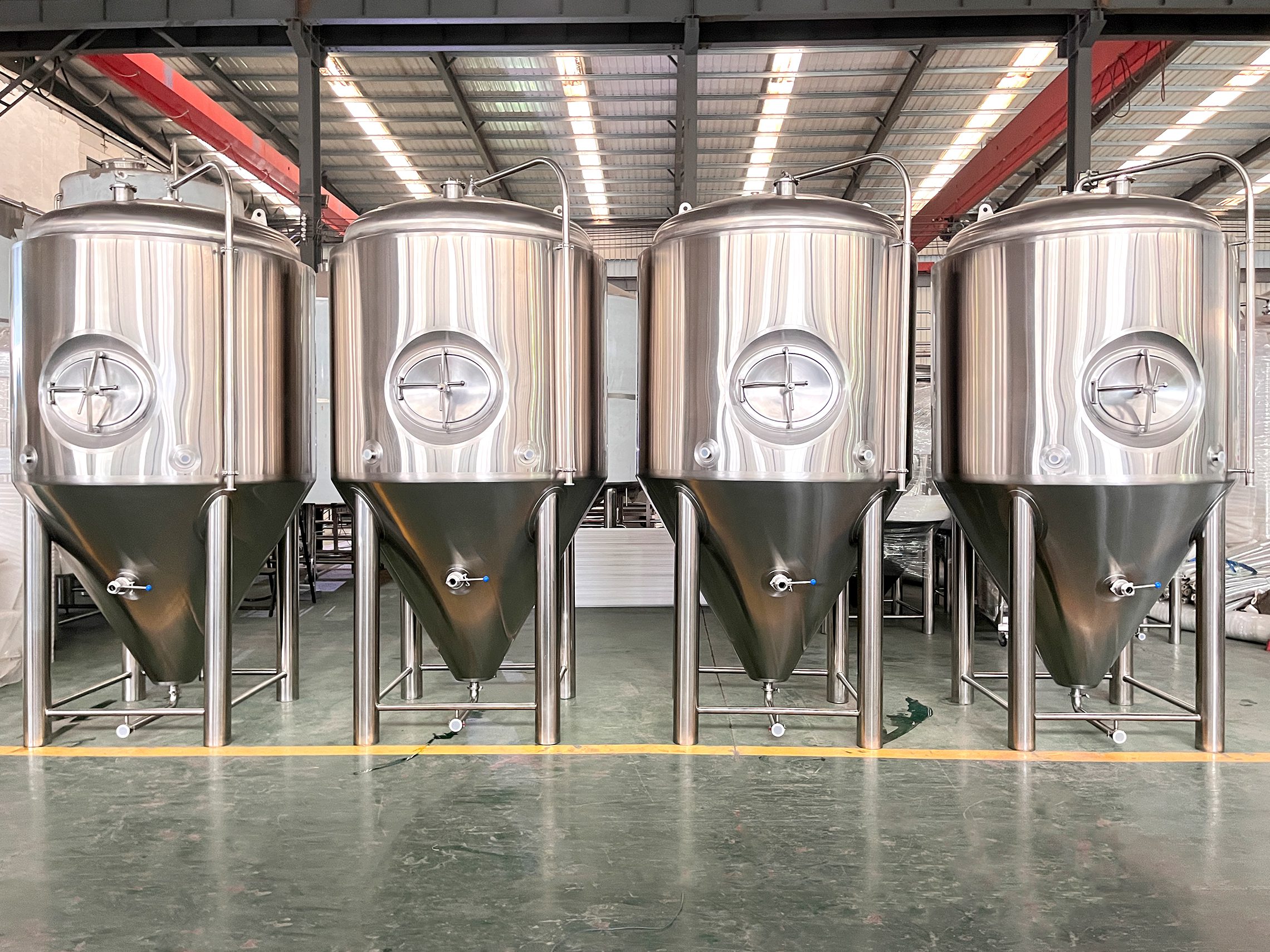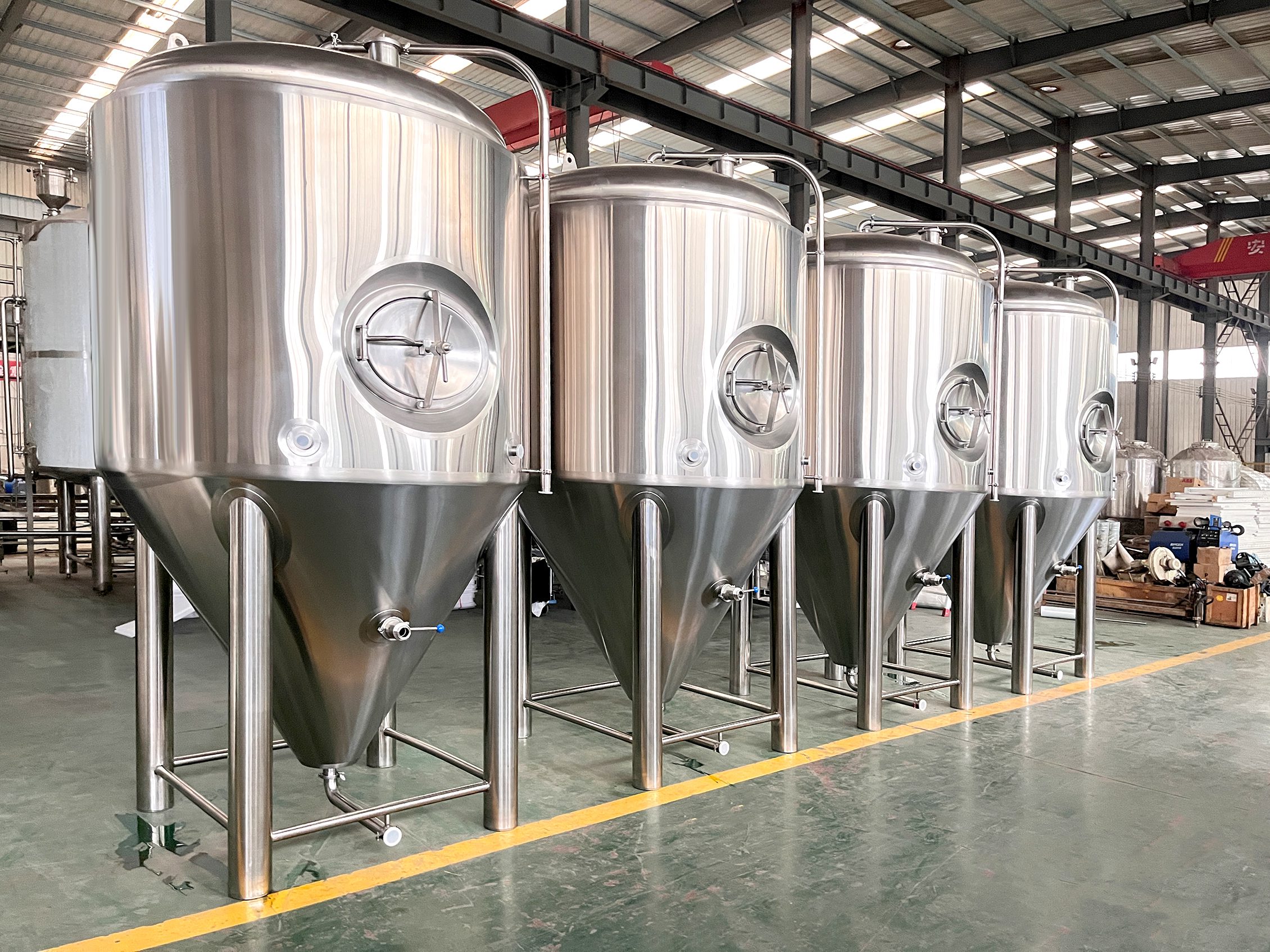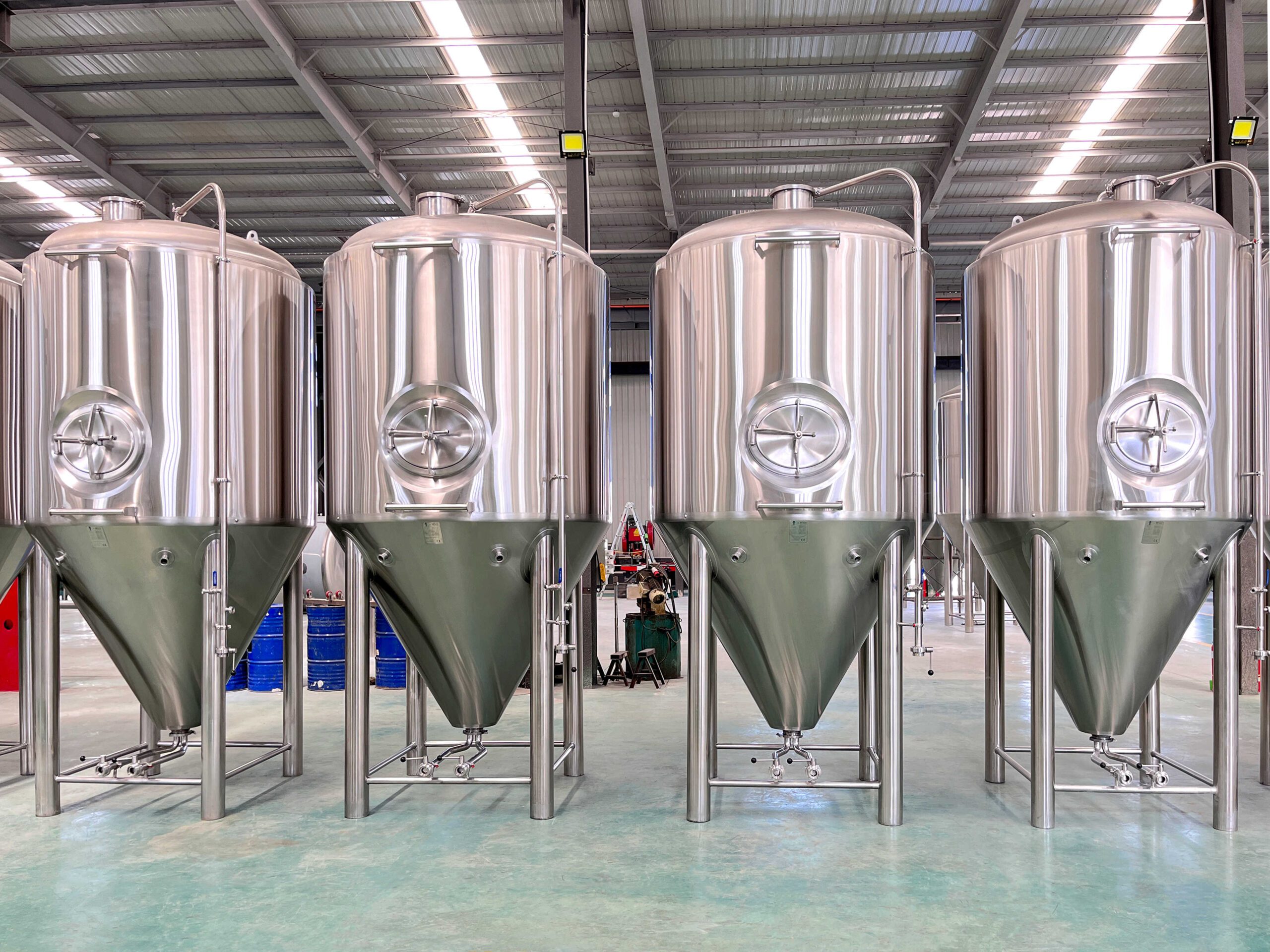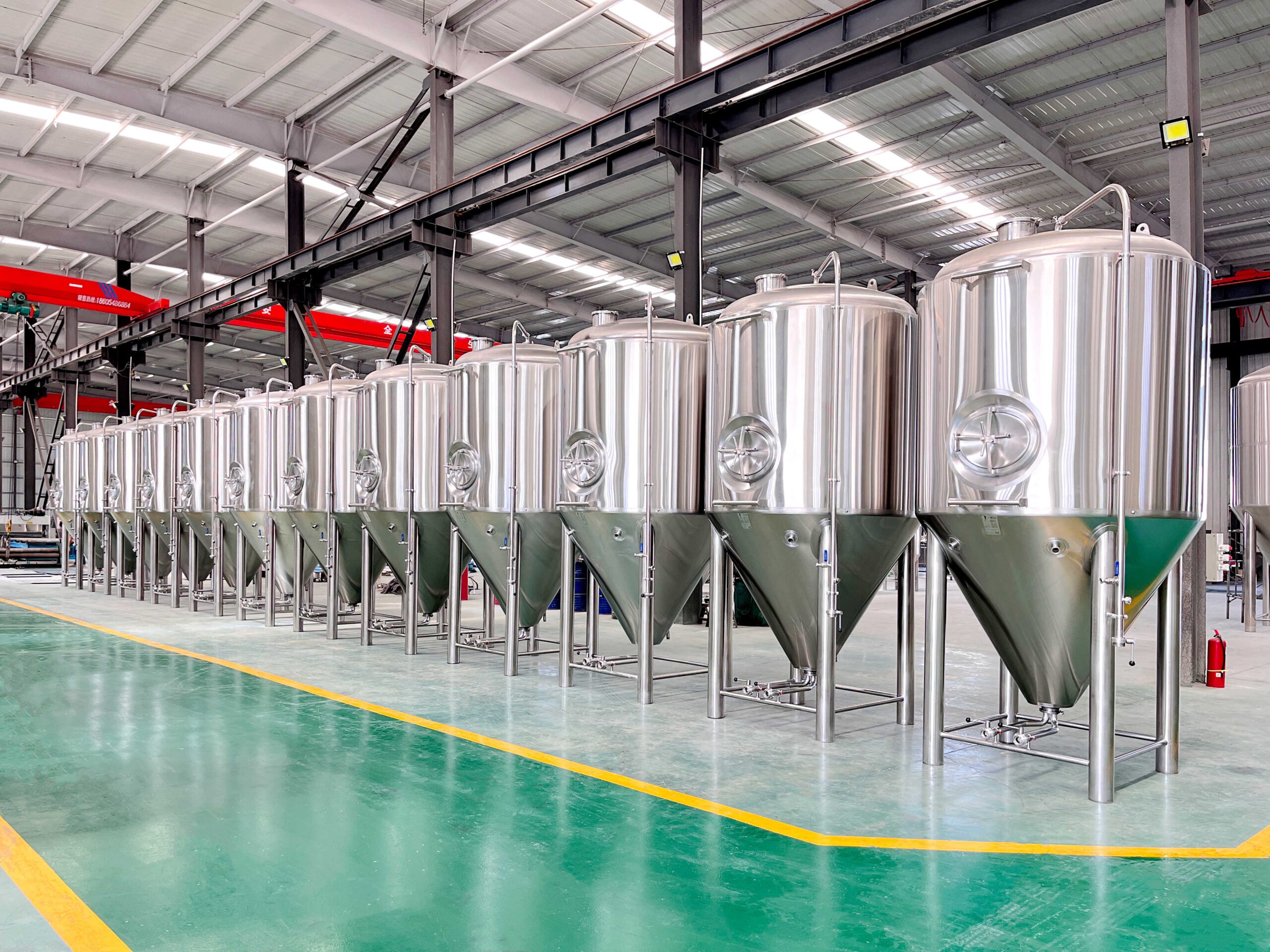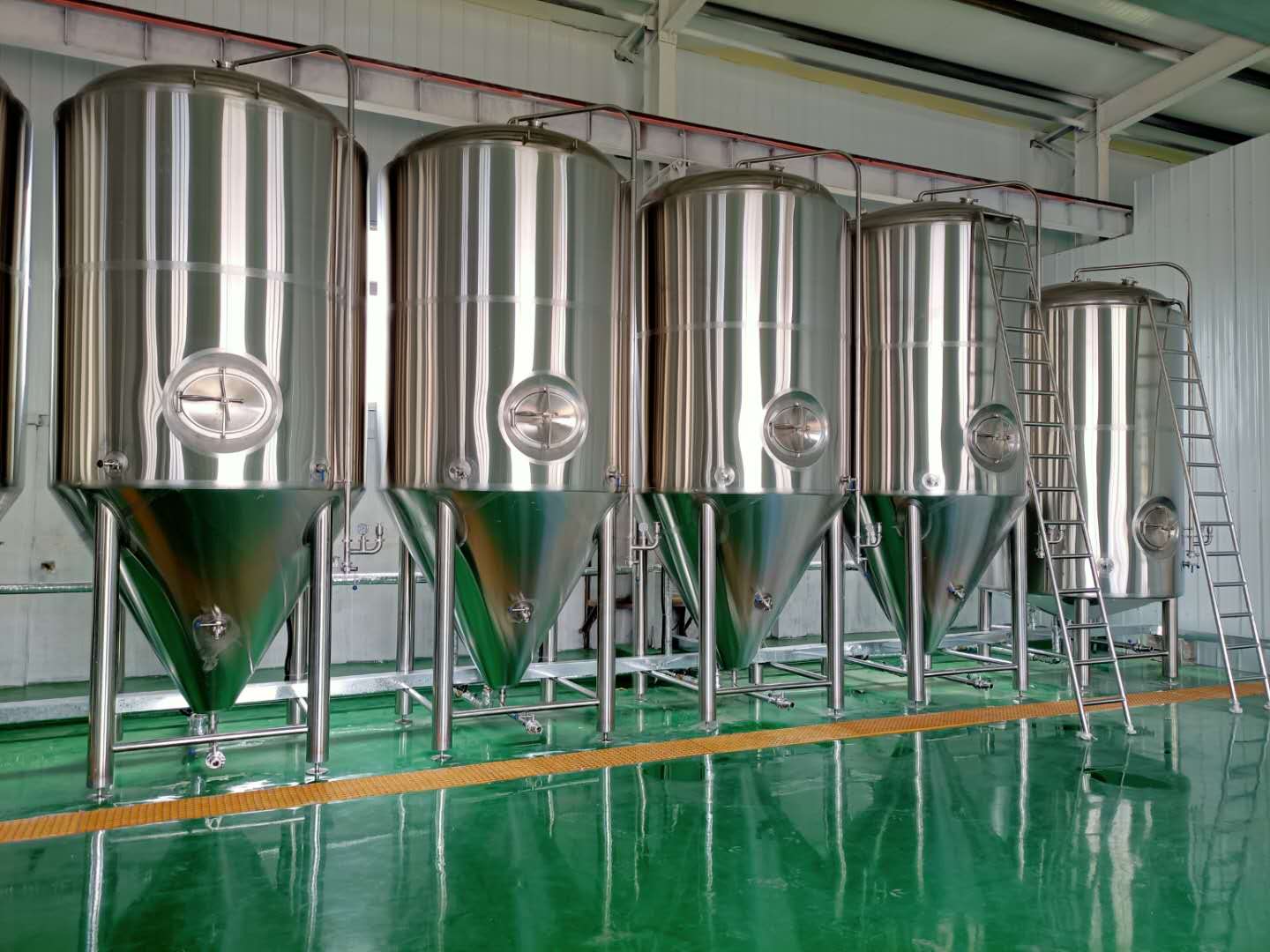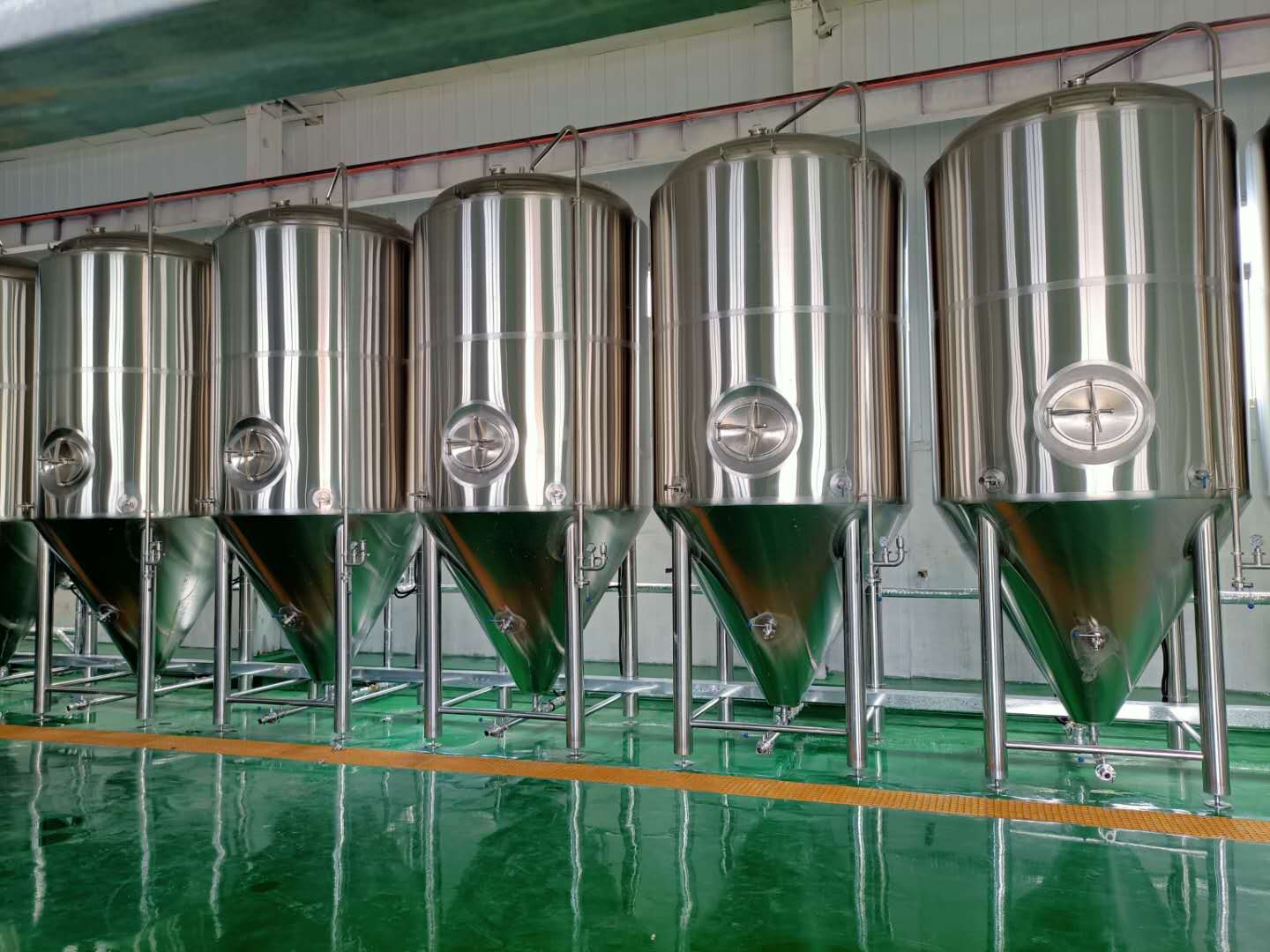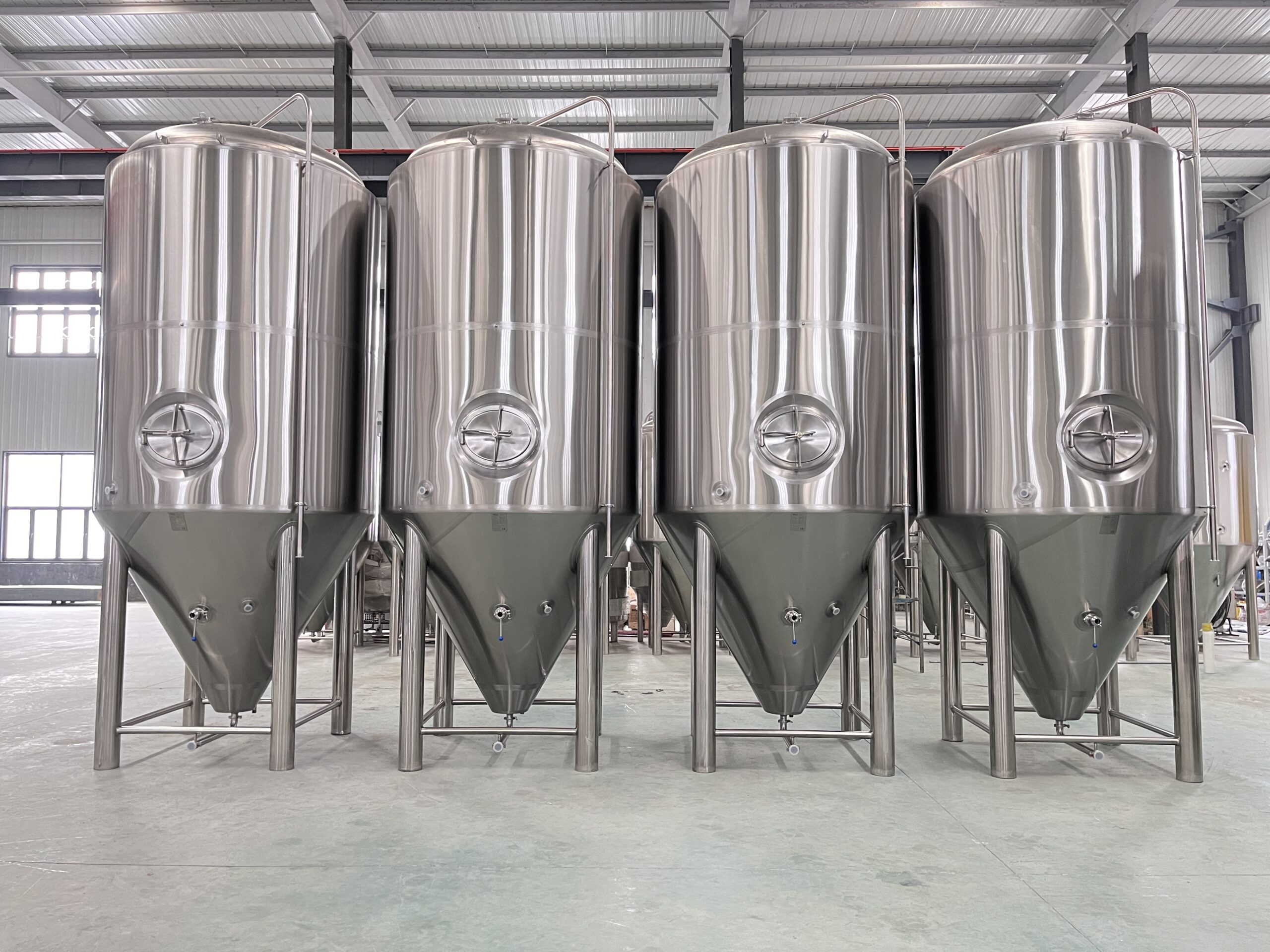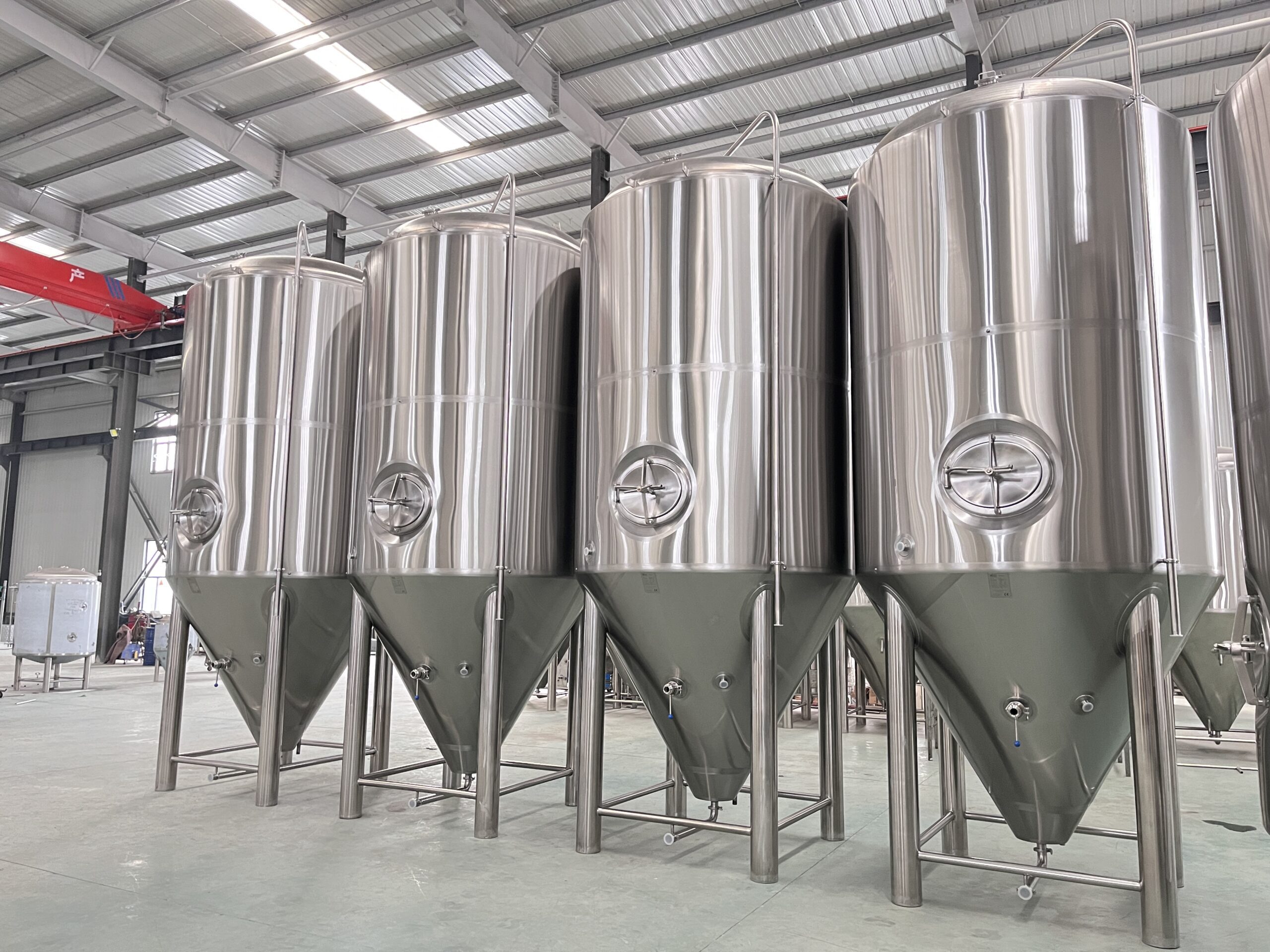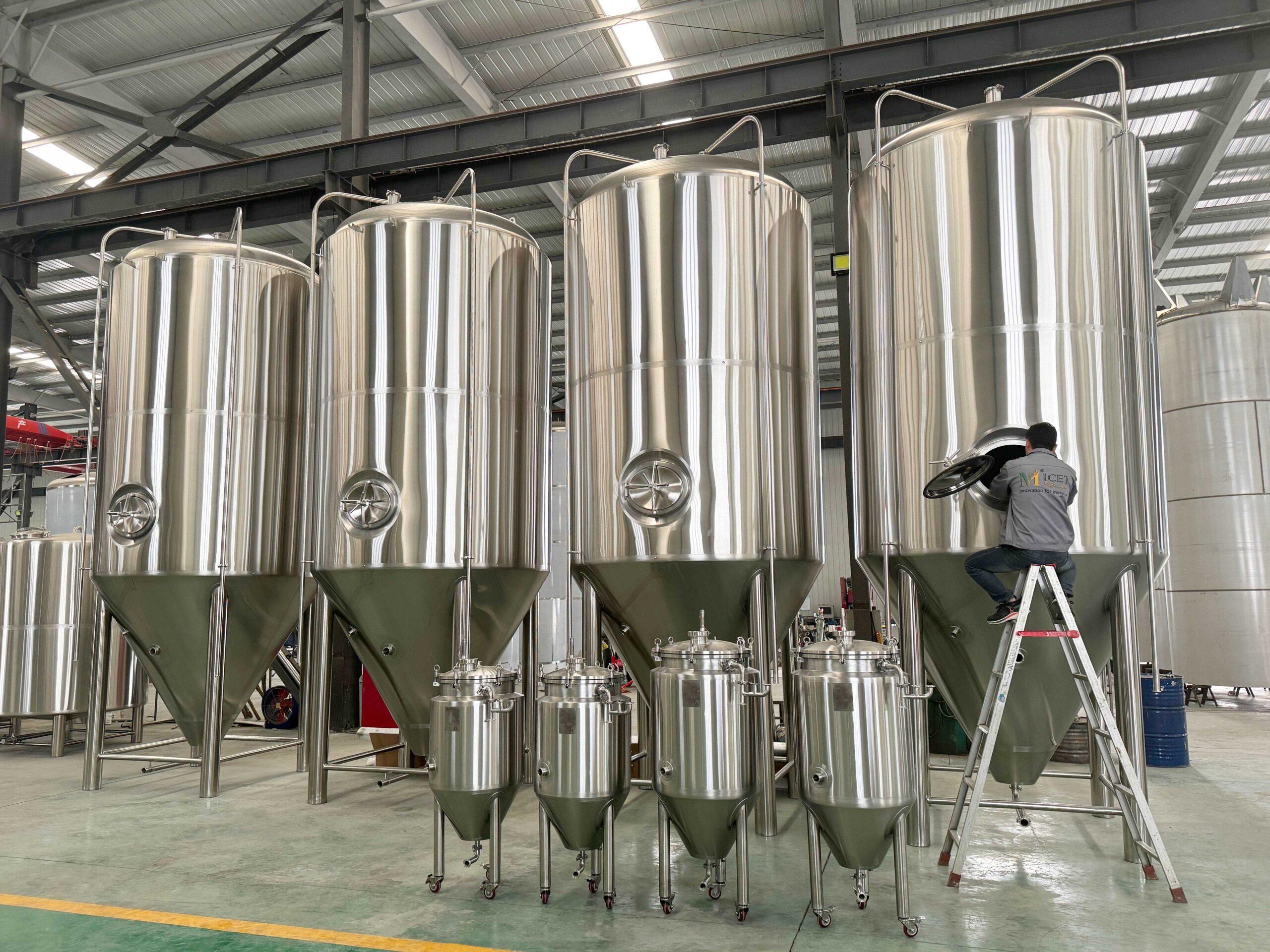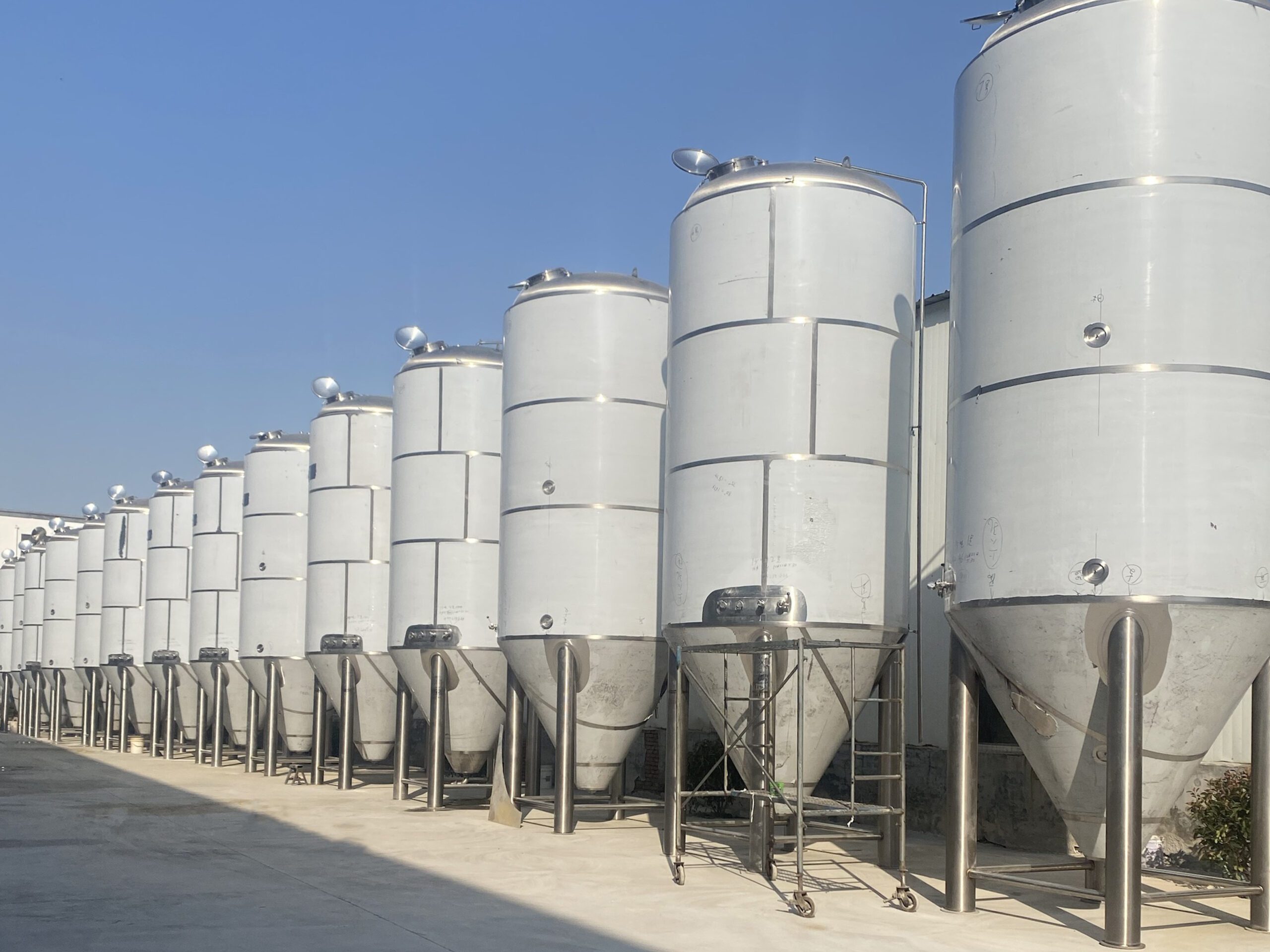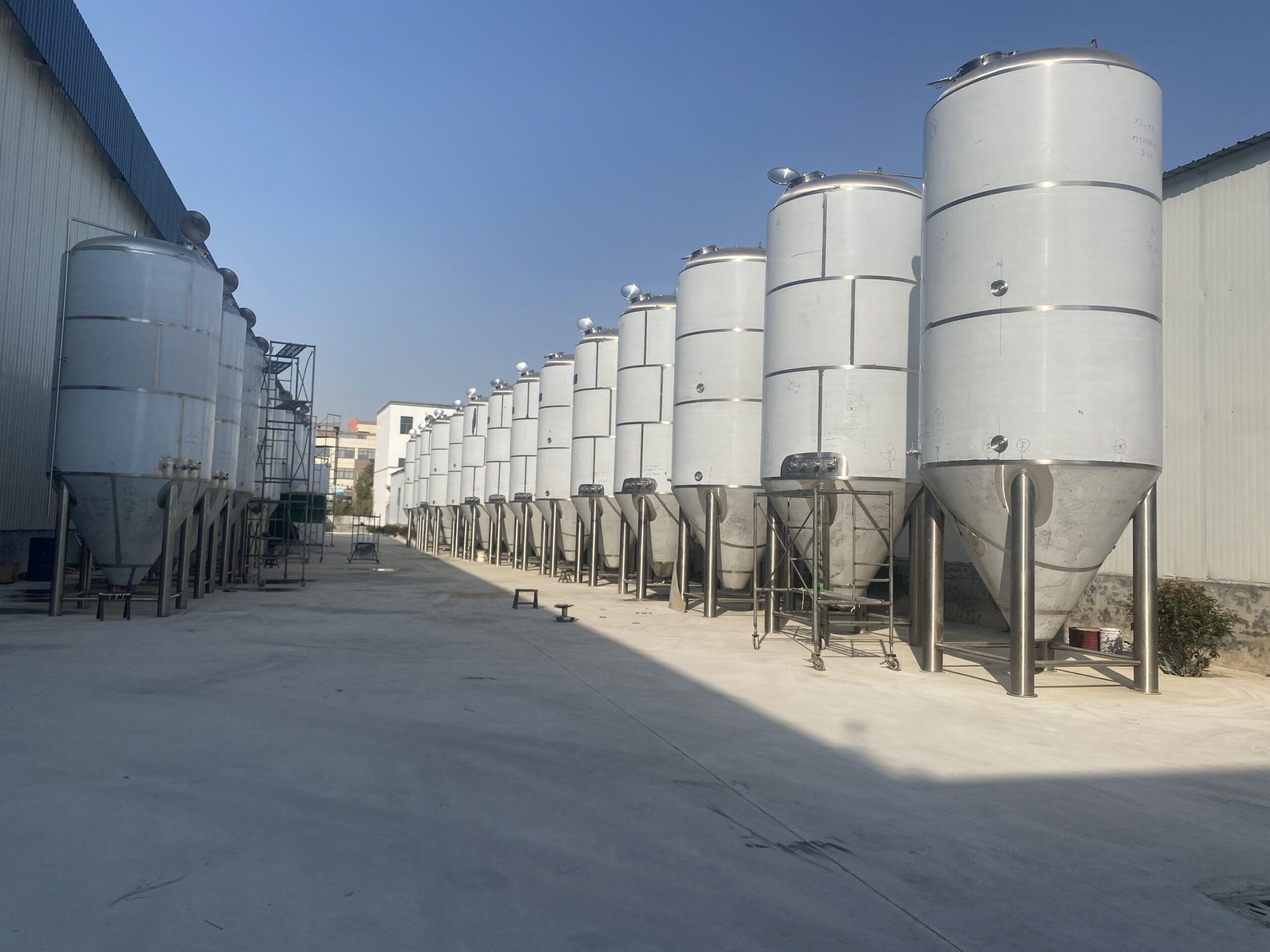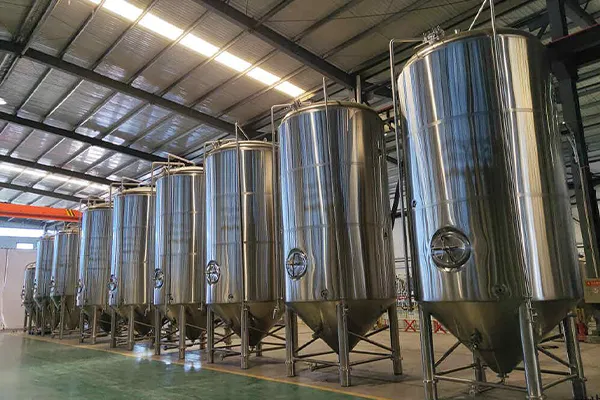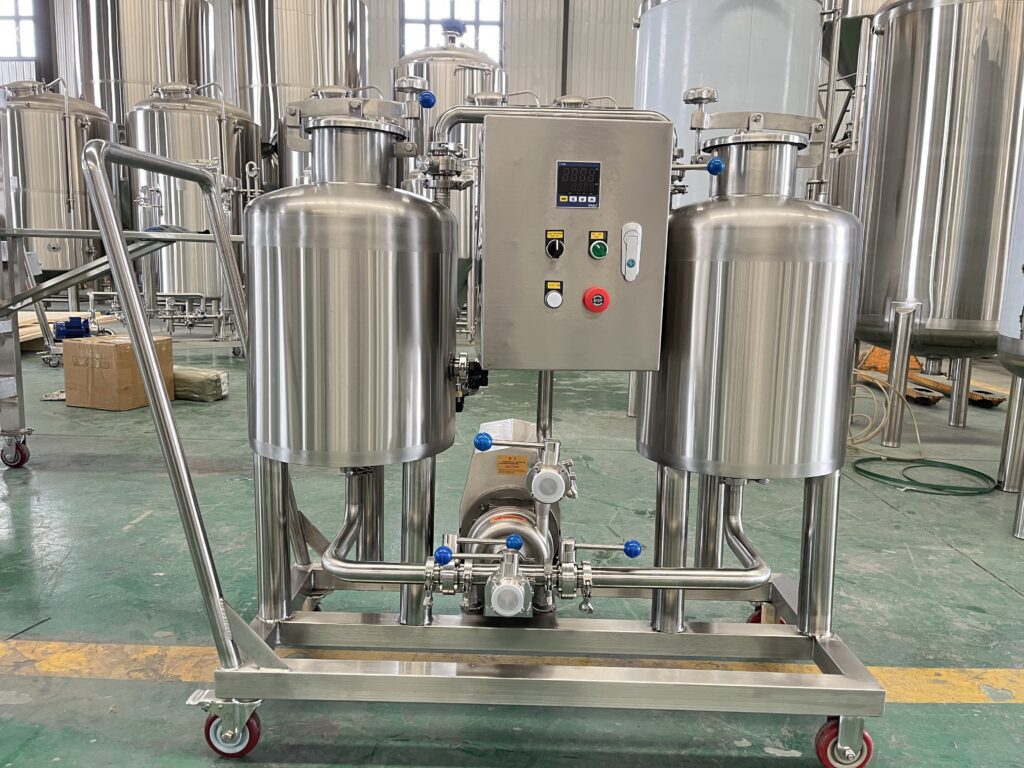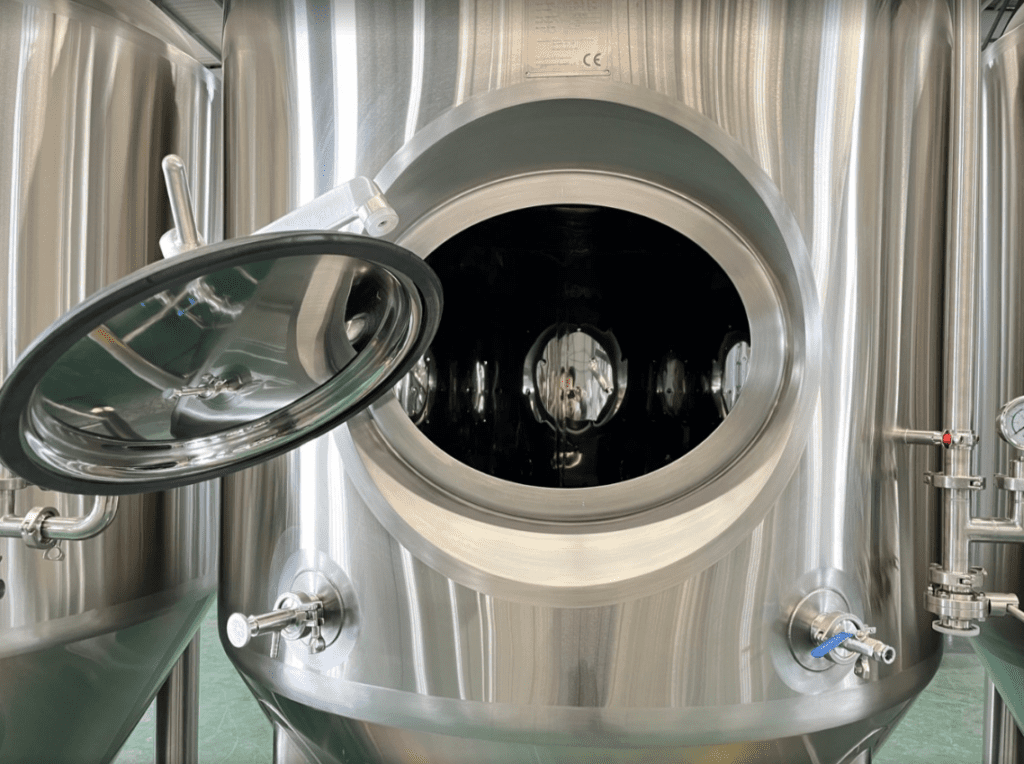










Our Fermentation Cellar Projects & On-Site Photos show used fermentation tanks installed in real breweries and beverage plants, so you can see actual layouts, tank rows and piping, and imagine how similar setups can work in your own project.

Cut costs with used fermentation tanks ready for beer, kombucha, cider, wine and beverage plants—capacity matched to your cellar plan.
Pressure-Rated Options – Verified condition for safe carbonation and serving.
Hygiene-Ready – Internal cleaning, passivation and inspection records available.
Fit-to-Layout Customization – Nozzles, outlets and connections adjusted if required.
Fast Export Delivery – Secure packing for overseas transport.
Choose from a wide range of capacities to match your brewhouse size, number of SKUs and production plan.
Compact 300L stainless steel fermentation tank for pilot brewing, test batches or small kombucha / cider lines, pressure-tested and internally cleaned before shipment.
500L used fermentation tank suitable for nano breweries and restaurant breweries, with stainless-steel construction and optional cooling jacket for controlled fermentation.
1000L pre-owned fermentation tank for microbreweries and kombucha producers, supplied with basic fittings and inspected welds, ideal for small commercial production.
2000L used fermentation tank for growing craft breweries, with jacketed cooling and cone or dish bottom options, pressure-tested and ready for integration into your cellar.
2500L second-hand fermentation tank designed for higher-output microbreweries, supporting multiple batches per week and stable temperature control with glycol jackets.
High-capacity 5000L used fermentation tank for regional breweries or central production sites, suitable for beer, cider or other beverages, with tested pressure rating and hygienic internal finish.
This used 10T fermentation tank package uses MICET’s standard fermentation tank design and combines large-volume used fermenters with refurbished bright beer tanks.
15T fermentation tank package using two 6500L conical fermenters and twelve 3000L fermenters. All tanks are SUS304,insulated, jacketed and refurbished
20T fermentation tank package using two 6500L conical fermenters and twelve 3000L fermenters. All tanks are SUS304,insulated, jacketed and refurbished
SS304 / SS316
Internal surface roughness (e.g. Ra ≤ 0.6–0.8 μm when available)
Internal pickling & passivation
SS304 / SS316
Internal surface roughness (e.g. Ra ≤ 0.6–0.8 μm when available)
Internal pickling & passivation
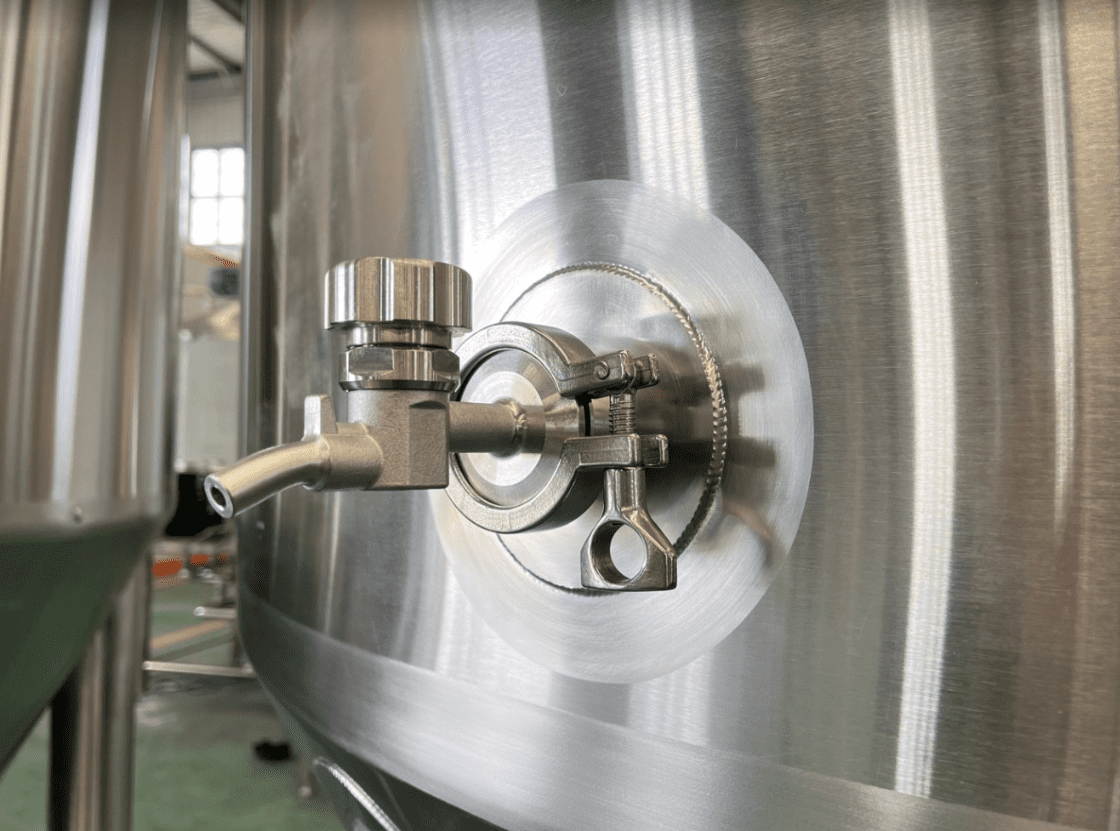
Manway, CIP spray ball, sampling valve, thermowell, level indicator, inlet/outlet sizes
Tri-clamp / DIN / SMS connections
Before any used brewery equipment is offered to you, it goes through a strict refurbishment and quality control process in our factory. This helps you avoid hidden risks, reduce installation issues and put the system back into production as quickly as possible
In many cases, the best solution is used fermentation tanks or unitanks combined with new glycol chillers, pump skids, manifolds and CIP systems. We refurbish the tank body, jackets and fittings, then engineer new cooling, valves and cleaning loops around them. This keeps your main cellar volume cost-effective, while hygiene, temperature control and maintenance are handled by reliable new equipment.
Tell us about your project and our engineers will design a hybrid new + used solution just for you.
We can modify used fermentation tanks to fit your existing cellar layout and process design.
PRV, sampling valves, carbonation stone, racking arm, level gauge, thermowell
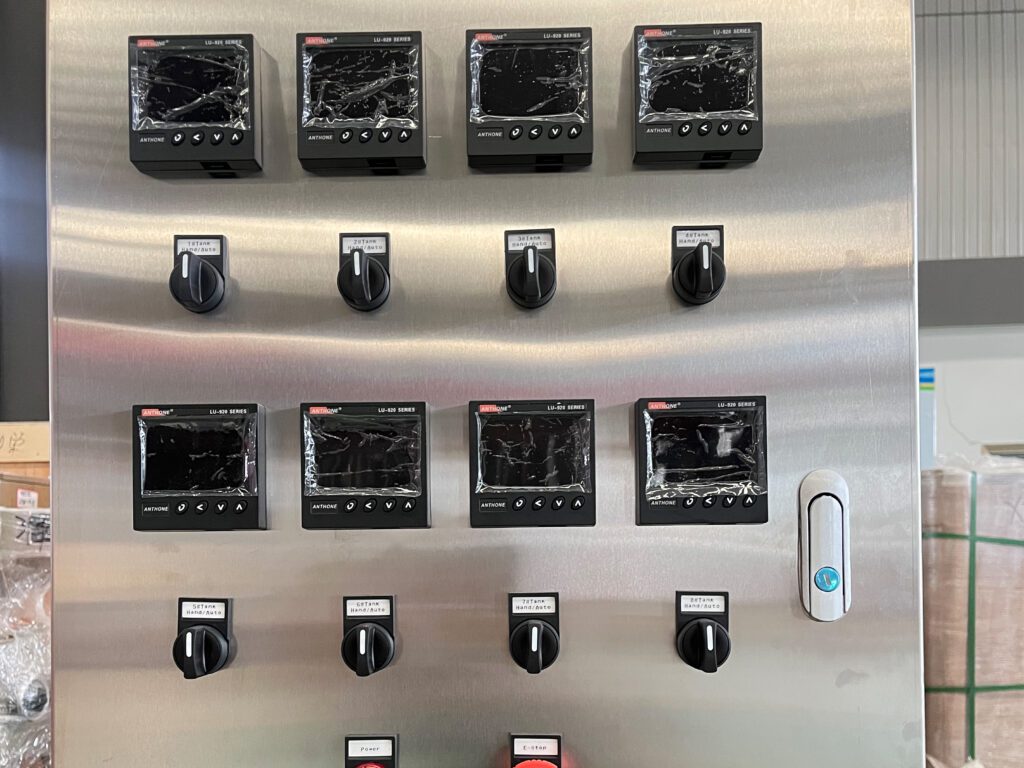
Temperature sensors, basic control panels, PLC integration options
CIP spray balls, CIP return connection, CIP set integration
Add/remove nozzles, change leg supports, adjust outlet height, add ladders or platforms
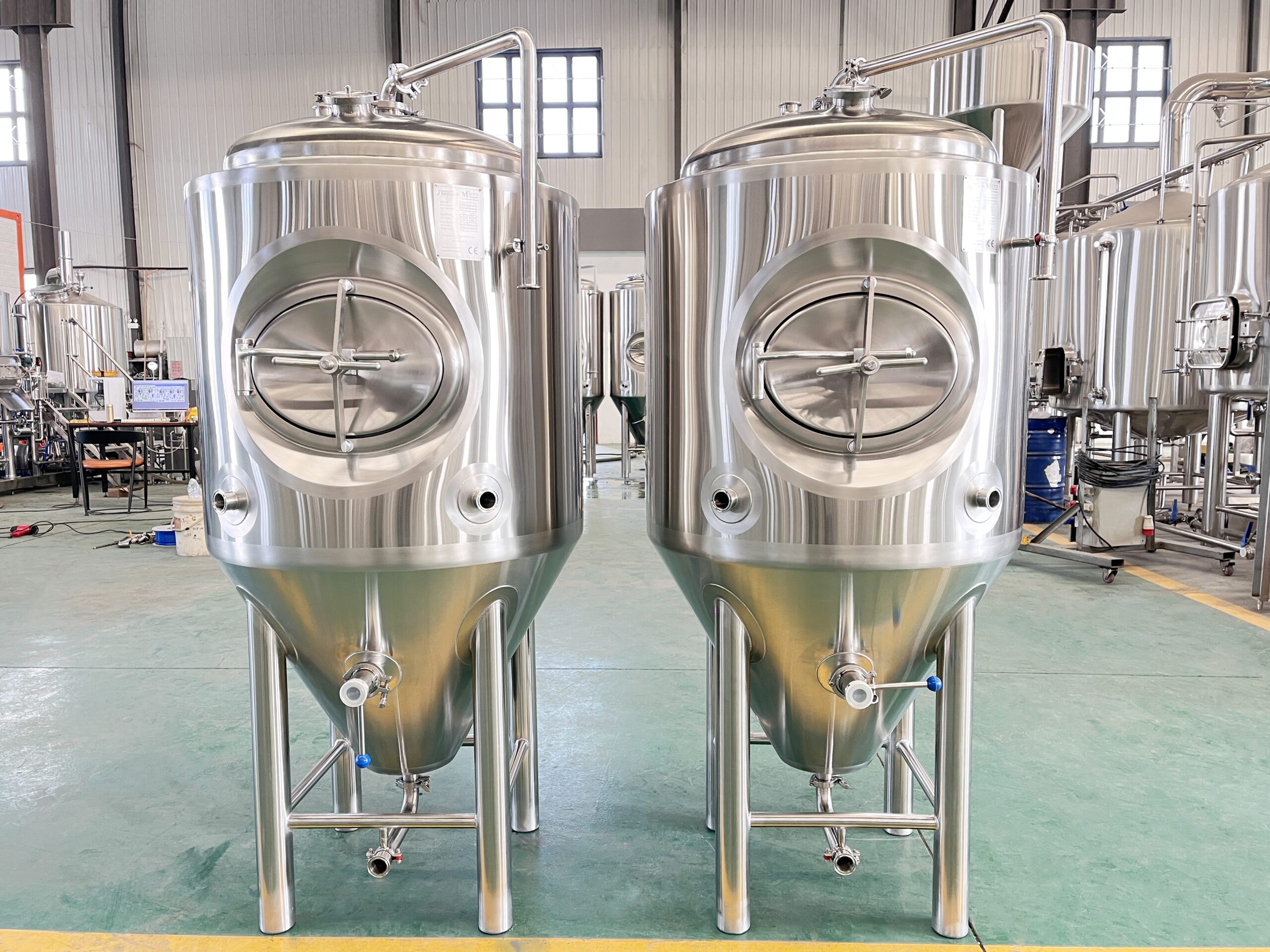
Our Fermentation Cellar Projects & On-Site Photos show used fermentation tanks installed in real breweries and beverage plants, so you can see actual layouts, tank rows and piping, and imagine how similar setups can work in your own project.
Dolor sit amet, consectetur adipisi cing elit, sed do eius mod tempor incididunt ut labore et dolore magna aliqua.
Everything you need to know before placing your custom brewery equipment order
A winery mainly includes the following equipment:
1. Raw material processing: crusher, washing machine, gelatinization pot (grain-based), crusher (fruit wine-based), press
2. Fermentation: fermentation tanks, floating roof tanks, brite tanks, fruit wine tanks
3. Separation and filtration: filter press, diatomaceous filter, press machine
4. Distillation (for distilled spirits): distillation column, condenser, alcohol meter
5. Aging and storage: storage tanks, oak barrels
6. Bottling and packaging: bottle washing machine, filling machine, capping machine, labeling machine, inkjet printer
7. Auxiliary equipment: water pump, refrigeration unit, sterilization equipment, temperature control equipment
1. Bar Location: In addition to market research, it’s recommended to collect relevant market data when selecting a location.
2. Energy Supply: This includes essential conditions for operating a bar, such as water, electricity, and natural gas.
3. Interior Design: A simple yet tasteful design style is popular with consumers; the bar should have its own unique style.
4. Wine Knowledge: Operators need to be familiar with wine origins, varieties, serving temperatures, and food pairings, such as serving red wine at 16-18℃ and white wine at 8-12℃.
5. Team Training: Service staff need to master wine opening and pouring etiquette (e.g., pouring to 2/3 full), wine recommendation techniques, and emergency handling (e.g., handling intoxicated customers).
6. Marketing Strategy: In the initial stage, attract customers through membership programs and themed tasting events. Long-term customer relationships need to be maintained, such as by regularly holding wine knowledge lectures.
On average, the cost to open a wine bar can range from $50,000 to $300,000 or more. Several factors significantly influence this budget: The location of your wine bar greatly affects the cost. Rent in a high-traffic urban area will be substantially higher compared to a more subdued location in a small town or suburb.
Starting a wine bar requires substantial financial planning. Initial costs can include rent, renovations, licensing fees, inventory, and marketing expenses. Depending on the location and scale of your wine bar, these costs could range from $50,000 to over $500,000.
Opening a wine bar requires four main categories of equipment: storage, serving, basic operations, and atmosphere creation. The core elements are temperature-controlled wine storage and professional serving tools, while also considering customer experience and operational efficiency. These mainly include:
1. Storage Equipment: Crucial for ensuring wine quality, such as grape pre-processing equipment, wine tanks, refrigeration systems, control cabinets, oak barrel aging storage, cleaning systems, and corresponding bottling and dispensing equipment.
2. Serving Equipment: Enhancing service professionalism, such as corkscrews, decanters, and wine thermometers.
3. Basic Operational Equipment: Bar counters, refrigerators, cleaning and disinfection tools, etc.
4. Atmosphere Equipment: Lighting, sound system, and soft furnishings to create a conducive tasting environment.
Key factors inhibiting wine fermentation:
1. Abnormal temperature: Temperatures exceeding 30℃ or falling below the optimal range (20-30℃ for primary fermentation, 10-20℃ for secondary fermentation) will inhibit yeast activity and may even cause fermentation to stop.
2. Oxygen imbalance: Insufficient oxygen supply will result in insufficient yeast numbers, while excessive oxygen supply may lead to over-proliferation or oxidation problems.
3. Excessive sulfur dioxide: Adding too much sulfur dioxide will directly poison the yeast, affecting its reproduction and metabolism.
4. Raw material problems: Mold, damage, rot, or pesticide residues in grapes will inhibit yeast growth.
5. Low pH: When pH < 3.0, yeast fermentation capacity decreases significantly, easily generating volatile acids or ceasing activity.
6. Accumulation of fermentation products: Excessively high alcohol concentration or substances such as fatty acids produced by yeast metabolism will inhibit the continued fermentation process.
The fermentation is considered done when you either reach your desired sugar level or go “dry” at 0° Brix. A wine with 0.2% residual sugar contains two grams of sugar in a liter of wine. Dry wines are typically in the 0.2%-0.3% range, off-dry wines in the 1.0%-5.0% range, and sweet dessert wines are normally 5.0%-10%.
Homemade wine intended for personal consumption does not require a license. When brewing wine for personal enjoyment only, care should be taken to control methanol content and avoid contamination by other microorganisms.If intended for sale, a Food Business License and a business license are required.
The best container for fermenting wine depends on the stage and desired outcome, but stainless steel is the most popular and practical choice for modern winemaking, especially in commercial settings. It’s durable, easy to clean, doesn’t impart flavors, and allows for precise temperature control. For home winemakers, glass carboys and food-safe plastic buckets are good alternatives for primary fermentation, with glass being non-reactive and plastic being lightweight.
Send us your capacity, quantity, pressure and application, and we’ll match suitable used tanks from our inventory.
1 iş günü içinde sizinle iletişime geçeceğiz, lütfen "@micetbrewing.com" son ekine dikkat edin. “@micetbrewing.com”.
*Gizliliğinize saygı gösteriyoruz. Gönderilen tüm bilgiler kesinlikle gizlidir.
Detaylarınız yalnızca talebinize yanıt vermek için kullanılacaktır. Hiçbir zaman istenmeyen e-postalar veya tanıtım mesajları göndermiyoruz.