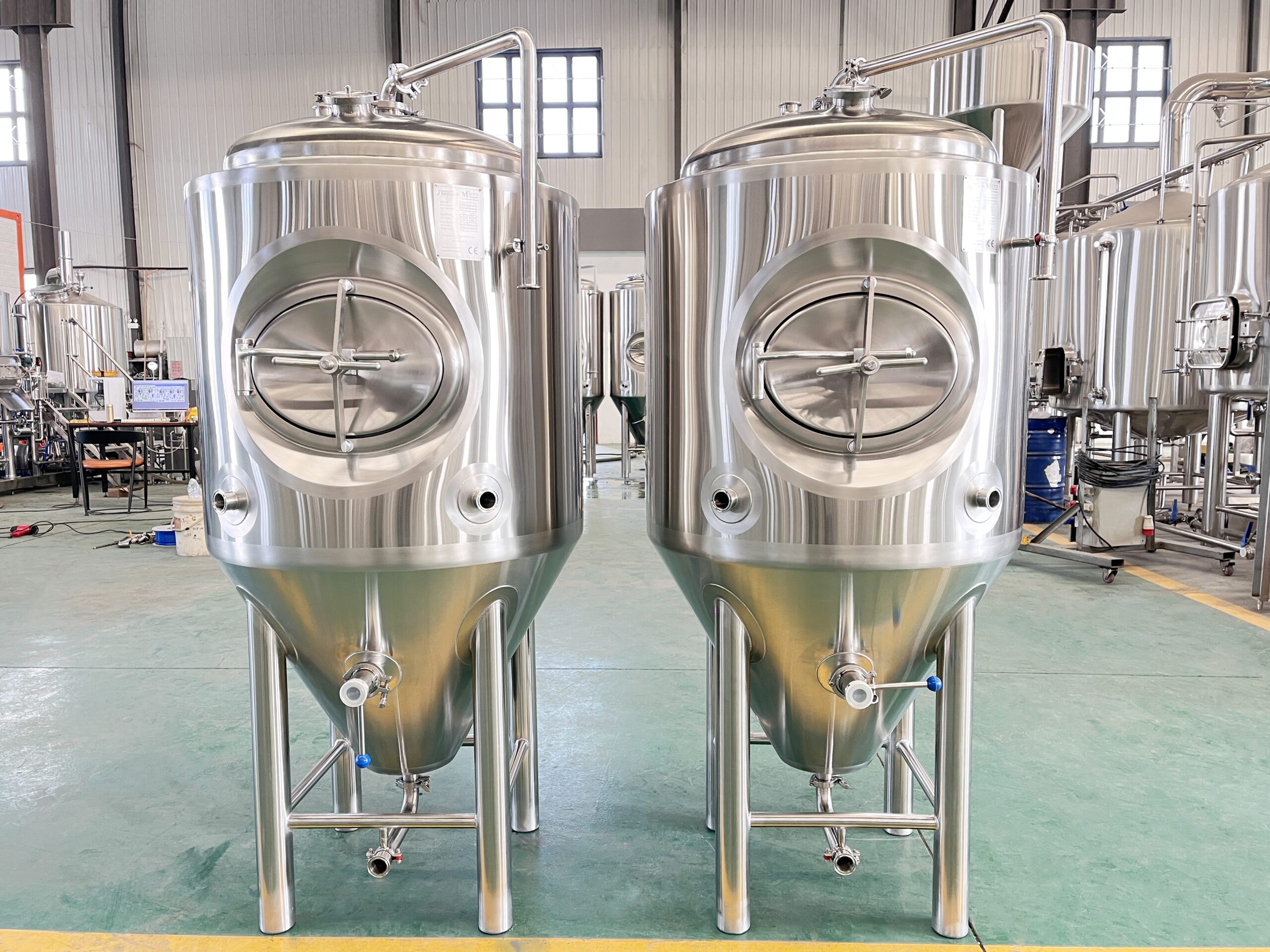
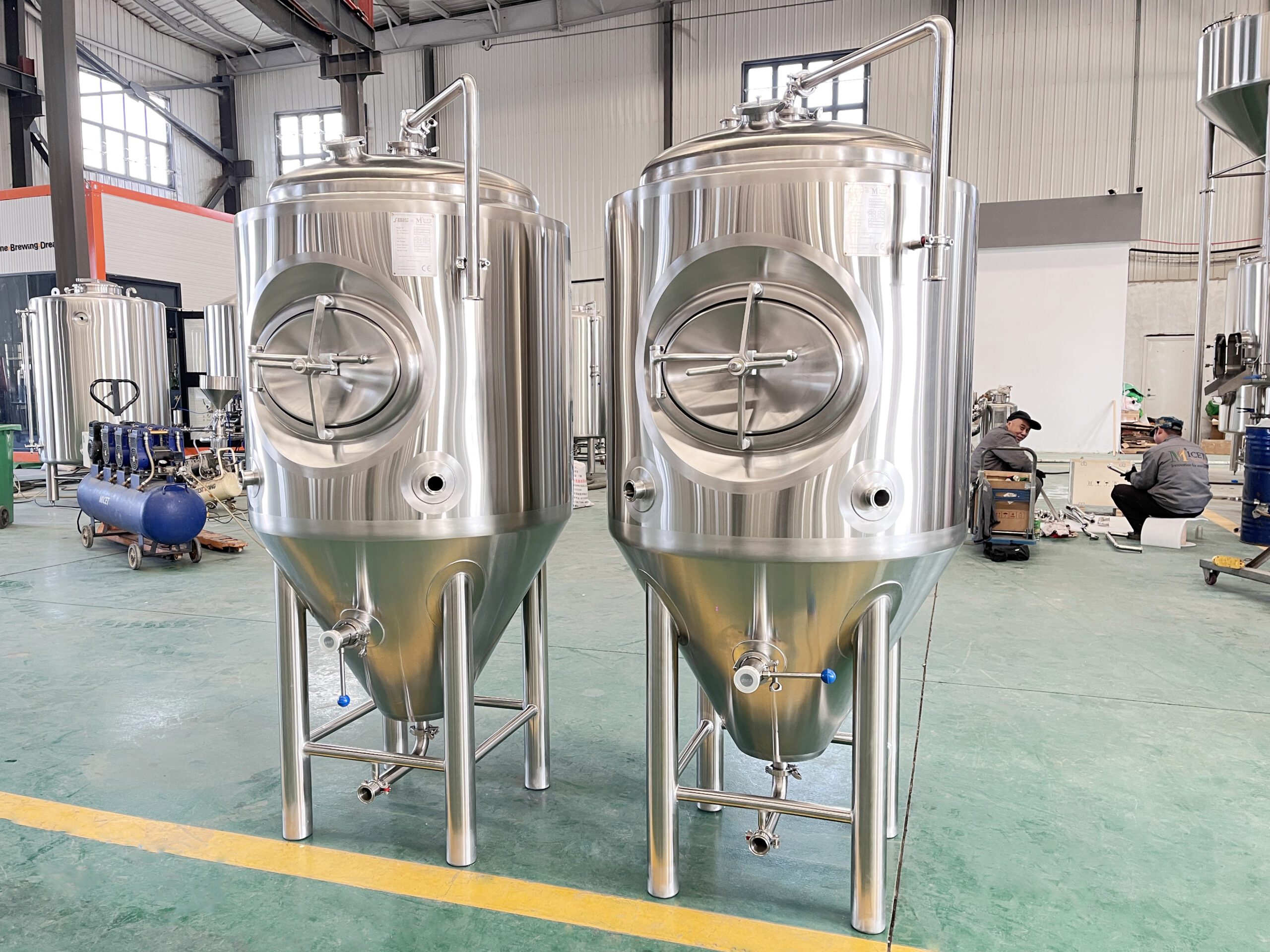
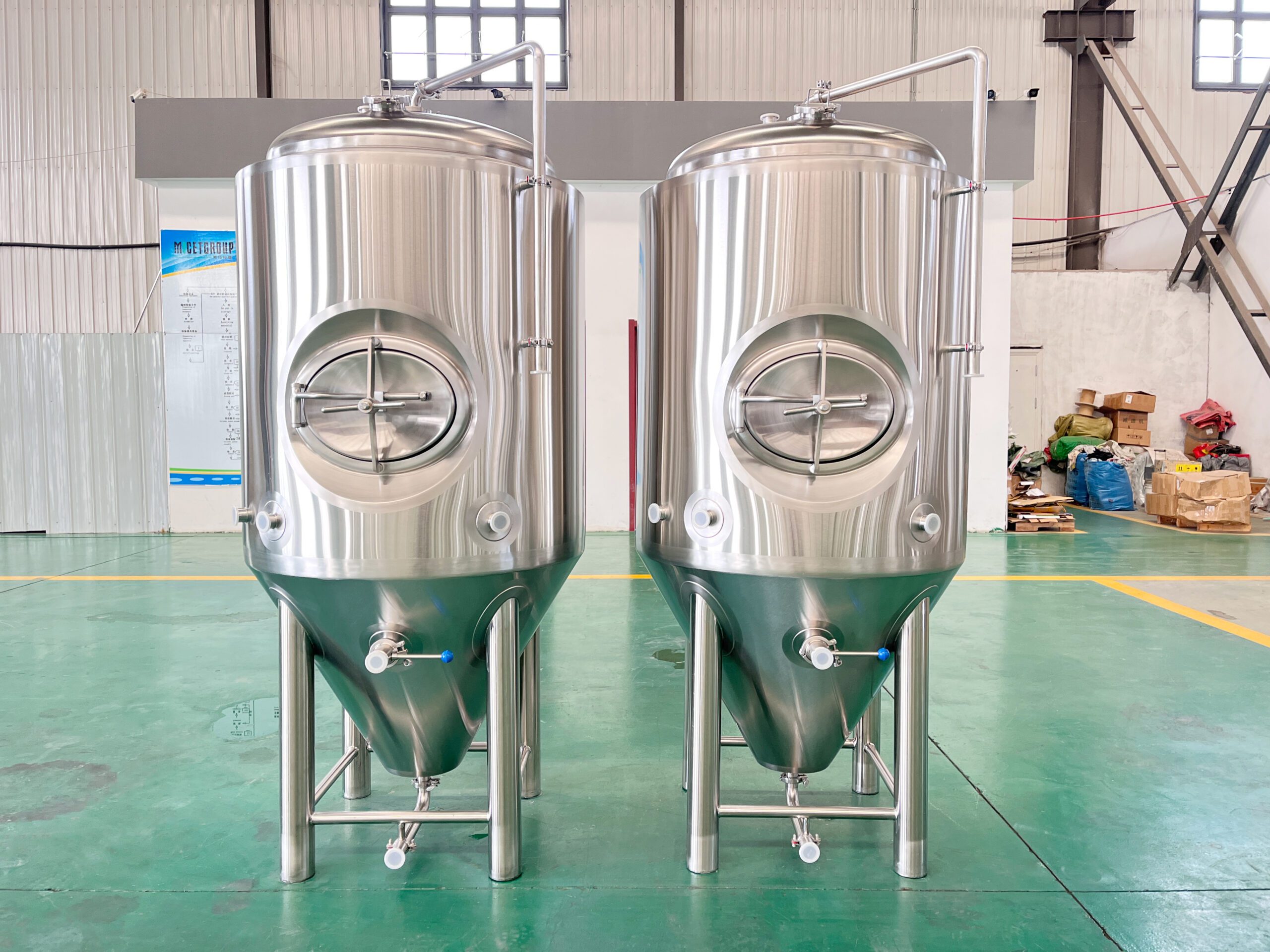
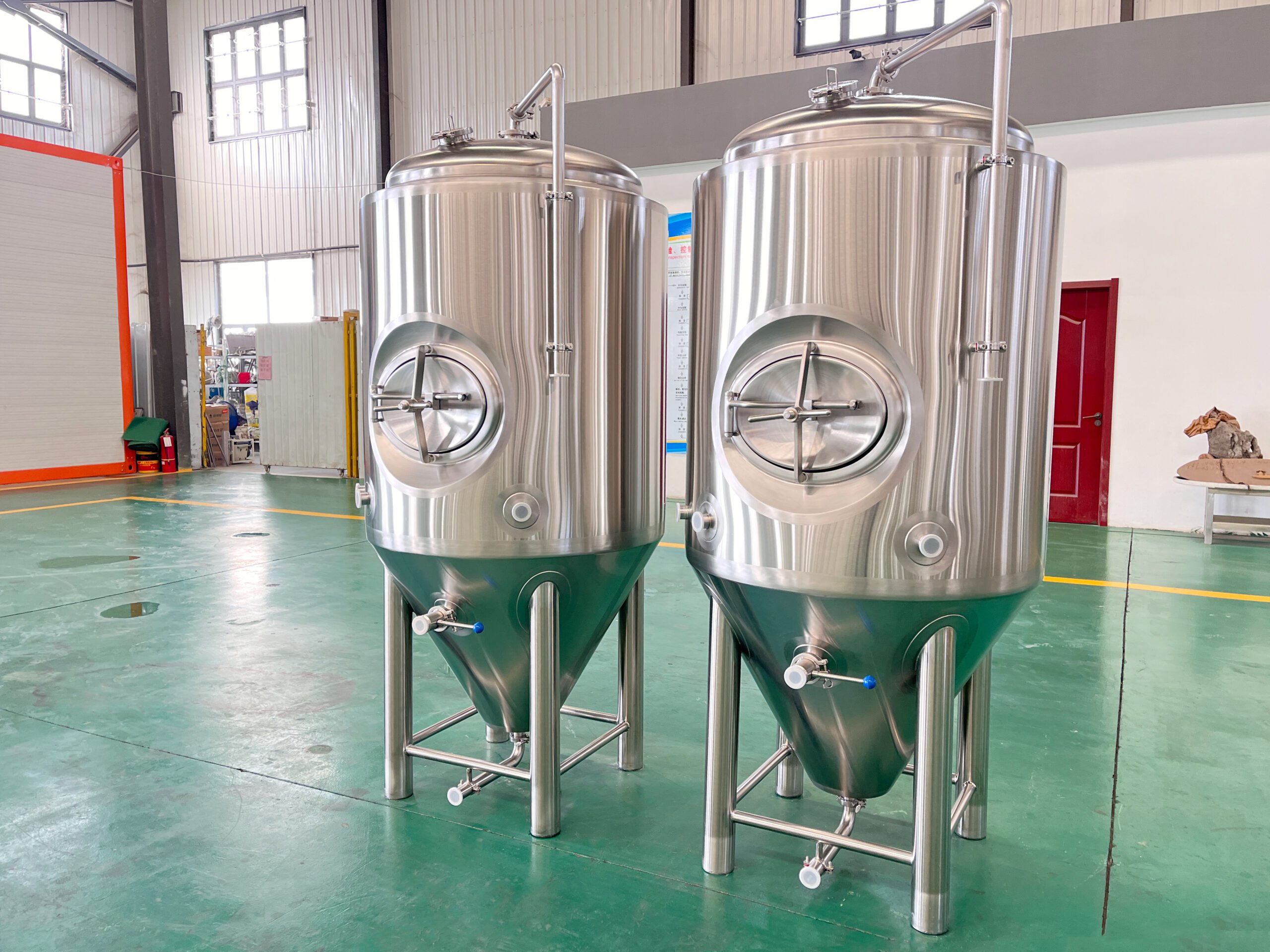
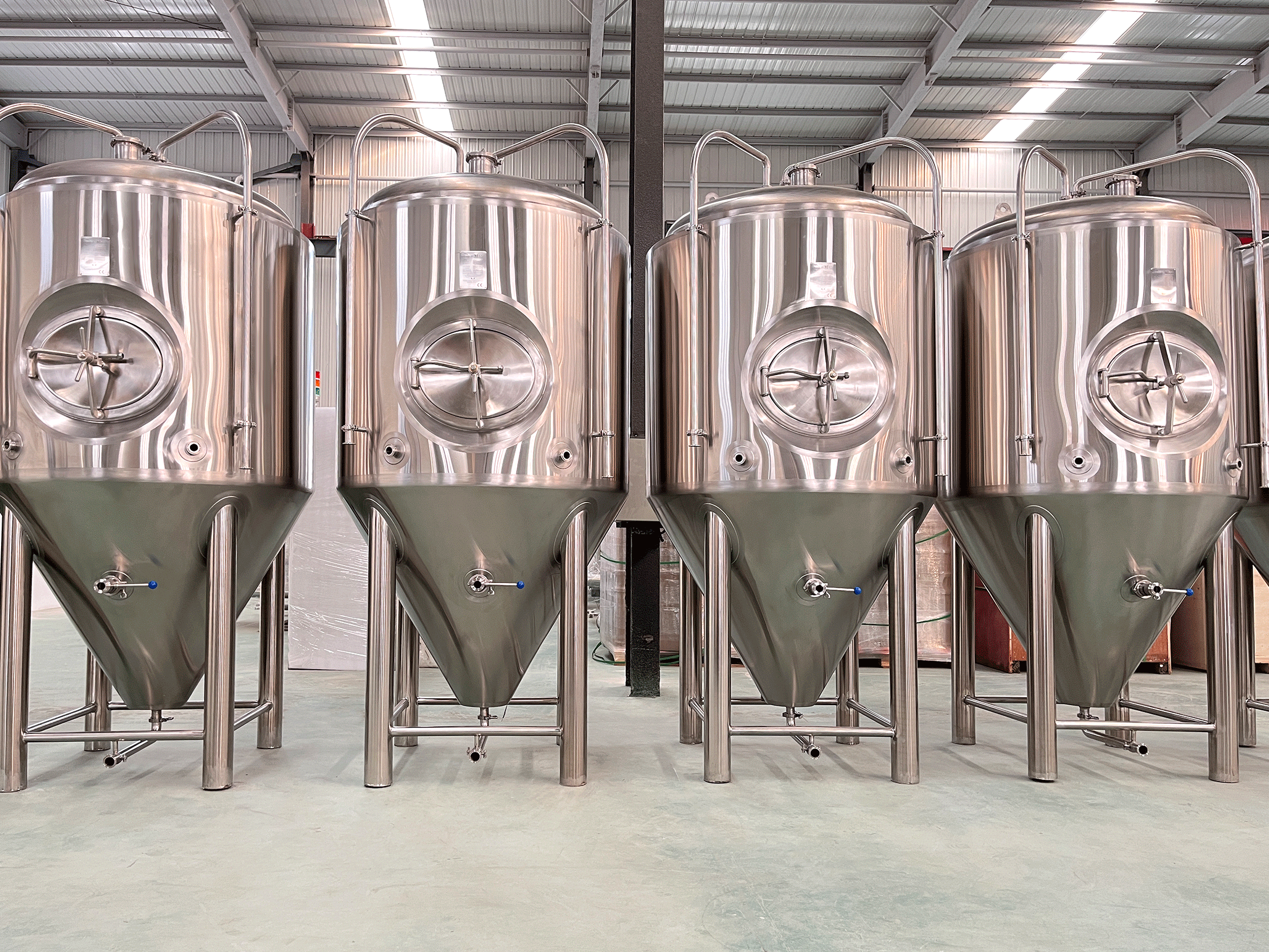
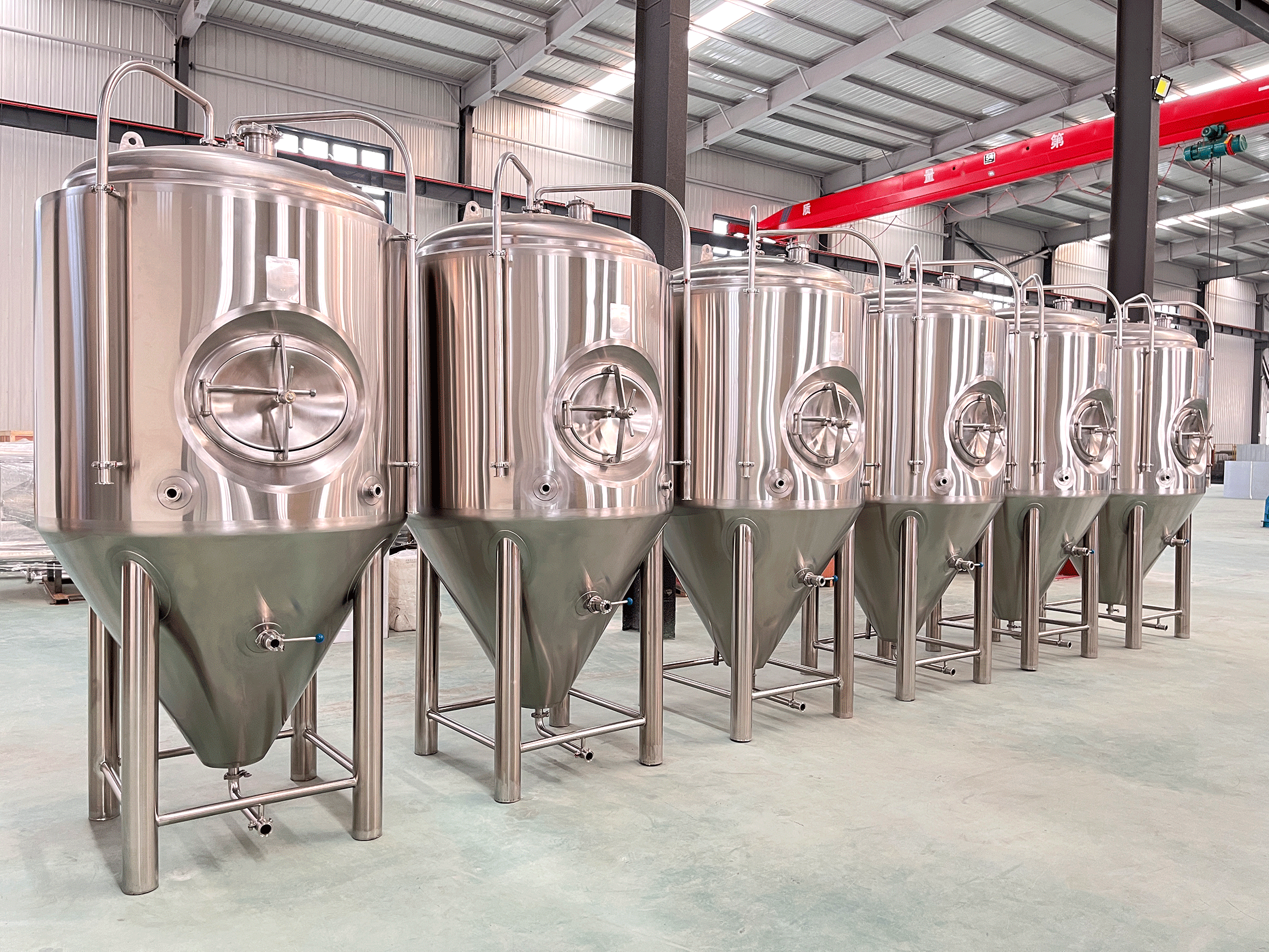
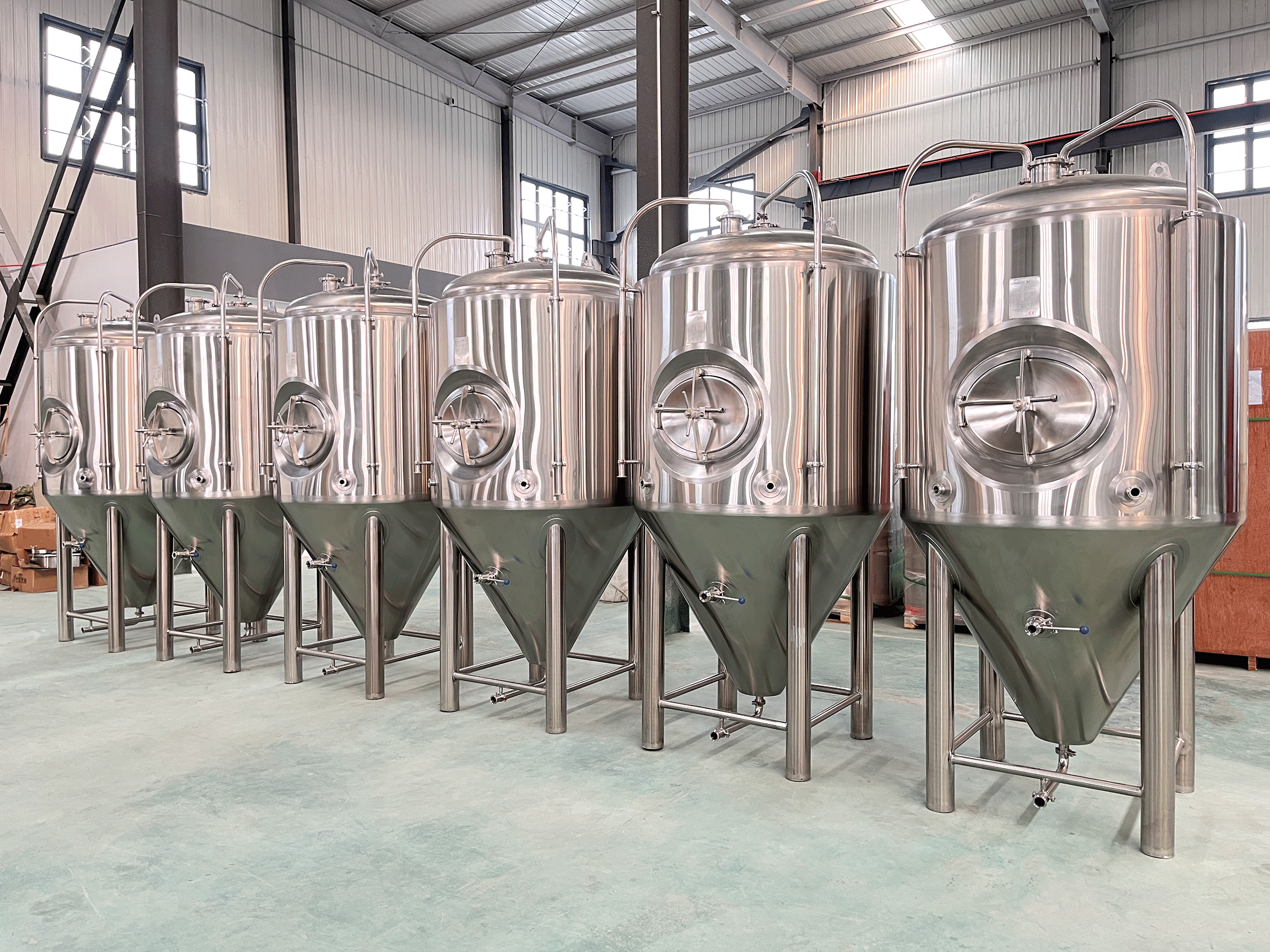
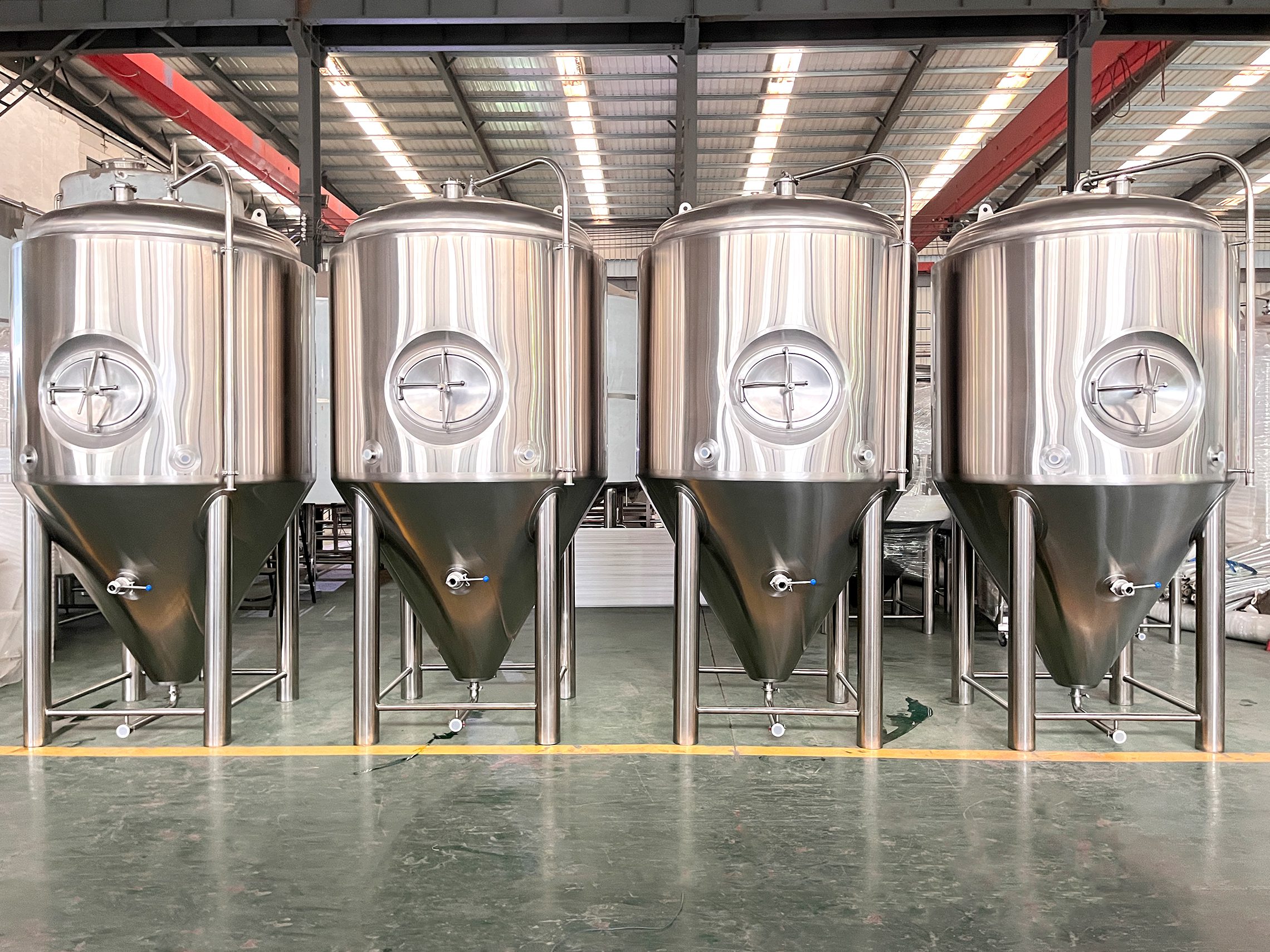
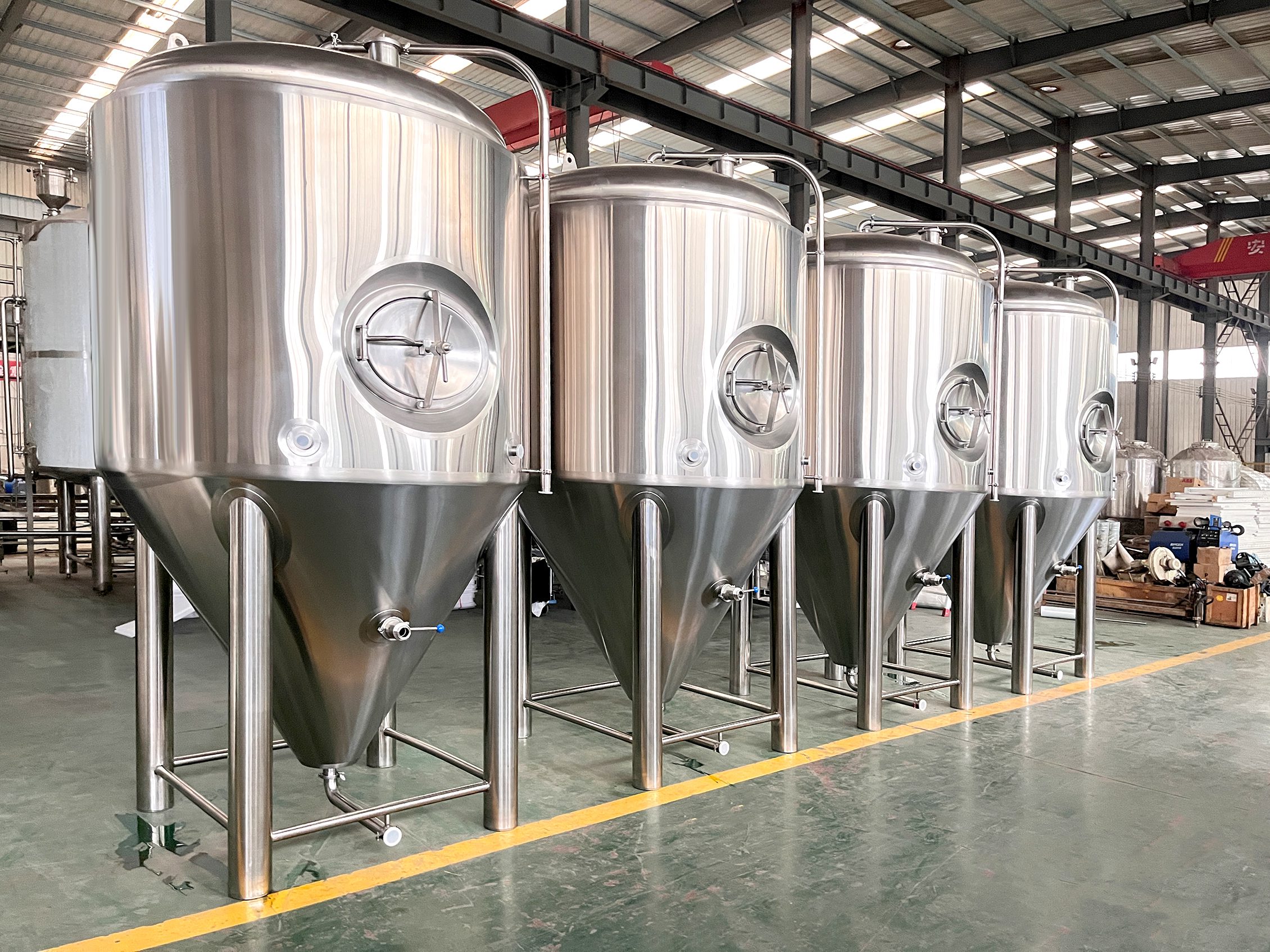
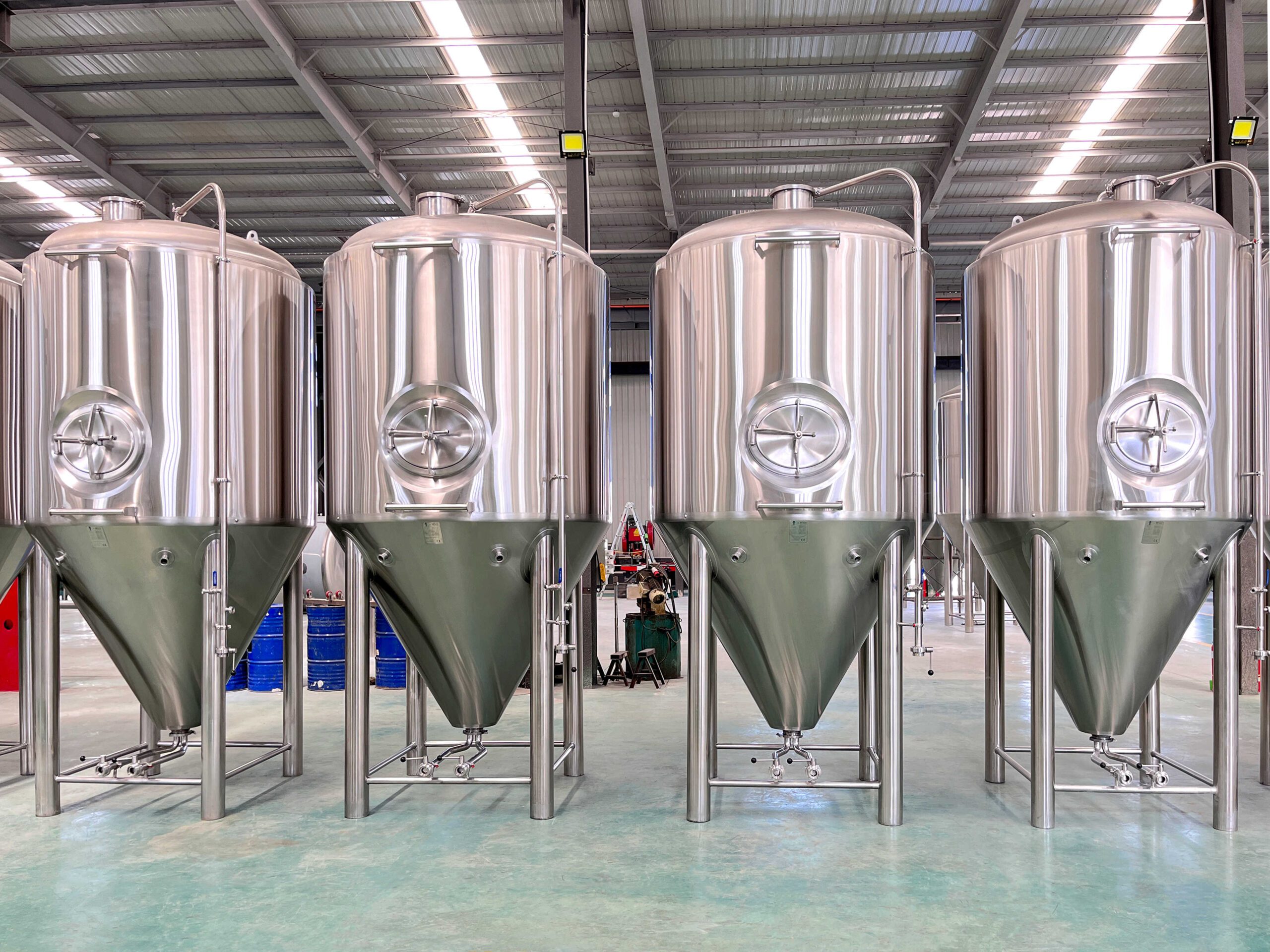
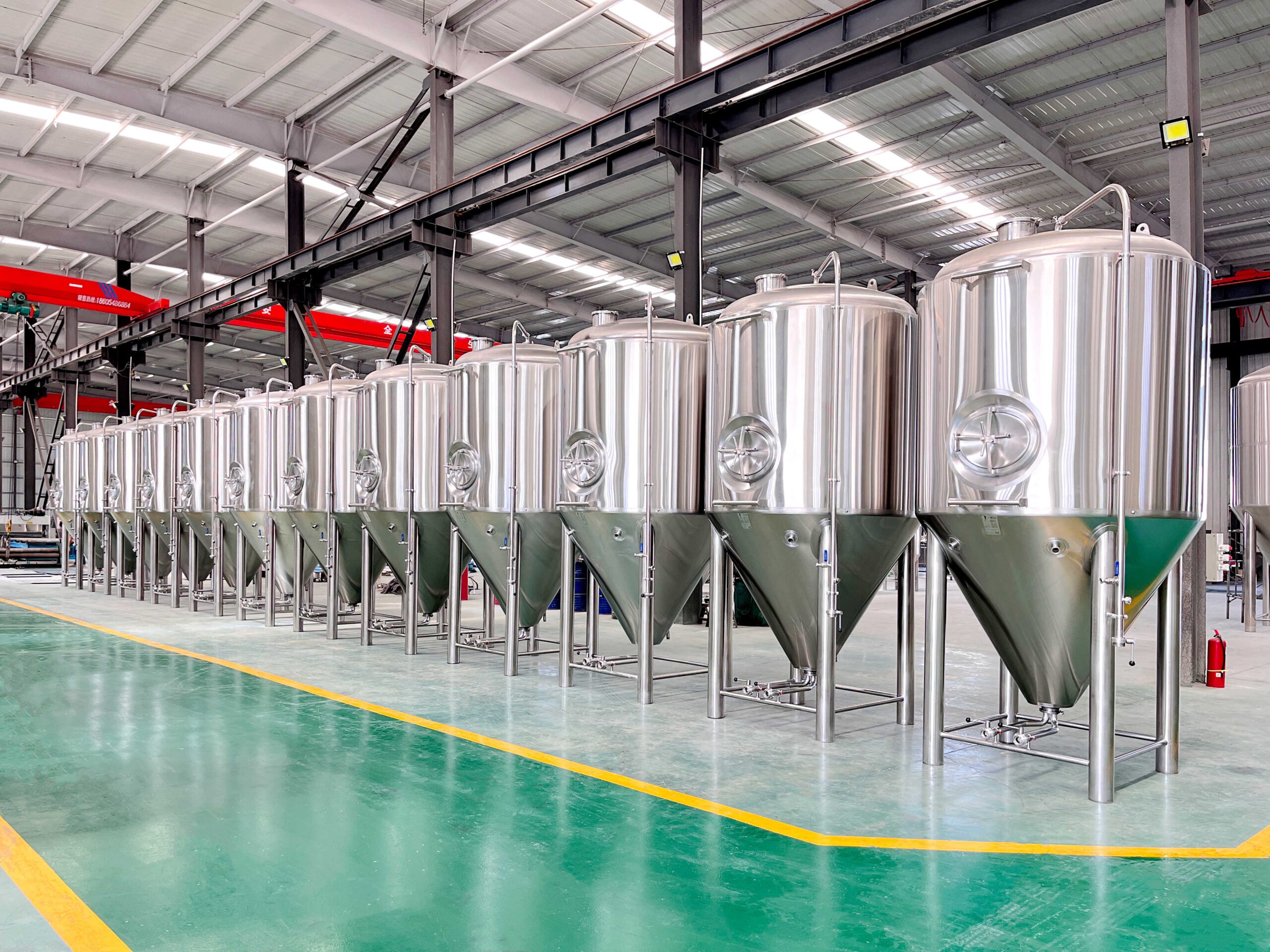
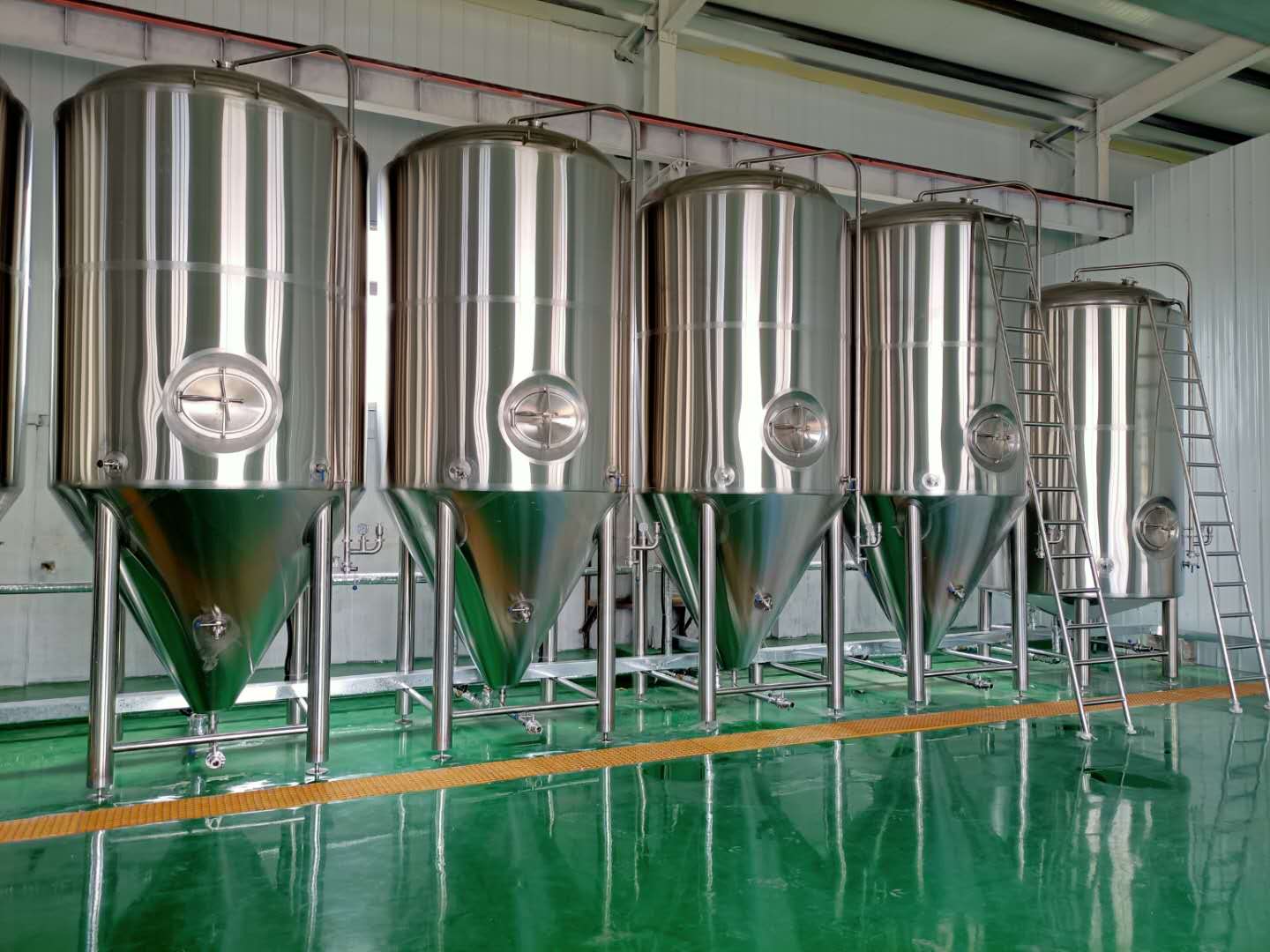
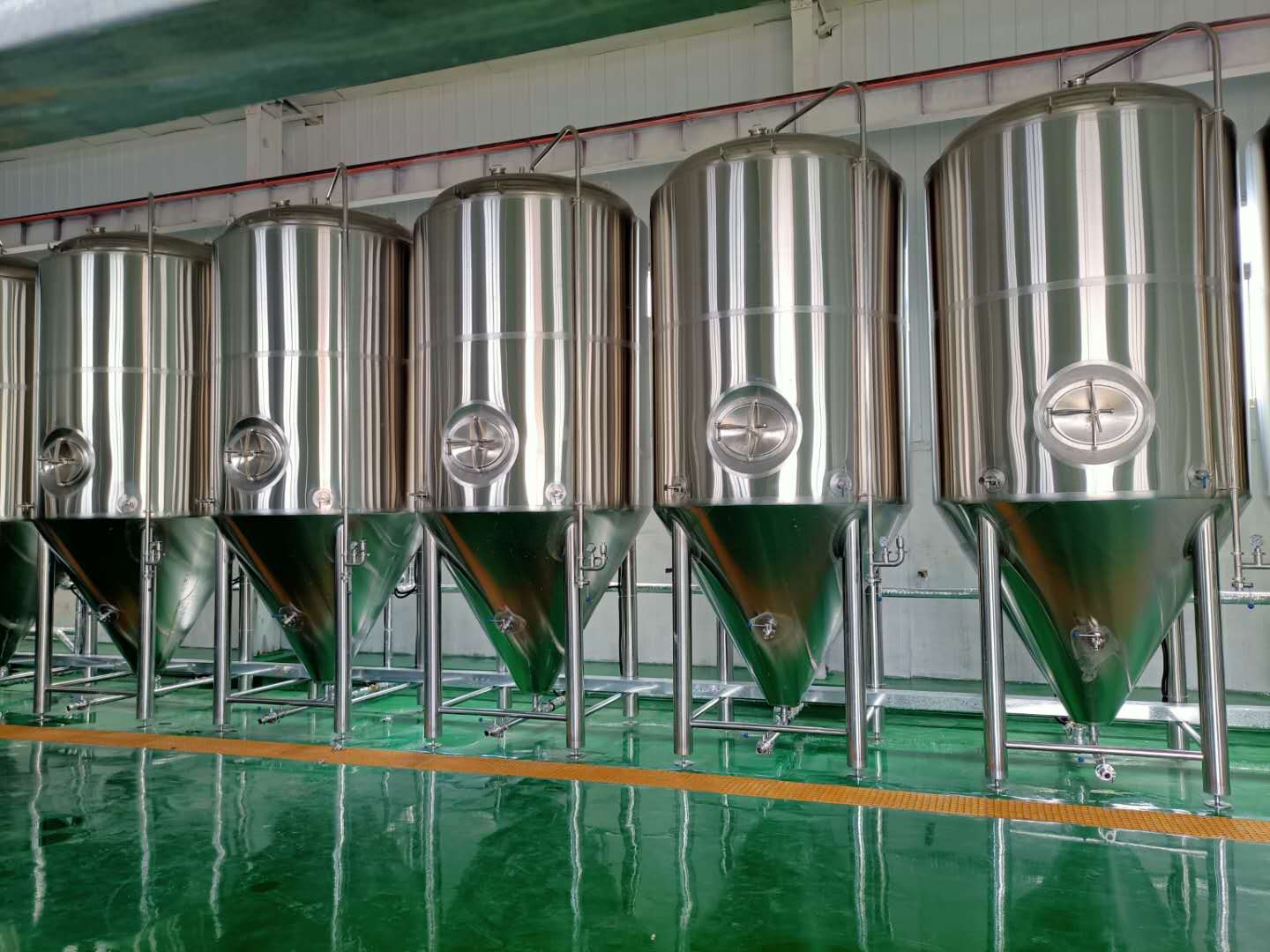
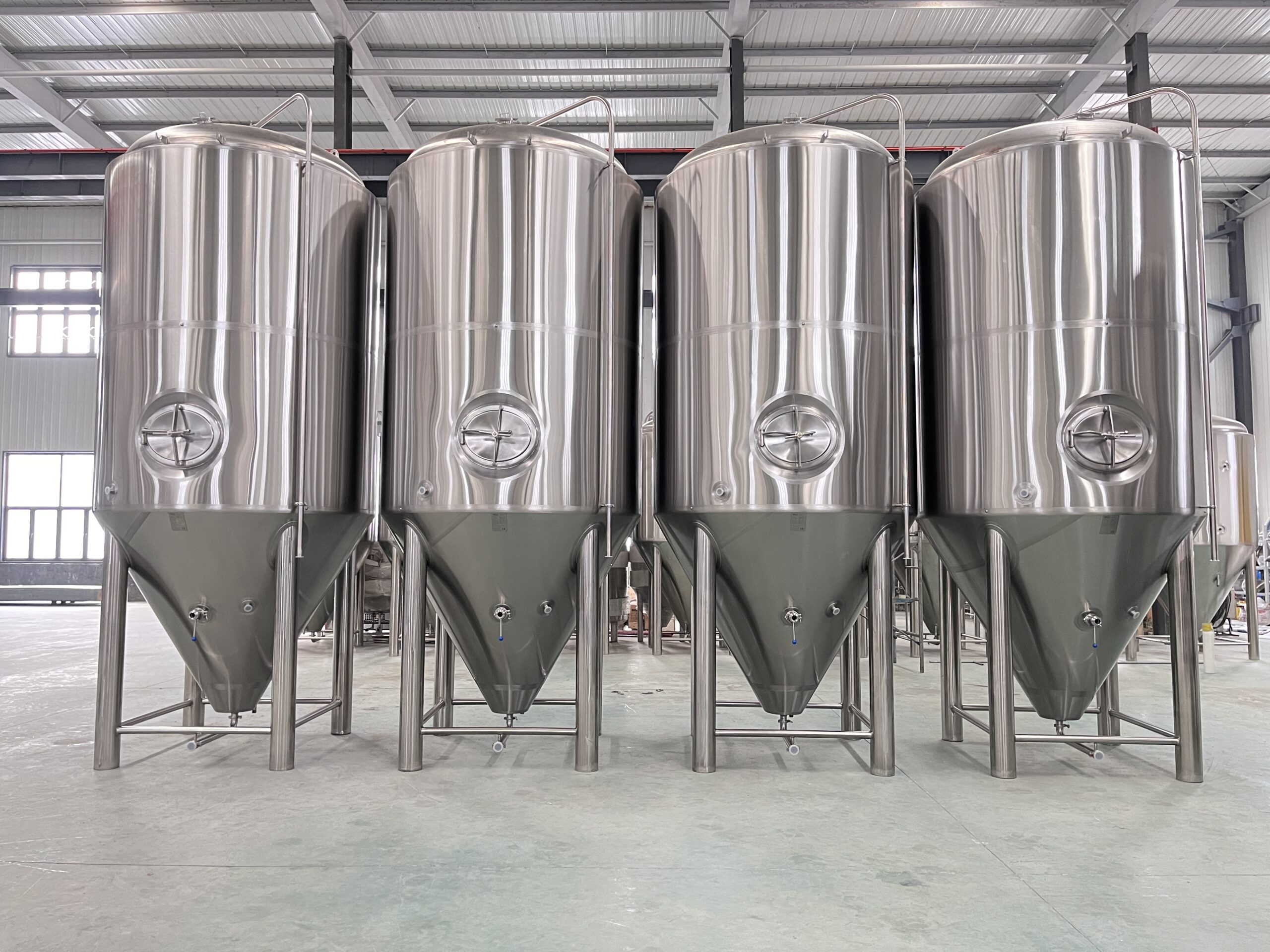
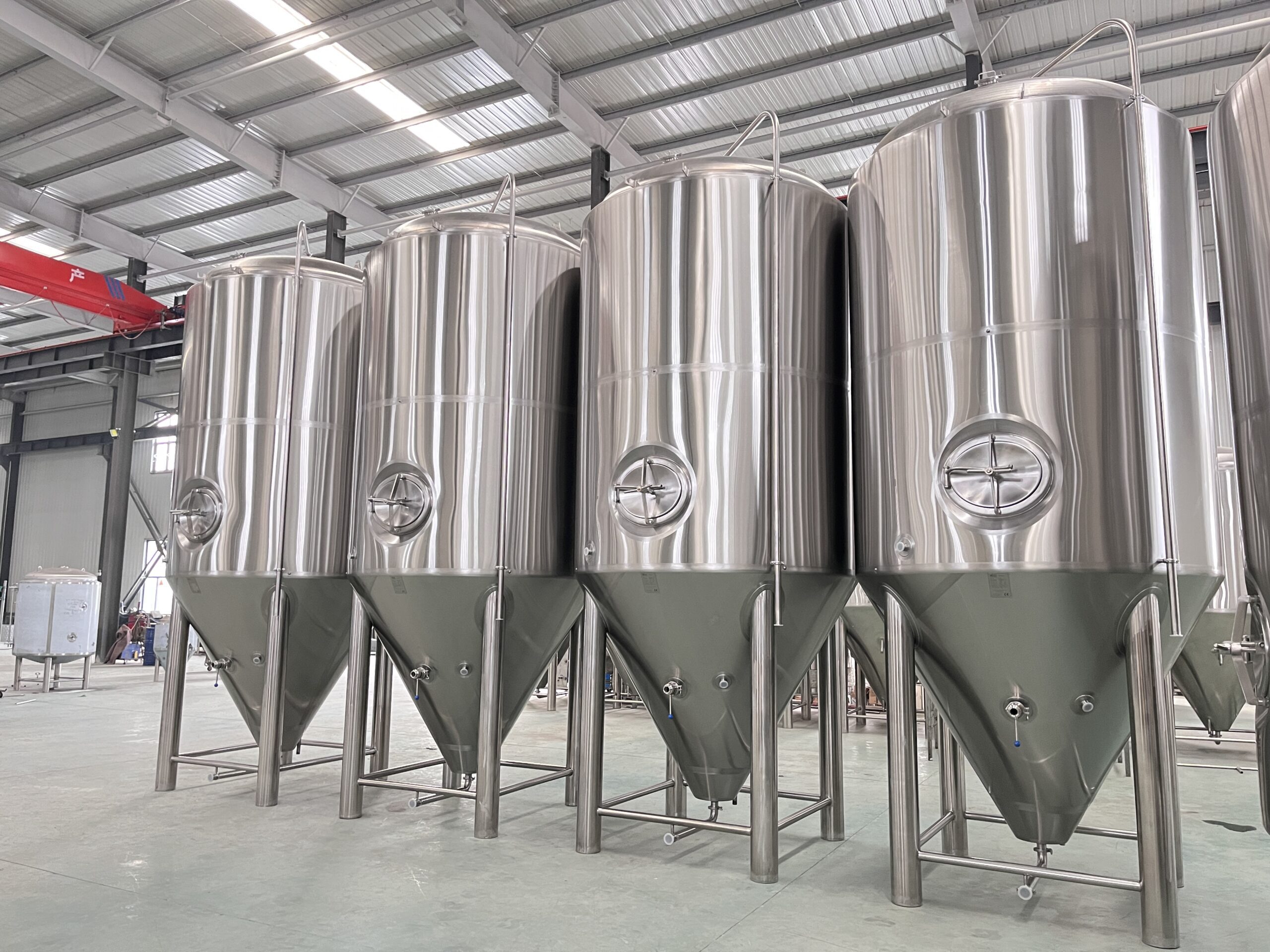
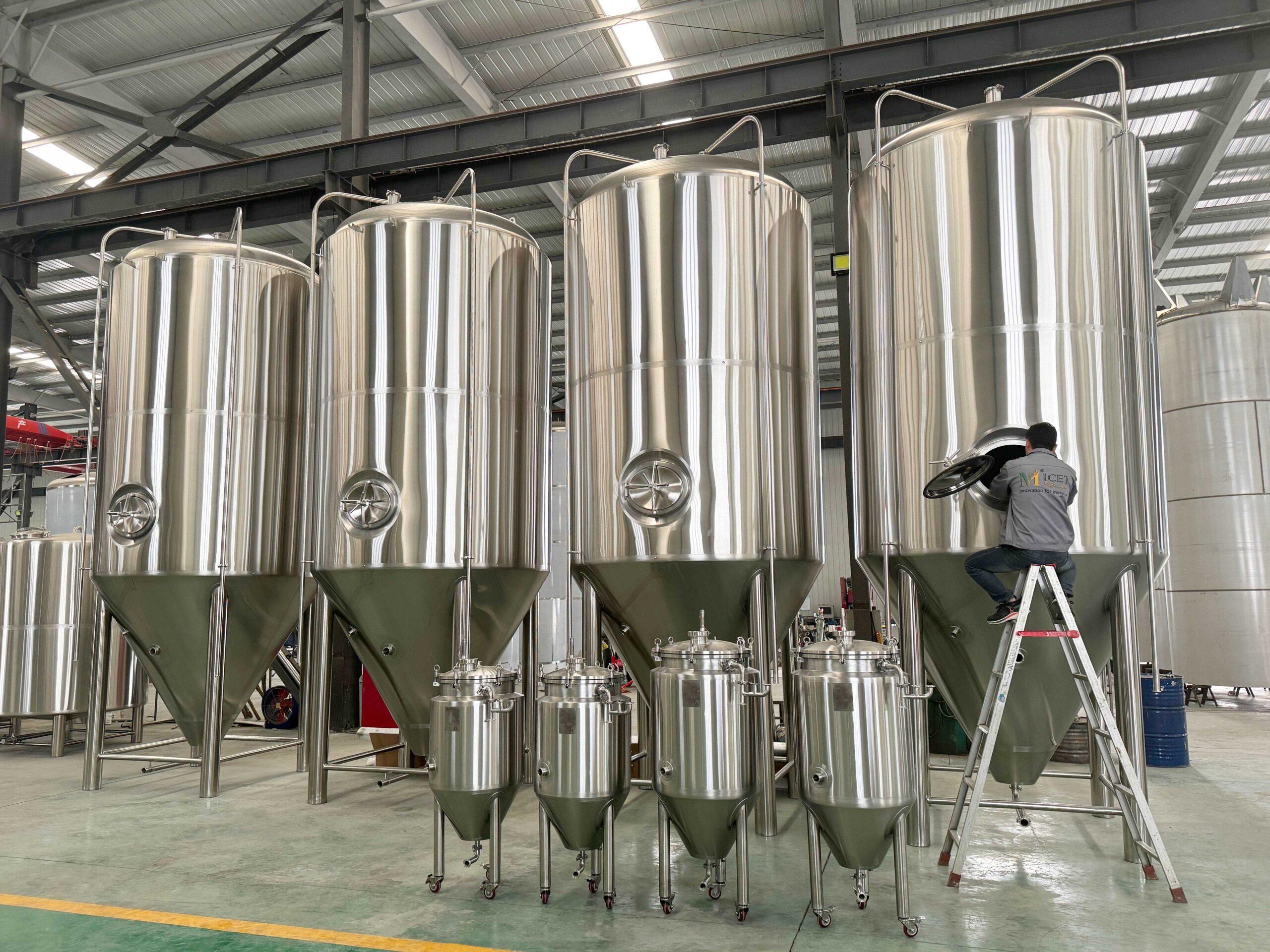
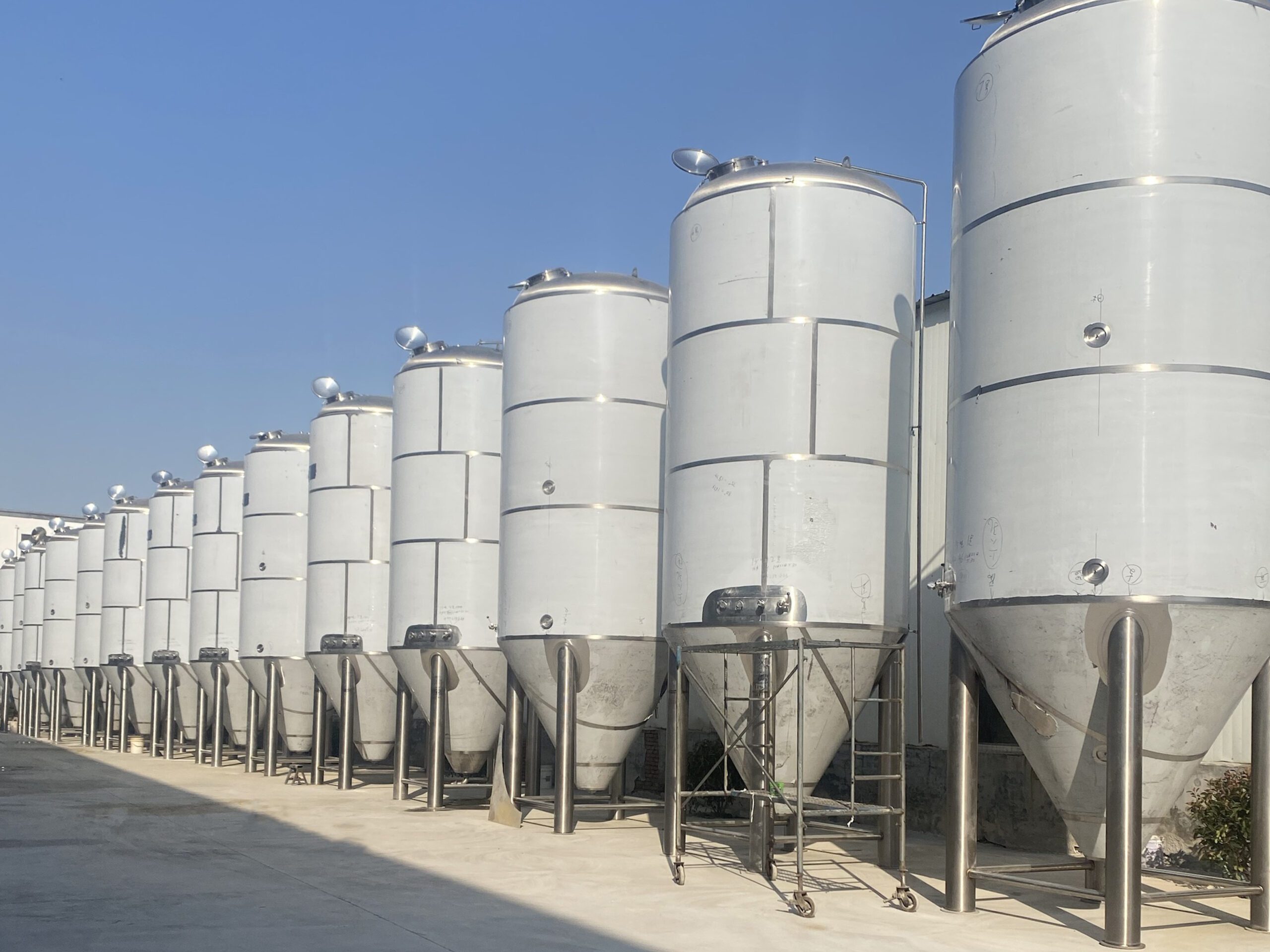
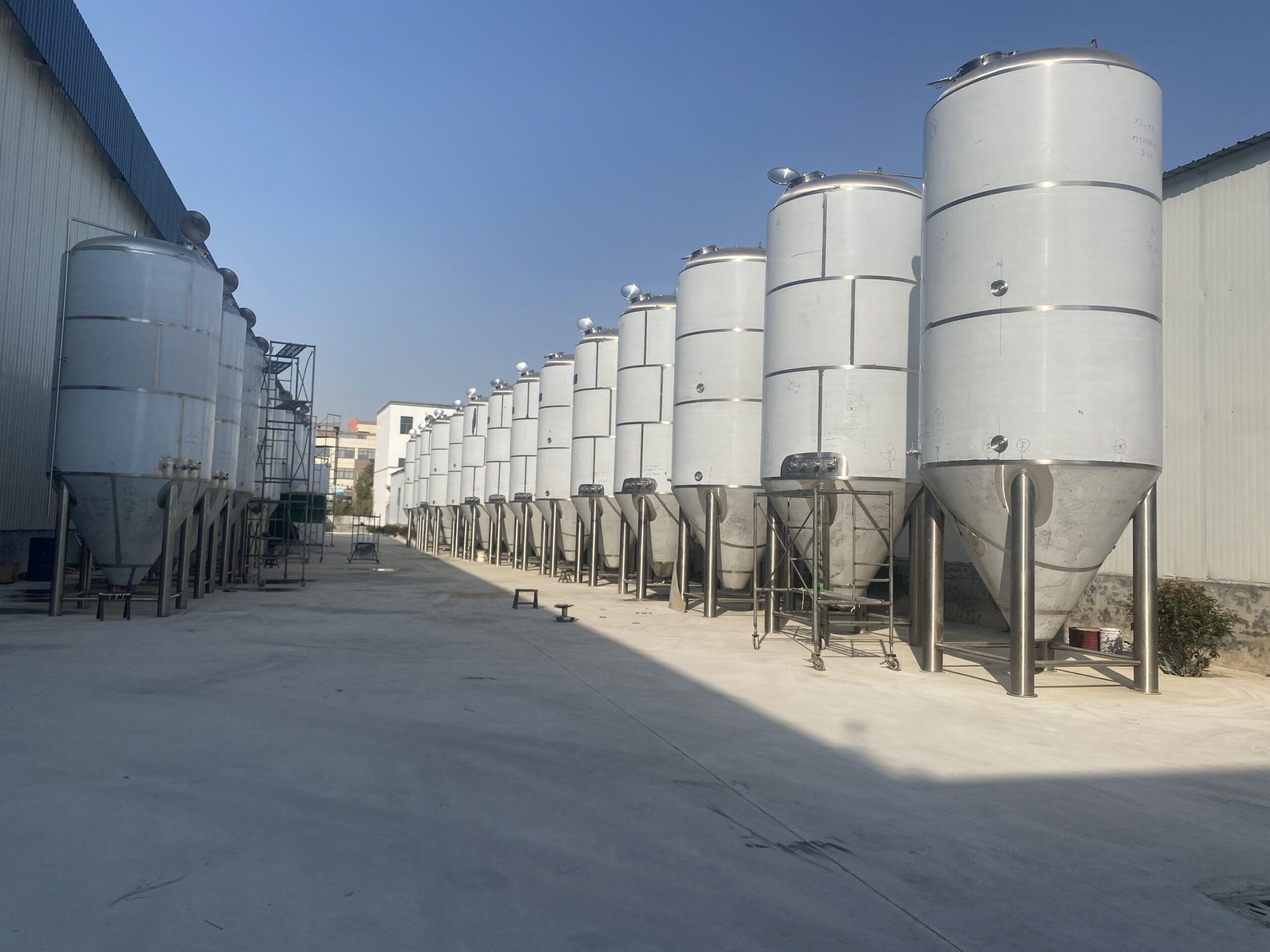
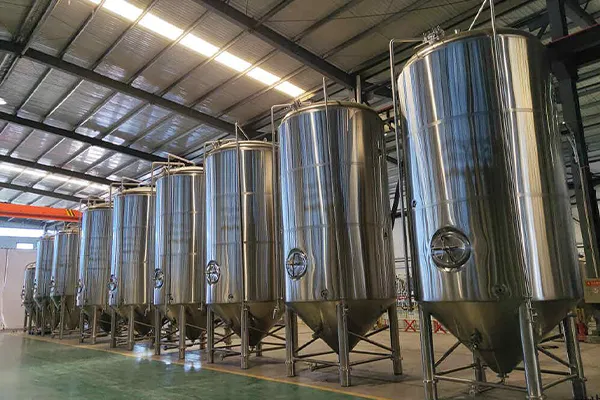
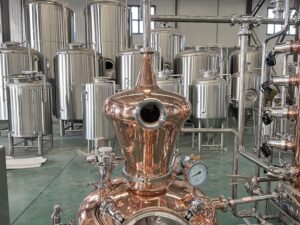
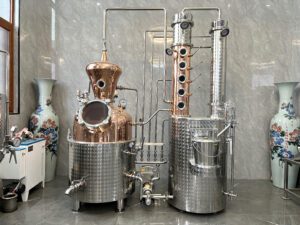
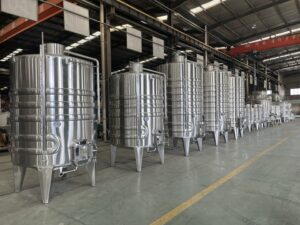
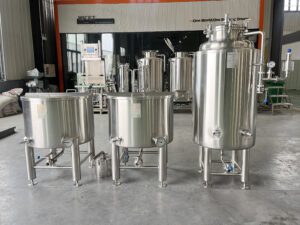
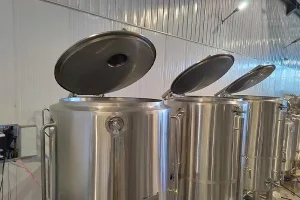
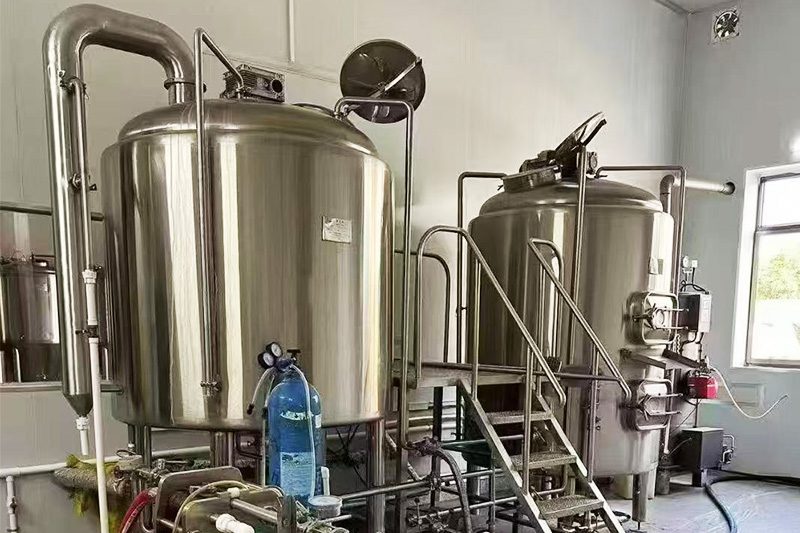
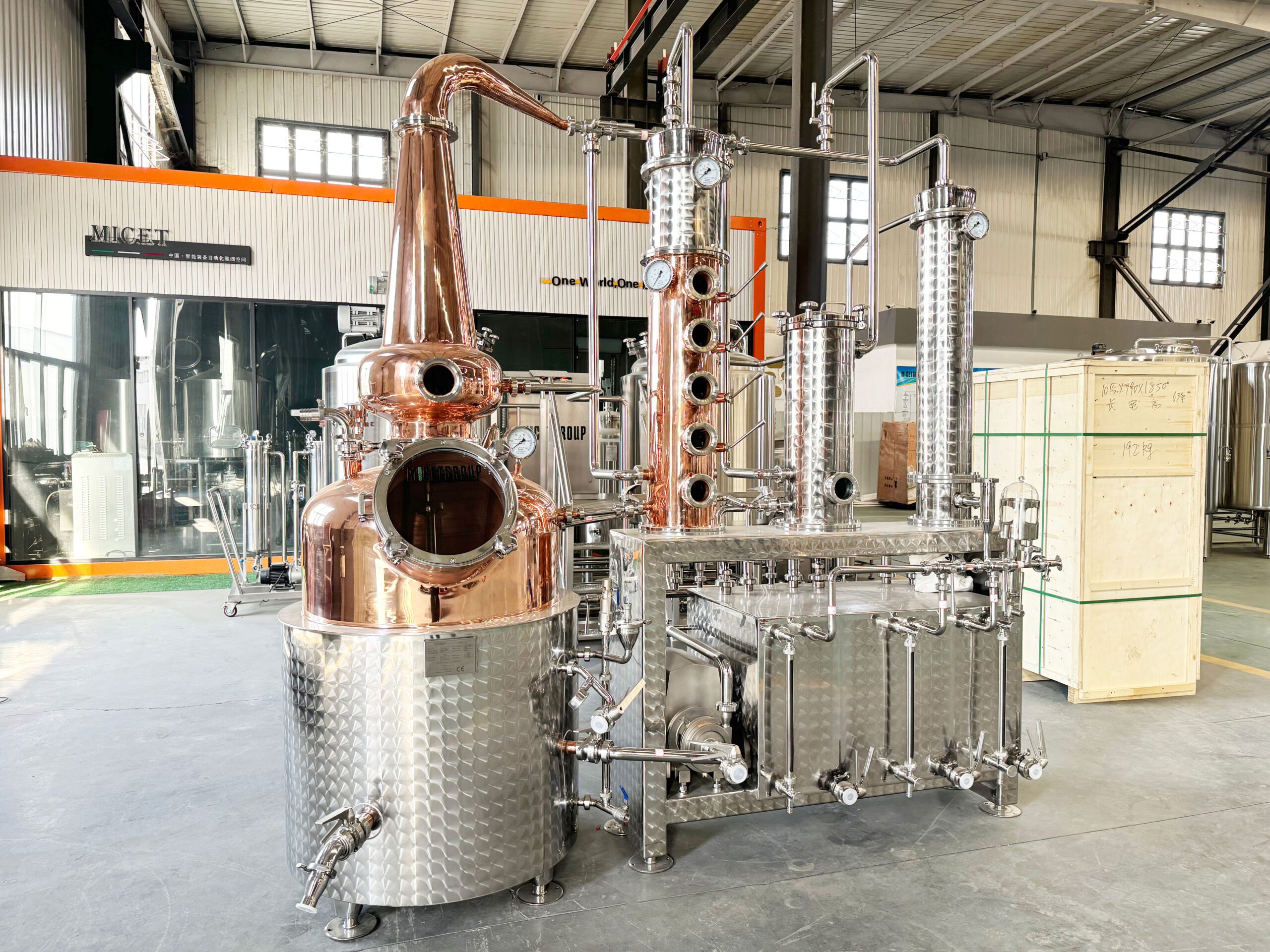
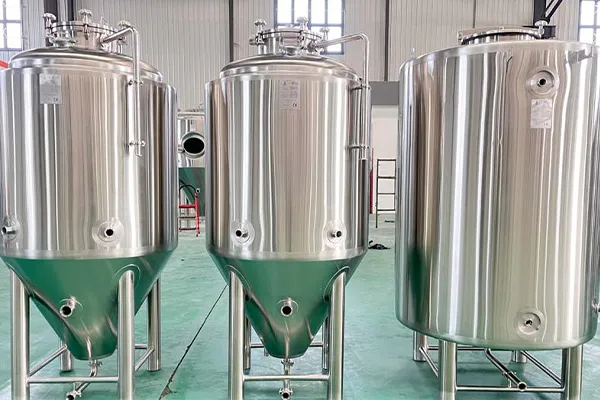
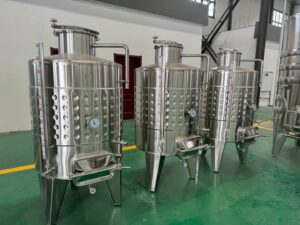
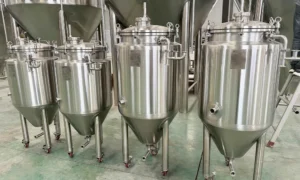
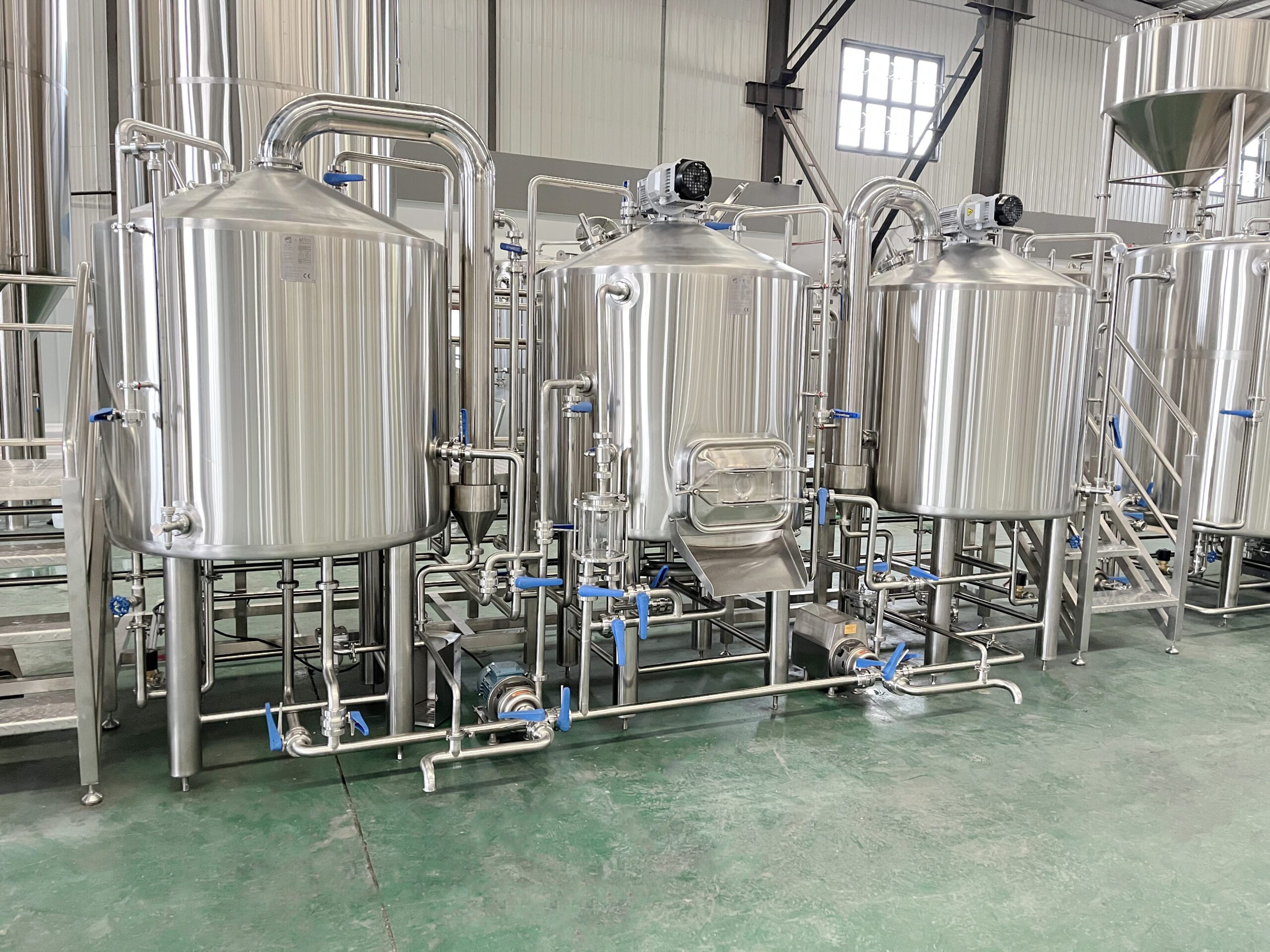
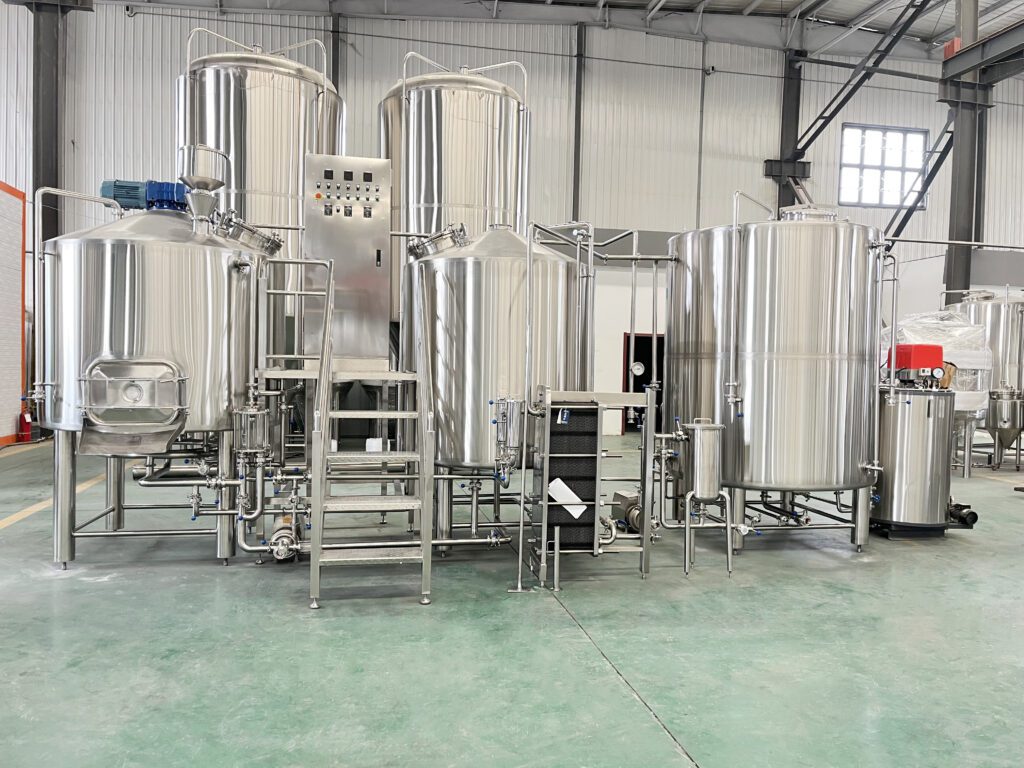
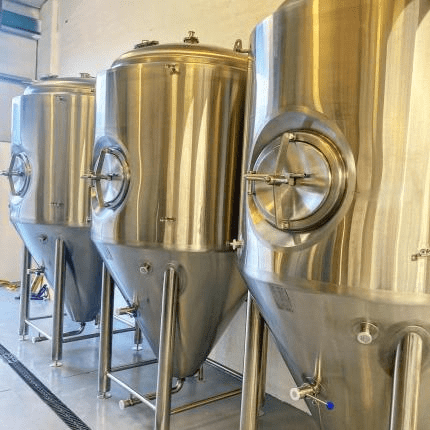
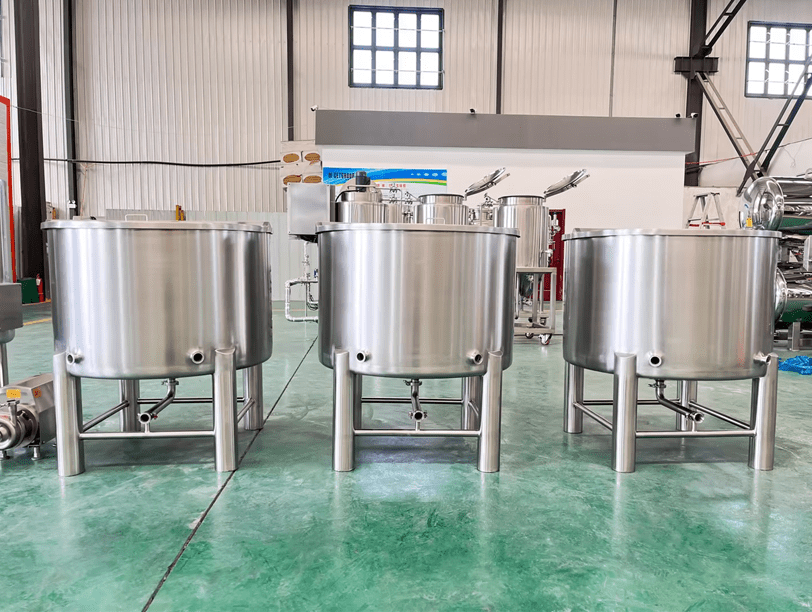
Choose from a wide range of capacities to match your brewhouse size, number of SKUs and production plan.
300L Used Fermentation Tank
Compact 300L stainless steel fermentation tank for pilot brewing, test batches or small kombucha / cider lines, pressure-tested and internally cleaned before shipment.
500L used fermentation tank suitable for nano breweries and restaurant breweries, with stainless-steel construction and optional cooling jacket for controlled fermentation.
1000L pre-owned fermentation tank for microbreweries and kombucha producers, supplied with basic fittings and inspected welds, ideal for small commercial production.
2000L used fermentation tank for growing craft breweries, with jacketed cooling and cone or dish bottom options, pressure-tested and ready for integration into your cellar.
2500L second-hand fermentation tank designed for higher-output microbreweries, supporting multiple batches per week and stable temperature control with glycol jackets.
High-capacity 5000L used fermentation tank for regional breweries or central production sites, suitable for beer, cider or other beverages, with tested pressure rating and hygienic internal finish.
This used 10T fermentation tank package uses MICET’s standard fermentation tank design and combines large-volume used fermenters with refurbished bright beer tanks.
Before any used brewery equipment is offered to you, it goes through a strict refurbishment and quality control process in our factory. This helps you avoid hidden risks, reduce installation issues and put the system back into production as quickly as possible
Inspection & Pressure Test
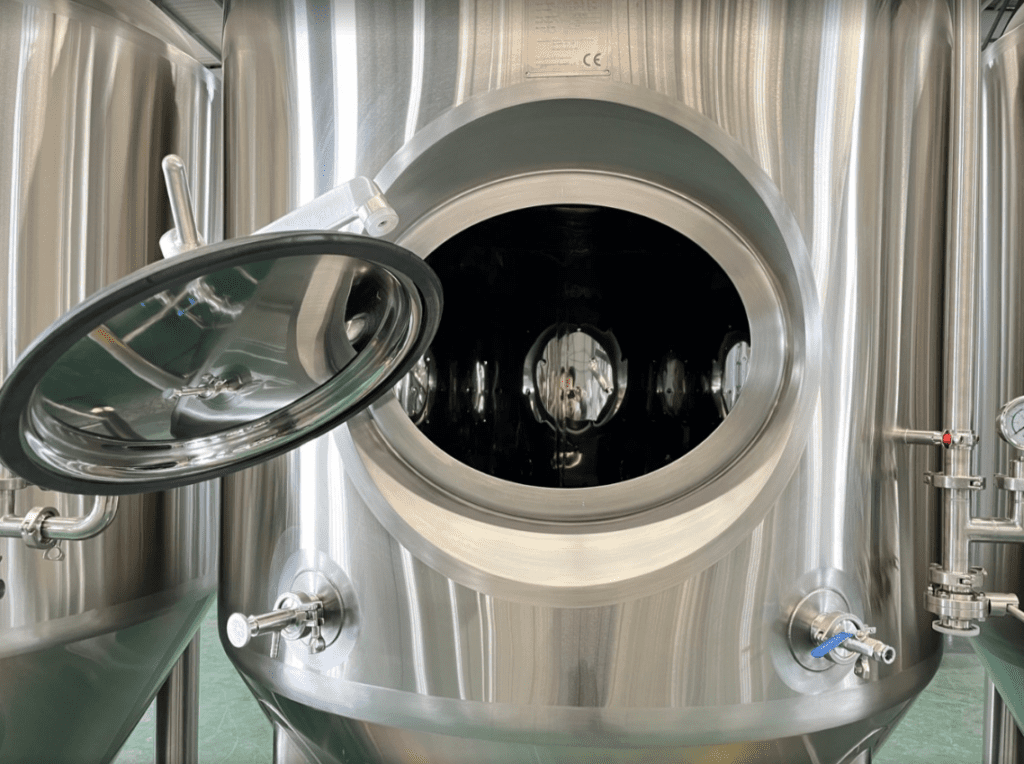
We inspect the shell, cone, legs, jackets and welds for corrosion or damage, then perform pressure and leak tests on tank and jackets to confirm safe working pressure.
Internal Cleaning & Acid Passivation
The tank interior is deep-cleaned and descaled, then acid-passivated to restore stainless-steel corrosion resistance and create a smooth, hygienic, CIP-friendly surface.
Valve & Fitting Check / Replacement
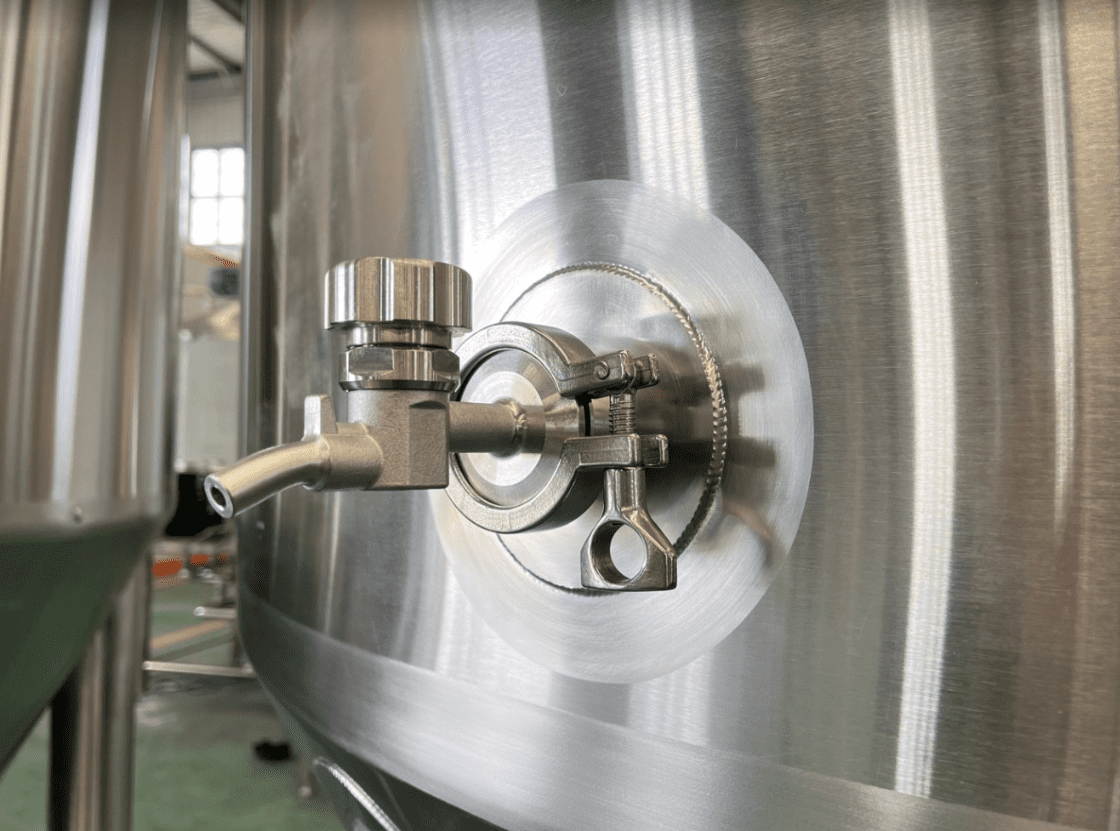
Manways, PRV, valves, gaskets, CIP spray balls and other fittings are checked; any worn or non-sanitary parts are repaired or replaced with food-grade components.
Final Inspection & Photo Report
We carry out a final visual check inside and outside the tank, then provide basic test records and photos, so you clearly see the real condition before packing and shipment.
Hybrid Fermentation Cellars – Used Tanks with New Cooling & CIP
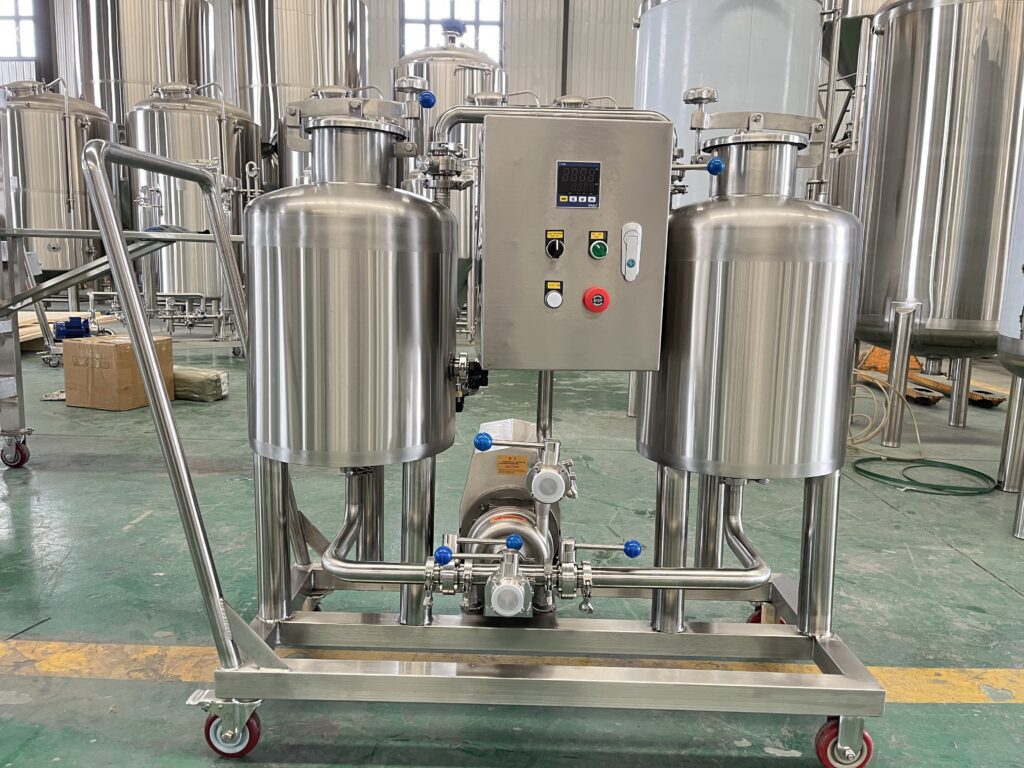
In many cases, the best solution is used fermentation tanks or unitanks combinato con new glycol chillers, pump skids, manifolds and CIP systems. We refurbish the tank body, jackets and fittings, then engineer new cooling, valves and cleaning loops around them. This keeps your main cellar volume cost-effective, while hygiene, temperature control and maintenance are handled by reliable new equipment.
Parlateci del vostro progetto e i nostri ingegneri progetteranno una soluzione ibrida nuovo + usato su misura per voi.
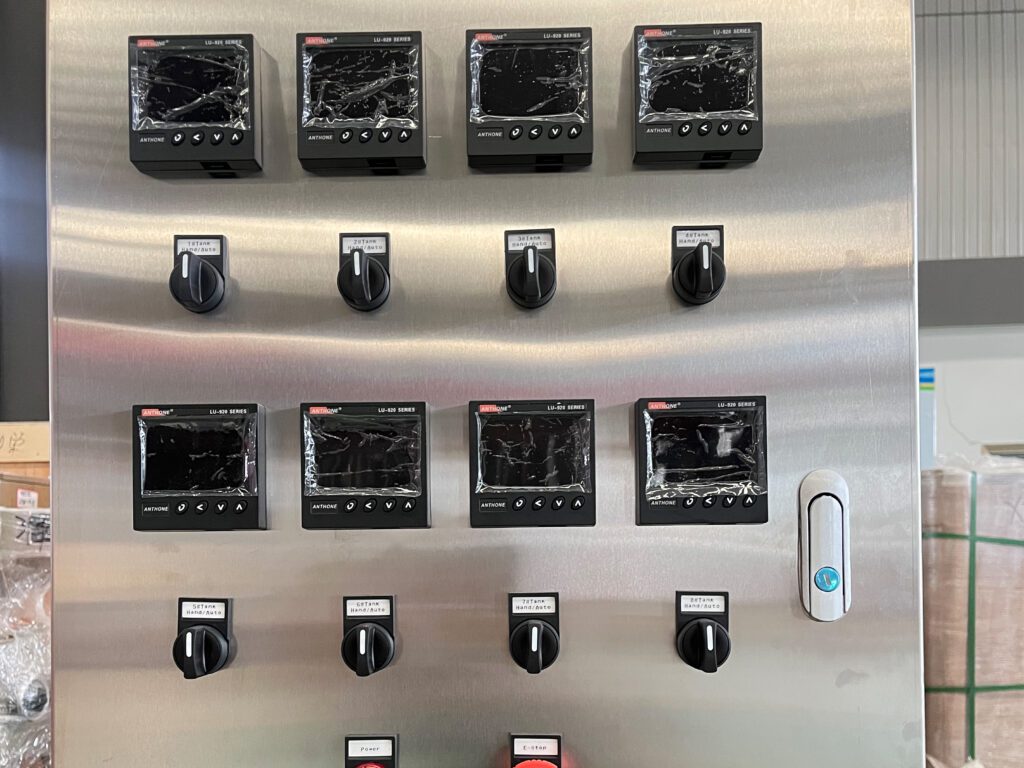
Temperature sensors, basic control panels, PLC integration options
CIP & Cleaning
CIP spray balls, CIP return connection, CIP set integration
Mechanical Modifications
Add/remove nozzles, change leg supports, adjust outlet height, add ladders or platforms
Customer Cases
MICET has performed actual installations in more than 100 countries—customized brewery, kombucha, distillery, winery systems, fermentation tanks, and stainless steel tanks.
Explore how we design, manufacture, install, and support turnkey projects from nano to commercial scale.
What Distillery Equipment Is Used to Distill Spirits? A Complete Guide to Commercial Distilling Equipment
Starting a distillery without the right equipment can waste raw ingredients, reduce spirit quality, and create serious safety risks. Distillation needs more than a still. A complete distillery needs fermentation, heating, vapor control, condensation, storage, cleaning, testing, and packaging equipment.
A distillery usually uses mash equipment, a mash tun, fermenter, pot still or column still, condenser, reflux system, receiving tank, storage tanks, filtration equipment, proofing tools, CIP cleaning equipment, pumps, valves, piping, and bottling equipment. Commercial distilling also requires safety controls, ventilation, temperature control, hygienic design, and legal compliance.
Sintesi
Distillery equipment is not only the still. A complete system includes mash preparation, fermentation, distillation, condensation, spirit collection, storage, filtration, proofing, cleaning, and packaging.
Distillation separates liquid mixtures by vapor behavior, then condenses vapor back into liquid distillate.
In the United States, a distilled spirits plant can produce, bottle, process, rectify, or store beverage spirits such as vodka, whiskey, gin, brandy, rum, and liqueurs, but approval and compliance are required.
Ethanol vapor and flammable liquid handling require serious engineering controls, including controlling vapor release and eliminating ignition sources.
Copper contact is often used in whiskey distilling because copper surfaces can help reduce sulfur compounds in spirit production, although the effect depends on still design and contact area.
The right distillation equipment depends on spirit type, batch size, heating method, hygiene requirements, local regulations, and the size of your business.
Schema dell'articolo
What equipment is used in any distillery?
What does a still do in the distillation process?
Pot still vs column still: which distillation equipment is right?
Why are mash tun, fermentation tank, and fermenter important?
How do condenser, vapor path, and reflux affect distillate quality?
What storage tanks, proofing tools, and filtration equipment are needed?
What cleaning equipment supports hygiene within a distillery?
What equipment is needed for whiskey, vodka, gin, brandy, and essential oils?
What safety and compliance equipment should commercial distilling projects consider?
How should B2B buyers choose commercial distillery equipment?
What Equipment Is Used in Any Distillery?
The basic equipment in any distillery includes raw material handling tools, mash equipment, fermentation tanks, a still, condenser, receiving tank, storage tanks, pumps, valves, piping, cleaning equipment, testing tools, and packaging equipment. The exact system depends on whether the distiller makes whiskey, vodka, gin, brandy, rum, neutral spirits, or other distilled spirit products.
A simple distillery flow looks like this:
Process Stage
Main Equipment Used
Raw ingredient preparation
Grain mill, fruit crusher, sugar mixing tank, water treatment
Mash preparation
Mash tun, cooker, agitator, heating system
Fermentazione
Fermenter, cooling jacket, yeast handling, temperature control
Distillazione
Pot still, column still, heating system, reflux system
Condensation
Condenser, cooling water system, distillate outlet
For commercial projects, I do not recommend choosing equipment piece by piece without a production plan. Distilling alcohol involves heat, ethanol vapor, pressure, cooling, cleaning, and regulation. The equipment should be planned as one system.
As a professional brewery, distillery, winery, kombucha, and beverage equipment manufacturer, we usually begin by asking: What spirit do you want to distill, what batch size do you need, and how will the product be packaged or aged? Those answers shape the whole system.
What Does a Still Do in the Distillation Process?
A still is the core distillation equipment used to heat fermented liquid and separate alcohol vapor from the mixture. During distillation, components with different vapor behavior separate as the liquid is heated. The vapor travels through the still system, enters a condenser, cools, and returns to liquid form as distillate.
In spirit production, the still does not create alcohol by itself. Alcohol comes from fermentation, where yeast converts fermentable sugars into ethanol. The still then concentrates and separates the alcohol and flavor compounds from the fermented wash, wine, mash, or beer-like liquid.
A distiller controls several factors during the distilling process:
Heating rate
Vapor path
Copper or stainless steel contact
Reflux level
Condenser efficiency
Collection method
Cut points
Cooling water flow
Product proof target
A small change in still design can change flavor, yield, and working efficiency. A tall neck may create more reflux. A traditional pot still may keep heavier flavor. A column still may produce cleaner, lighter spirit. The right choice depends on the spirit style.
Pot Still vs Column Still: Which Distillation Equipment Is Right?
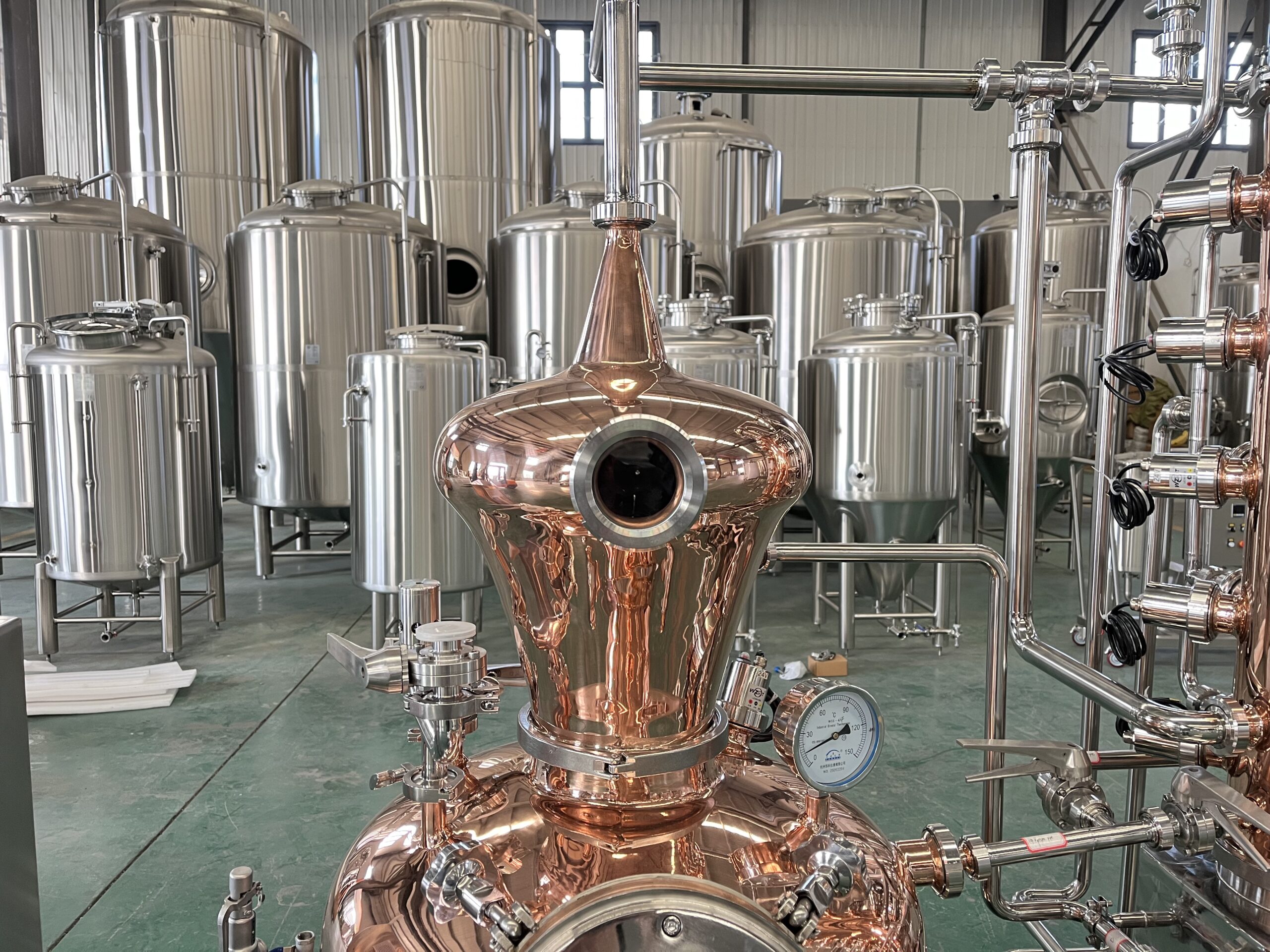
A pot still is commonly used for flavorful batch distillation. It is often selected for whiskey distilling, brandy, rum, and craft spirits where aroma and body matter. A traditional pot still usually has a pot, head or helmet, lyne arm, condenser, and collection outlet.
A column still uses plates or packing to create repeated vapor-liquid contact inside the column. This helps increase separation and can produce higher-proof spirit. Column still systems are often used for vodka, gin base spirit, neutral spirit, and operations that need more control over purity and proof.
Equipment Type
Main Strength
Uso comune
Pot still
Richer flavor, batch control, traditional character
Whiskey, brandy, rum, craft spirits
Column still
Higher proof, cleaner separation, more reflux control
Vodka, gin base, neutral alcohol
Hybrid still
Combines pot and column features
Craft distilleries with multiple products
Reflux column
Better separation and cleaner output
Vodka or high-proof spirits
Botanical gin still
Adds vapor or liquid infusion options
Gin and flavoring products
The trade-off is simple. A pot still often gives more character but may need more time and more cuts. A column still gives more control and higher proof but may remove some heavier flavor. For a multi-product distillery, a hybrid pot-column system can be practical.
Why Are Mash Tun, Fermentation Tank, and Fermenter Important?
Before a distillery can distill, it needs fermentable alcohol. For grain spirits, the process often starts with milling and mashing. A mash tun or cooker mixes grain and water under controlled temperature and mixing. This helps convert starch into fermentable sugars, depending on the raw ingredients and recipe.
After mashing, the liquid moves to a fermenter. Yeast is added, and fermentation begins. The fermenter must support temperature control, cleaning, safe transfer, and proper working volume. For fruit spirits or brandy, fermentation may start with juice or crushed fruit instead of grain mash.
A commercial fermenter should be:
Made of stainless steel or suitable food-grade material
Easy to clean
Designed with sanitary valves
Sized for the batch plan
Equipped with temperature control mechanisms
Compatible with CIP cleaning where needed
Built with safe access and drain points
If fermentation is unstable, distillation cannot fix everything. Poor fermentation can create off-flavors, low alcohol yield, microbial problems, or inconsistent distillate. Good spirits begin before the still.
How Do Condenser, Vapor Path, and Reflux Affect Distillate Quality?
The condenser cools alcohol vapor and turns it back into liquid distillate. Without a good condenser, vapor may not fully condense, collection becomes unstable, and safety risk increases. Condenser design must match the still size, heating power, cooling water supply, and expected vapor flow.
The vapor path also matters. Vapor may pass through copper, stainless steel, a helmet, a swan neck, a column, plates, packing, or a reflux section. More reflux means some vapor condenses and returns to the still or column before being collected. This repeated contact can make the spirit cleaner and higher in proof.
Copper deserves special attention. Research on whiskey sulfur compounds notes that copper still surfaces have been reported to remove sulfur compounds, although the chemistry is complex and not every copper position has the same effect.
For whiskey, brandy, and some craft spirits, copper contact can help shape aroma. For vodka or gin, stainless steel systems with copper sections may be used depending on the desired spirit style. The best design is not “all copper” or “all stainless” by default. It should match product quality and yield goals.
What Storage Tanks, Proofing Tools, and Filtration Equipment Are Needed?
After distillation, the distillate may need temporary holding, proof adjustment, blending, filtration, aging, or bottling. Storage tanks are used for spirit collection, blending, dilution, resting, or bulk storage. They are usually made of stainless steel and fitted with sanitary valves, level indicators, vents, manways, and cleaning connections.
Proofing tools help the distiller check alcohol strength. A hydrometer or alcoholmeter is used to measure proof or ABV, usually with temperature correction. Professional operations may also use lab testing for accuracy, especially for tax, labeling, and compliance.
Filtration depends on the spirit. Vodka may use activated carbon filters to improve clarity and smoothness. Gin may need botanical particle removal. Brandy and whiskey may need less filtration if flavor retention is the goal. A good filtration system should improve product quality without stripping the desired character.
Equipment
Scopo
Spirit receiver
Collects distillate from condenser
Storage tank
Holds spirit before blending or packaging
Proofing tank
Supports dilution and proof adjustment
Hydrometer / alcoholmeter
Checks alcohol strength
Activated carbon filters
Common for vodka polishing
Cartridge or plate filtration
Removes particles before bottling
Blending tank
Mixes batches or adjusts flavor
Manual bottling line
Suitable for small craft production
What Cleaning Equipment Supports Hygiene Within a Distillery?
Hygiene within a distillery affects flavor, safety, and production efficiency. Cleaning equipment may include CIP systems, spray balls, cleaning pumps, chemical tanks, hoses, drain systems, and sanitary fittings. CIP means clean in place. It allows tanks and pipes to be cleaned without full disassembly.
Distillery cleaning is different from simple rinsing. Mash residue, yeast, fruit pulp, sugar deposits, botanical oils, and mineral scale can build up in equipment. If these residues stay inside the system, they may affect the next batch.
A well-designed cleaning setup should support:
Safe chemical circulation
Easy drainage
No dead corners
Smooth internal surfaces
Accessible valves
Removable filters where needed
Regular inspection
Documented cleaning steps
For B2B buyers, this is one of the biggest differences between low-cost equipment and professional distillery equipment. A still or tank that is difficult to clean will become expensive through downtime, labor, and quality issues.
What Equipment Is Needed for Whiskey, Vodka, Gin, Brandy, and Essential Oils?
Different products need different distilling equipment. Whiskey distilling often uses mash cooking, fermentation tanks, pot stills or hybrid stills, condensers, spirit receivers, barrels, and storage areas. Brandy needs fruit processing, fermentation, distillation, and often aging.
Vodka or gin requires a different plan. Vodka usually needs a cleaner, higher-proof spirit, so column distillation, reflux control, proofing, and filtration may matter more. Gin may require botanical flavoring, which can happen through maceration, vapor infusion, or a gin basket depending on the distiller’s style.
Essential oils are not beverage alcohol, but some equipment principles overlap. Essential oil distillation often uses steam distillation, plant material baskets, condensers, oil-water separators, and stainless steel vessels. The design focus is aroma capture, plant material handling, and separation.
Product
Common Equipment Focus
Whiskey
Mash tun, fermenter, pot still, condenser, barrel aging
Vodka
Column still, reflux, filtration, proofing tank
Gin
Neutral spirit system, botanical basket, flavoring control
Brandy
Fruit fermentation, pot still, storage tanks
Rum
Molasses handling, fermentation, pot or column distillation
A 1000L distillery system may be suitable for a growing craft distillery, but size alone is not enough. The heating method, condenser capacity, column design, cleaning access, and building utilities must match the product.
What Safety and Compliance Equipment Should Commercial Distilling Projects Consider?
Commercial distilling involves flammable liquids and ethanol vapor. OSHA guidance explains that engineering controls for flammable liquids such as ethanol focus on preventing or controlling flammable vapor release and eliminating ignition sources.
A distillery should consider safety equipment and design features such as:
Proper ventilation
Explosion-proof electrical components where required
Grounding and bonding
Safe alcohol storage
Temperature and pressure monitoring
Emergency shutoff
Fire protection
Spill control
Clear drainage
Safe access platforms
Local code-compliant room design
Legal compliance also matters. In the United States, TTB rules cover distilled spirits plant operations, permits, registration, production, bottling, processing, storage, and related compliance topics. A beverage distilled spirits plant may produce, bottle, rectify, process, or store spirits, but operators must follow the applicable rules.
This article is not legal advice. Every commercial distillery should check local laws, alcohol licensing rules, fire codes, electrical codes, and environmental requirements before purchasing or installing equipment.
How Should B2B Buyers Choose Commercial Distillery Equipment?
B2B buyers should choose commercial distilling equipment by process, not by catalog photo. A startup craft distillery, established distillery, restaurant chain, beverage co-packer, distributor, or project investor may need very different equipment even if the product name sounds similar.
A practical purchasing checklist:
Question
Perché è importante
What spirit will you produce?
Whiskey, vodka, gin, brandy, rum, or essential oils need different systems
What batch size do you need?
Defines still volume, fermenter size, and heating load
What raw ingredients will you use?
Grain, fruit, molasses, or botanicals affect mash and cleaning
Pot still or column still?
Controls flavor, proof, and production style
What heating method is available?
Steam, electric, gas, or thermal oil affects layout and cost
Do you need copper contact?
Important for some spirit styles and aroma targets
What proof target is required?
Affects reflux, column design, and collection strategy
How will you clean the system?
Determines CIP, access, valves, and downtime
What packaging method is planned?
Manual bottling line or automated filling affects layout
What support is needed?
CAD/3D layout, installation guidance, and technical service reduce risk
From our professional experience, many distillery projects fail at the planning stage because buyers focus only on the still. The still matters, but the fermenter, condenser, cooling system, cleaning plan, storage tanks, and safety design matter just as much.
What Recommendations Do Not Apply to Every Distillery?
Not every distillery needs the same system. A small craft distiller may need flexibility more than high automation. A vodka producer may need a column still and filtration. A whiskey producer may prefer traditional pot still character. A brandy producer may focus on fruit handling and gentle distillation. A co-packer may need repeatable cleaning, fast changeover, and batch documentation.
Important trade-offs include:
Pot still vs column still: Flavor character vs higher proof and separation.
Copper vs stainless steel: Aroma management vs cleaning, cost, and durability.
Manual vs automated control: Lower upfront cost vs repeatable operation.
Small batch vs large batch: Product flexibility vs economies of scale.
Open layout vs compact layout: Easy service access vs limited building space.
Basic filtration vs advanced filtration: Flavor retention vs clarity and smoothness.
The best system is not the most expensive one. It is the system that matches your product, production capacity, safety requirements, and long-term business plan.
Practical Case Study: Planning a 1000L Craft Distillery System
A startup distillery wanted a 1000L system for whiskey and gin. At first, the buyer asked only for a still price. After reviewing the project, we found that the facility also needed fermentation capacity, cooling, botanical handling, proofing, storage, cleaning, and a practical manual bottling line.
The final equipment plan included:
Need
Equipment Solution
Whiskey mash preparation
Mash tun with temperature and mixing control
Fermentazione
Stainless steel fermenters sized for batch schedule
Whiskey distillation
Pot still with copper contact and condenser
Gin flexibility
Botanical basket and controlled vapor path
Raffreddamento
Condenser cooling water system
Spirit handling
Receiving tank, proofing tank, storage tanks
Pulizia
CIP pump and sanitary spray connections
Packaging
Manual bottling line for small-batch releases
Layout
CAD/3D plan for workflow and utility access
This project showed a common lesson: good distillery equipment should support the whole production chain, not just the moment of distillation.
FAQs About Distilling Equipment
What equipment is used in a distillery?
A distillery uses mash equipment, fermenters, stills, condensers, reflux systems, spirit receivers, storage tanks, pumps, valves, piping, filtration systems, proofing tools, cleaning equipment, and bottling equipment.
What is the most important piece of distillery equipment?
The still is the most visible piece of equipment, but the fermenter, condenser, cooling system, and cleaning system are also essential. Poor fermentation or poor condensation can damage quality even if the still is well made.
Qual è la differenza tra un alambicco a vaso e uno a colonna?
A pot still is usually used for batch distillation and flavorful spirits such as whiskey, rum, and brandy. A column still uses plates or packing for stronger separation and higher proof, making it useful for vodka, gin base spirit, and neutral alcohol.
Is stainless steel or copper better for distillation equipment?
Both can be useful. Stainless steel is durable, hygienic, and easy to clean. Copper can help manage sulfur compounds and is traditional for many whiskey and brandy stills. Many commercial systems combine stainless steel with copper contact sections.
Do I need a mash tun for a distillery?
You need a mash tun if your spirit production starts from grain or other starch-based raw ingredients. If you distill from wine, cider, fruit wash, or purchased neutral spirit, your mash equipment needs may be different.
What equipment is needed for vodka or gin?
Vodka usually needs column distillation, reflux control, proofing, filtration, and clean storage. Gin may need neutral spirit handling, botanical flavoring, a gin basket or maceration tank, condenser, storage, filtration, and bottling equipment.
Is distilling alcohol at home legal?
Laws vary by country and region. In the United States, beverage distilled spirits production is regulated, and commercial operations require proper approval and compliance. Always check local alcohol laws before distilling.
Punti di forza
Distillery equipment includes much more than a still.
A complete system may include mash tun, fermenter, still, condenser, reflux column, receiving tank, storage tanks, filtration, proofing, CIP cleaning, and bottling equipment.
Pot stills are often used for flavorful spirits such as whiskey and brandy.
Column stills are often used for higher-proof spirits such as vodka or neutral alcohol.
Fermentation quality strongly affects distillate quality and yield.
Condenser sizing and cooling water supply are critical for safe vapor control.
Copper contact can influence sulfur compound reduction in some distilling systems.
Stainless steel is widely used because it is hygienic, durable, and easy to clean.
Commercial distilling requires serious safety planning because ethanol and alcohol vapor are flammable.
The best distillery equipment plan should match spirit type, batch size, building layout, heating method, cleaning workflow, legal requirements, and future growth.
For a distillery project, the safest next step is a process review: confirm the spirit type, batch capacity, heating source, building utilities, cleaning plan, packaging method, and local compliance needs before choosing the still size or full equipment layout.
What Equipment Is Needed to Make Kombucha? A Practical Guide to Kombucha Brewing at Home and Commercial Scale
Bad kombucha equipment can lead to weak fermentation, mold risk, flat flavor, messy bottling, or unsafe pressure in bottles. Whether you brew kombucha at home or plan commercial production, the right tools help you control taste, safety, fizz, and repeatable quality.
To make kombucha, you need tea, cane sugar, water, a SCOBY, starter tea, a clean glass jar or stainless steel fermentation tank, breathable cover, rubber band, thermometer, pH test strips or meter, strainer, bottles for second fermentation, and cleaning tools. Commercial kombucha brewing also needs sanitary tanks, CIP cleaning, cooling, filtration, carbonation, filling, and quality control equipment.
Sintesi
Kombucha is a fermented tea made with sweetened tea and a SCOBY, a culture of bacteria and yeast that drives fermentation.
For safe homemade kombucha, pH control matters. Colorado State University notes kombucha should be below pH 4.2 but not below pH 2.5 for safe consumption.
A homebrew setup can start with a glass jar, coffee filter or tea towel, rubber band, starter tea, kombucha SCOBY, thermometer, test strips, and glass bottles.
Second fermentation creates carbonation, but pressure can build in bottles, so bottle choice and monitoring matter.
Commercial kombucha production requires stainless steel fermentation tanks, hygienic design, temperature control, pH/TA testing, safe packaging, and process records.
The best equipment depends on your goal: homemade kombucha, taproom-style batches, beverage co-packing, or scalable factory production.
Schema dell'articolo
What is kombucha brewing, and why does equipment matter?
What basic equipment do you need to make kombucha at home?
Why are SCOBY, starter tea, and sweetened tea essential?
What jar, cover, rubber band, and brewing vessel should you use?
What tools help control fermentation, temp, and pH?
What bottles are needed for second fermentation and carbonation?
How do you make kombucha with a simple 1-gallon recipe?
What equipment is needed for commercial kombucha brewing?
What are the trade-offs between DIY kombucha kits and professional systems?
How should beverage businesses choose kombucha equipment?
What Is Kombucha Brewing, and Why Does Equipment Matter?
Kombucha brewing is the process of fermenting sweetened tea with a SCOBY. The word SCOBY means symbiotic culture of bacteria and yeast. During fermentation, yeast and bacteria work together to change sugar and tea into a tart, lightly fizzy fermented tea. Research describes kombucha as sugared tea fermented at ambient temperature with a cellulose pellicle made up of acetic acid bacteria and yeast.
Equipment matters because kombucha is alive. It needs air during the first fermentation, clean tools, the right room temperature, enough starter tea, and a safe vessel. Poor tools can slow the brew, invite fruit flies, increase contamination risk, or create inconsistent flavor. This is true whether you make kombucha at home in a wide-mouth jar or produce it in a commercial beverage facility.
From my experience as a brewery, distillery, winery, kombucha, and beverage equipment manufacturer, I usually tell buyers one thing first: attrezzatura per kombucha should support clean fermentation before it supports high output. A bigger tank is not useful if the process is hard to clean, hard to test, or hard to repeat.
What Basic Equipment Do You Need to Make Kombucha at Home?
To make kombucha at home, you need simple but clean tools. A beginner homebrew setup usually includes a glass jar, tea, organic cane sugar or cane sugar, starter liquid, a kombucha SCOBY, a breathable cover, rubber band, thermometer, pH test strips, strainer, and glass bottles for second fermentation.
A basic homemade kombucha equipment list looks like this:
Equipment
Why You Need It
Glass jar or brewing jar
Holds the sweet tea, starter, and SCOBY
SCOBY
Starts the fermentation process
Starter tea
Acidifies the brew and protects the batch
Tea bags or loose leaf tea
Provides nutrients and flavor
Cane sugar
Feeds yeast and bacteria
Coffee filter or tea towel
Covers the jar while allowing airflow
Rubber band
Secures the cover and keeps fruit flies out
Thermometer
Helps monitor room temperature
pH test strips or meter
Checks acidity and safety range
Strainer
Removes tea leaves or fruit pieces
Glass bottles
Used for second fermentation and fizz
For beginners, this setup is enough to start brewing. A DIY kombucha kit may include many of these items, but you should still check the quality of the jar, bottles, and test strips. Cheap bottles may not handle pressure well during bottle conditioning.
Why Are SCOBY, Starter Tea, and Sweetened Tea Essential?
The SCOBY is the heart of kombucha brewing. It often looks like a pale, rubbery layer called a pellicle. This pellicle forms on the surface as the culture ferments sweet tea. Studies of SCOBY cultures show that kombucha communities commonly include yeast and acetic acid bacteria, with common genera such as Brettanomyces and Komagataeibacter found in many samples.
Starter tea is just as important as the SCOBY. It lowers the pH of the new batch at the start. This makes the brew less friendly to unwanted microbes. Colorado State University explains that acidification helps kombucha reach a safe pH and reduce contamination risk.
Sweetened tea provides food. You can use black tea, green tea, or a blend of black and green tea. The yeast consumes sugar and produces compounds that bacteria convert into organic acids. Without enough sugar, the kombucha may become sluggish. Without enough starter, the batch may not acidify fast enough.
What Jar, Cover, Rubber Band, and Brewing Vessel Should You Use?
For kombucha at home, a wide-mouth glass jar is usually the easiest choice. Glass is easy to see through, easy to clean, and does not react with acidic kombucha. A 1 gallon jar is common for a small batch of kombucha. A half-gallon jar is also useful when testing a new kombucha recipe or different flavors.
You should cover the jar with a coffee filter, tea towel, or tightly woven breathable cloth. The cover should allow oxygen to enter but keep fruit flies, dust, and insects out. A rubber band keeps the cover tight around the jar. Do not seal the first fermentation with an airtight lid because the SCOBY needs oxygen.
For commercial production, food-grade stainless steel is normally preferred. It is stronger, more hygienic, easier to clean, and better for controlled production. A commercial kombucha tank may include a manway, sanitary valves, CIP spray ball, cooling jacket, sample valve, temperature probe, and optional spigot or racking outlet.
What Tools Help Control Fermentation, Temp, and pH?
Kombucha fermentation depends on temperature, time, acidity, starter strength, and culture health. A simple thermometer helps you check room temperature. Kombucha usually ferments at room-temperature conditions, but very cold rooms can slow the process, while overly warm rooms can push faster acid production.
pH test strips or a pH meter help you monitor acidity. Colorado State University states that safe kombucha should be below pH 4.2 and not lower than pH 2.5. This is why test strips are not just “extra tools.” They help you know whether the brew is moving in the right direction.
For home use, test strips are usually enough. For professional beverage production, a pH meter, titratable acidity testing, alcohol testing, temperature logs, batch records, and sanitation checks become more important. Kombucha that rises above 0.5% ABV may be regulated as an alcoholic beverage in the United States, so commercial producers should test alcohol carefully.
What Bottles Are Needed for Second Fermentation and Carbonation?
After the first fermentation, many brewers move finished kombucha into bottles for second fermentation. This stage adds flavoring and carbonation. Fruit juice, herbs, ginger, berries, citrus, or other flavoring ingredients can create different flavors. The yeast consumes small amounts of sugar and produces carbon dioxide, which creates fizz.
Use strong glass bottles made for pressure, such as flip-top bottles designed for fermented drinks. Do not use weak decorative bottles. Pressure can build during second fermentation. If bottles are too weak, overfilled, or left too long at warm temperature, they may leak or break.
Second fermentation needs careful control. Use clean bottles, leave headspace, do not overdo sugar, and refrigerate when carbonation is ready. For commercial kombucha, carbonation can be controlled more safely with brite tanks, carbonation stones, pressure-rated vessels, and filling systems.
How Do You Make Kombucha With a Simple 1-Gallon Recipe?
A simple 1 gallon kombucha recipe usually starts with brewed tea, sugar, starter tea, and a SCOBY. Exact ratios vary by recipe and culture strength, but the basic process is easy to understand.
A beginner process may look like this:
Brew tea with tea bags or loose leaf tea.
Add cane sugar while the tea is hot and stir until dissolved.
Cool the sweet tea to room temperature.
Pour it into a clean glass jar.
Add starter tea and the kombucha scoby.
Cover the jar with a coffee filter or tea towel.
Secure it with a rubber band.
Let it ferment at room temperature.
Taste after several days.
Bottle the finished kombucha for flavoring or second fermentation.
Save starter tea and SCOBY for the next batch.
Colorado State University notes that kombucha is often fermented for 7–10 days, though timing can vary based on conditions and desired taste. A shorter brew may taste sweeter. A longer brew may taste more sour or vinegary. If the batch smells rotten, grows fuzzy mold, or looks unsafe, discard it.
What Equipment Is Needed for Commercial Kombucha Brewing?
Commercial kombucha brewing needs stronger, cleaner, and more controlled equipment than homemade kombucha. A beverage producer needs to repeat the same taste, acidity, carbonation, and package quality across every batch. This requires more than a glass jar.
A commercial kombucha line may include:
Process Stage
Professional Equipment
Tea brewing
Hot water tank, tea extraction vessel, filter or strainer
For a startup kombucha brand, not every item must be fully automatic on day one. But the equipment should be hygienic, scalable, and easy to clean. A poor layout can waste labor every day. A good layout supports smooth movement from tea brewing to fermentation, flavoring, carbonation, and filling.
What Are the Trade-Offs Between DIY Kombucha Kits and Professional Systems?
A DIY kombucha kit is good for learning. It is affordable, small, and easy to use. You can test black tea, green tea, fruit juice, loose leaf tea, and different flavors without much investment. But a DIY kit does not offer strong process control or commercial capacity.
Professional kombucha systems cost more, but they provide better sanitation, repeatability, temperature control, and production planning. They also reduce manual handling. For beverage co-packers, kombucha producers, brewpub chains, and project investors, these benefits can reduce long-term risk.
Option
Advantage
Limitation
DIY kombucha kit
Low cost, easy to start
Small volume, less control
Glass jar homebrew
Simple and visible
Not scalable
Small stainless tank
More durable, cleaner
Higher upfront cost
Jacketed fermenter
Better temp control
Needs utilities
Full commercial line
Scalable and efficient
Requires planning and capital
The right choice depends on your goal. If you only want homemade kombucha, use simple tools. If you want a beverage business, plan for hygiene, testing, filling, cooling, and repeatable production.
How Should Beverage Businesses Choose Kombucha Equipment?
B2B buyers should not choose kombucha equipment only by tank volume. Start with the business model. Will you sell fresh kombucha on tap, bottled kombucha, canned kombucha, flavored kombucha, hard kombucha, or co-packed products for other brands? Each model needs different equipment.
A practical buyer checklist:
Question
Perché è importante
What is the target batch size?
Defines tank volume and production plan
How many SKUs or flavors?
Affects flavoring tanks and scheduling
Do you need carbonation?
Requires pressure-rated equipment
Bottle, can, keg, or bulk pack?
Defines filling and packaging line
What is the target pH and acidity?
Defines testing and quality control
Do you need alcohol control?
Important for compliance and labeling
How will tanks be cleaned?
Determines CIP design
Is expansion planned?
Affects layout and utility sizing
What is the building layout?
Impacts workflow and installation
What technical support is needed?
Reduces startup and commissioning risk
As a professional brewery, distillery, winery, kombucha, and beverage equipment manufacturer, we often review the buyer’s process before recommending tanks. For global projects, we may support factory-direct supply, CAD/3D layout planning, sanitary stainless steel equipment, installation guidance, and long-term technical service.
What Recommendations Do Not Apply to Every Kombucha Project?
Not every kombucha project needs the same equipment. A home brewer does not need a stainless steel CIP system. A small taproom may not need a high-speed canning line. A large beverage co-packer should not rely on open jars or manual bottling.
Some trade-offs are important:
Glass jars are good for learning, but not for scalable commercial output.
Open fermentation can support oxygen exposure, but it must be protected from insects and contamination.
Second fermentation can make kombucha fizzy, but pressure risk must be managed.
More automation saves labor, but it increases upfront investment.
Filtration improves clarity, but it may change live culture profile.
Forced carbonation improves consistency, but it changes the craft-style bottle conditioning approach.
Professional advice should always match the real process, local rules, and market plan. Kombucha for a restaurant chain, kombucha for retail shelves, and kombucha for a small tasting room are different projects.
Practical Case Study: From Homemade Kombucha to Small Commercial Production
A startup beverage team came to us after making successful homemade kombucha in glass jars. Their flavor was good, but they had three problems: inconsistent acidity, slow bottling, and limited batch volume. They wanted to scale without losing the fresh fermented tea character.
We suggested a staged equipment plan:
Problem
Equipment-Based Improvement
Inconsistent pH
Add pH meter, batch records, controlled starter ratio
Add small mixing tank for fruit juice and flavoring
Unclear layout
Create CAD/3D flow from tea brewing to packaging
Cleaning risk
Add sanitary valves and CIP-ready tank design
The result was a more reliable kombucha brewing process. The team could still make your own kombucha-style product, but with better hygiene, clearer workflow, and stronger commercial control.
FAQs About Kombucha Equipment
What equipment do I need to make kombucha at home?
You need a glass jar, SCOBY, starter tea, sweetened tea, breathable cover, rubber band, thermometer, pH test strips, strainer, and glass bottles for second fermentation.
Can I brew kombucha without a SCOBY?
You usually need a kombucha SCOBY or strong starter from a previous batch. Store-bought kombucha may work only if it is raw, unflavored, and contains live culture, but results can be slower or less reliable.
What kind of jar is best for kombucha?
A wide-mouth glass jar is best for home kombucha. It is easy to clean, easy to cover, and does not react with acidic fermented tea.
Do I need pH test strips for homemade kombucha?
They are strongly recommended. pH strips or a pH meter help you check whether the fermentation is becoming acidic enough and not becoming too acidic.
What bottles are best for second fermentation?
Use strong pressure-rated glass bottles, such as flip-top bottles designed for fermented drinks. Avoid weak bottles because carbonation can build pressure.
What equipment is needed for commercial kombucha brewing?
Commercial kombucha production may need stainless steel fermentation tanks, tea brewing tanks, mixing tanks, cooling, pH and alcohol testing, carbonation equipment, filtration, filling machines, CIP cleaning, and sanitary piping.
How long does kombucha fermentation take?
Many home batches ferment around 7–10 days, but time depends on temperature, starter strength, sugar, tea, SCOBY health, and preferred taste.
Punti di forza
To make kombucha, you need tea, sugar, water, SCOBY, starter tea, a clean jar or tank, breathable cover, testing tools, and bottles.
The SCOBY and starter tea are essential for stable fermentation.
A glass jar works well for homemade kombucha, while stainless steel tanks are better for commercial brewing.
pH control is important because kombucha must become acidic enough to reduce contamination risk.
Second fermentation creates fizz, but bottle pressure must be managed carefully.
A DIY kombucha kit is good for learning, but commercial projects need hygienic, scalable equipment.
Beverage businesses should plan equipment around batch size, flavoring, carbonation, packaging, cleaning, and compliance.
Good kombucha equipment should make the process cleaner, safer, easier to repeat, and easier to scale.
For startup kombucha brands, brewpubs, beverage co-packers, wineries, distilleries, and project investors, a professional equipment review can help match the process, layout, and budget before purchasing.
This used 1000L beer brewing equipment is an excellent choice for craft breweries, brewpubs, restaurants, and startup brewing projects looking for a reliable and affordable brewing solution. The system is designed to provide stable brewing performance while significantly reducing initial investment costs compared to brand-new brewery equipment.
The complete 1000L brewing system is manufactured with high-quality stainless steel, ensuring durability, hygienic brewing conditions, and long service life. The equipment typically includes a brewhouse system, fermentation tanks, glycol cooling system, control system, pumps, and related brewery accessories. With a compact structure and user-friendly operation, it is suitable for both experienced brewers and new brewery investors.
This second-hand brewery equipment has been professionally maintained and remains in good working condition. The tanks feature sanitary polishing, reliable welding, and efficient temperature control performance, helping breweries produce consistent craft beer quality. The 1000L capacity is ideal for medium-scale beer production and can support multiple beer styles such as lager, ale, IPA, stout, and wheat beer.
Compared with purchasing new brewery equipment, used brewing systems offer faster delivery times and a more economical investment option, making them increasingly popular in the global craft beer market. Many breweries choose second-hand equipment to expand production capacity while controlling startup and operational costs.
Our used 1000L beer brewing equipment can also be customized according to customer requirements, including voltage, heating method, tank quantity, and brewery layout design. Before shipment, the equipment can be inspected and tested to ensure stable operation.
Whether you are starting a new craft brewery or upgrading your current brewing capacity, this used 1000L brewery equipment provides a practical, efficient, and budget-friendly solution for professional beer production.
Attrezzature per distillerie e soluzioni chiavi in mano: Guida pratica alla scelta dell'alambicco, del sistema di distillazione e della linea di produzione completa più adatti.
Avviare una distilleria senza le giuste attrezzature può creare ritardi, rischi per la sicurezza, scarsa qualità dell'acquavite e investimenti sprecati. Un bell'alambicco non è sufficiente. È necessario un piano di processo completo, un progetto conforme, impianti affidabili e un fornitore che comprenda la produzione reale.
Le attrezzature della distilleria comprendono il sistema di mash, il fermentatore, l'alambicco a vaso o a colonna, il condensatore, l'attrezzatura di raffreddamento, il ricevitore di alcolici, i serbatoi, le pompe, le tubazioni, i controlli e il supporto per la pulizia utilizzati per produrre alcolici come whisky, gin, rum, vodka e brandy. Una soluzione di distilleria chiavi in mano comprende il layout, la progettazione delle attrezzature, la produzione, la guida all'installazione, il supporto alla messa in funzione e l'assistenza tecnica a lungo termine.
Sintesi
Le attrezzature della distilleria devono essere scelte in base al tipo di acquavite, alle dimensioni del lotto, al metodo di riscaldamento, allo stile di distillazione, alle condizioni di utilizzo, alle esigenze di conformità e all'espansione futura.
L'alambicco a vaso è comunemente utilizzato per whisky, brandy, rum e acquaviti saporite, mentre gli alambicchi a colonna e gli alambicchi continui sono spesso utilizzati quando è necessaria una maggiore efficienza o uno stile di acquavite più leggero.
Negli Stati Uniti, un'attività commerciale di distillati deve prima qualificarsi con il TTB richiedendo un permesso di operare; si tratta di un passaggio normativo, non di una scelta di attrezzature.
Le norme statunitensi per gli impianti di distillati sono contenute nella Parte 19 del CFR 27, e comprendono i permessi, la produzione, lo stoccaggio, la lavorazione, i registri e le operazioni fiscali.
Il programma di certificazione ASME per caldaie e recipienti a pressione copre le regole di progettazione, fabbricazione, assemblaggio e ispezione delle apparecchiature a pressione; gli acquirenti dovrebbero esaminare attentamente i recipienti a pressione quando scelgono serbatoi e sistemi riscaldati.
Un fornitore affidabile dovrebbe supportare il layout CAD/3D, l'attrezzatura di distillazione personalizzata, la fabbricazione di impianti sanitari, la guida all'installazione, la formazione, i pezzi di ricambio e l'assistenza post-vendita.
Schema dell'articolo
Che cos'è l'attrezzatura per distilleria?
Quali attrezzature sono necessarie per una distilleria chiavi in mano?
Come funziona un alambicco in un sistema di distillazione?
Pot Still vs Column Still: qual è l'impianto di distillazione giusto?
Quali alcolici si possono produrre: Gin, Whisky, Rum, Vodka e Brandy?
Perché i materiali sono importanti: Rame, acciaio inox o entrambi?
Cosa comprende una soluzione di distilleria chiavi in mano?
In che modo la capacità, il layout e i servizi influiscono sulla progettazione della distilleria?
Quali sono i dettagli di sicurezza, conformità e recipienti a pressione che contano?
In che modo gli acquirenti B2B dovrebbero scegliere i produttori di apparecchiature di distillazione?
Che cos'è l'attrezzatura per distilleria?
L'attrezzatura per distilleria è l'insieme di macchine, serbatoi, recipienti, tubazioni e controlli utilizzati per la produzione di alcolici distillati. Può comprendere un mash tun, un fermentatore, un bollitore per la distillazione, un alambicco, una colonna di distillazione, un condensatore, un ricevitore di alcolici, serbatoi di stoccaggio, pompe, scambiatori di calore, apparecchiature di raffreddamento, un quadro di controllo e accessori per la pulizia.
In parole povere, l'apparecchiatura aiuta a trasformare un liquido fermentato in un'acquavite. In primo luogo, le materie prime vengono preparate e fatte fermentare. Poi il liquido fermentato viene riscaldato nell'alambicco. L'alcol e i composti aromatici vaporizzano, si muovono attraverso il sistema, si condensano e vengono raccolti. Il progetto esatto cambia a seconda che il distillatore voglia ottenere whisky, gin, rum, vodka, brandy o un'altra acquavite.
Per gli acquirenti B2B, il punto chiave è il seguente: le attrezzature per la distillazione non devono essere acquistate come parti isolate. L'alambicco, il fermentatore, il sistema di raffreddamento, il layout delle tubazioni e il sistema di controllo devono funzionare insieme. Se una parte è mal assortita, l'intero processo produttivo diventa più difficile da controllare.
Quali attrezzature sono necessarie per una distilleria chiavi in mano?
Una distilleria "chiavi in mano" normalmente comprende sia le attrezzature di produzione che il supporto al progetto. L'attrezzatura può includere sistemi di ammostamento, fermentazione, distillazione, raffreddamento, ricezione, stoccaggio, pulizia e controllo. Il progetto può comprendere la pianificazione del layout, la produzione delle attrezzature, la guida all'installazione, il supporto alla messa in funzione, la formazione degli operatori e l'assistenza a lungo termine.
Un tipico elenco di attrezzature per distillerie chiavi in mano può includere:
Area del sistema
Attrezzatura principale
Scopo
Preparazione delle materie prime
Attrezzature per la fresatura o la movimentazione dei materiali
Preparare cereali, frutta, melassa o altri materiali di base.
Ammassamento
Tun di ammostamento, serbatoio dell'acqua calda, agitatore
Convertire o miscelare materiali fermentabili
Fermentazione
Vasche di fermentazione, camicia di raffreddamento, valvole
Convertire lo zucchero in alcol
Distillazione
Alambicco a vaso, alambicco a colonna, condensatore
Separare e concentrare i composti alcolici e aromatici
Raffreddamento
Chiller, sistema di raffreddamento ad acqua, scambiatori di calore
Supporto per la condensazione e il controllo della temperatura
Ricezione
Ricevitore di spirito, serbatoio di raccolta sicuro
Raccogliere il distillato
Immagazzinamento
Serbatoi di stoccaggio o serbatoi per alcolici in acciaio inox
Trattenere il prodotto prima della miscelazione o dell'invecchiamento
Pulizia
Pompa CIP, sfere di spruzzatura, serbatoi di pulizia
Migliorare l'igiene e la manutenzione
Controllo
PLC/HMI o pannello di controllo manuale
Monitoraggio di riscaldamento, pompe e punti di processo
Per una distilleria artigianale in fase di avvio, un sistema compatto da 150 litri a diverse centinaia di litri può essere sufficiente per una produzione di prova o per le vendite locali. Per un progetto più grande, l'attrezzatura può variare da 1000L a 3000L o più, a seconda del tipo di acquavite, degli obiettivi di produzione, delle dimensioni dell'edificio e del budget.
Come funziona un alambicco in un sistema di distillazione?
L'alambicco è il cuore di un sistema di distillazione. Riscalda il liquido fermentato in modo che l'alcol e i composti volatili salgano sotto forma di vapore. Il vapore si muove poi attraverso una testa, una colonna, un braccio di litio o un condensatore, a seconda del progetto. Dopo il raffreddamento, il vapore diventa distillato liquido.
L'alambicco a vaso è spesso apprezzato per la conservazione degli aromi. È ampiamente utilizzato nelle distillerie artigianali perché dà al distillatore più carattere e controllo dei lotti. Una colonna di distillazione può fornire una maggiore separazione e una purezza più elevata, utile per la produzione di alcolici come la vodka o l'acquavite neutra.
L'alambicco deve corrispondere allo stile dell'acquavite. Un produttore di whisky può desiderare il contatto con il rame e la complessità del sapore. Un produttore di vodka potrebbe aver bisogno di una rettifica più forte. Un produttore di gin potrebbe aver bisogno di cestelli botanici o di opzioni di infusione a vapore. Un produttore di rum potrebbe preferire un'apparecchiatura che supporti il lavaggio della melassa e lo sviluppo del sapore.
Pot Still vs Column Still: qual è l'impianto di distillazione giusto?
L'alambicco è un sistema di distillazione discontinua. È comunemente usato per whisky, brandy, rum e liquori artigianali in cui l'aroma e il corpo sono importanti. Il concetto è semplice, ma la forma, il contatto con il rame, il metodo di riscaldamento e il design del condensatore influiscono sul carattere finale.
Un alambicco a colonna utilizza vassoi o imballaggi per migliorare la separazione. Può creare un'acquavite più leggera e pulita e può supportare una maggiore efficienza. Gli alambicchi continui sono adatti ad alcune esigenze di produzione su larga scala in cui la produzione e la costanza sono prioritarie.
Articolo
Pentola Ancora
Colonna Ancora
Stile di funzionamento
Distillazione in batch
Distillazione in batch o continua
Spiriti comuni
Whisky, rum, brandy, gin artigianale di base
Vodka, spirito neutro, rum leggero, liquori ad alto volume
Profilo aromatico
Più ricco, più pesante, più di carattere
Più pulito, più leggero, più raffinato
Livello di controllo
Più hands-on
Maggiore controllo tecnico
Il migliore per
Distillerie artigianali e liquori di alta qualità
Maggiore potenza e spirito ad alta purezza
Costo dell'attrezzatura
Può essere inferiore per i sistemi di piccole dimensioni
Solitamente più elevato per i sistemi avanzati
Flessibilità
Ottimo per i prodotti in piccoli lotti
Ottimi per l'efficienza e la ripetibilità
Il compromesso pratico è evidente. Se si desidera un'acquavite ricca e artigianale, un alambicco a vaso può essere migliore. Se avete bisogno di vodka ad alta purezza o di una maggiore efficienza produttiva, un sistema a colonna può essere migliore. Molte distillerie combinano entrambe le cose.
Quali alcolici si possono produrre: Gin, Whisky, Rum, Vodka e Brandy?
Le diverse acquaviti necessitano di una diversa pianificazione del processo. Il Distilled Spirits Council tiene traccia di categorie di acquaviti come il whisky americano, il brandy e il cognac, il gin, il rum, la vodka, la tequila/mezcal, lo scotch, il whisky irlandese e altre categorie, a dimostrazione dell'ampia gamma commerciale dell'industria della distillazione.
La produzione di gin può utilizzare spirito neutro più sostanze botaniche. L'attrezzatura può includere un cestello per gin, un percorso di infusione del vapore o un serbatoio di macerazione botanica. Gli acquirenti di gin dovrebbero discutere il carico di botaniche, l'accesso alla pulizia, il controllo degli aromi e la flessibilità delle ricette.
Il whisky richiede ammostamento, fermentazione, distillazione e solitamente invecchiamento. Un sistema per il whisky può comprendere tini di ammostamento, fermentatori, alambicchi di rame, ricevitori di alcolici e supporti di stoccaggio. Il rum può partire da melassa o materiale a base di canna da zucchero e spesso beneficia di scelte di fermentazione e distillazione che mantengono la profondità del sapore. La vodka di solito ha bisogno di una separazione più pulita e di una rettifica più spinta. Il brandy è comunemente legato alla distillazione di frutta o vino e può richiedere un riscaldamento delicato e la protezione degli aromi.
Per gli acquirenti, la lezione è semplice: non acquistate “un alambicco standard” prima di aver definito lo spirito. L'attrezzatura migliore per la distilleria dipende dal prodotto, dal mercato e dalle esigenze di produzione.
Perché i materiali sono importanti: Rame, acciaio inox o entrambi?
Le apparecchiature per la distillazione sono comunemente realizzate in acciaio inossidabile e rame. Ogni materiale ha un suo ruolo. L'acciaio inossidabile è robusto, pulibile, durevole e ampiamente utilizzato per serbatoi, tubazioni, piattaforme e apparecchiature di lavorazione. Il rame è spesso utilizzato negli alambicchi perché favorisce l'aspetto tradizionale e può influenzare il carattere dello spirito.
Un alambicco di rame offre un fascino visivo e un valore di processo per molti distillati artigianali. Gli acquirenti scelgono spesso alambicchi di rame per whisky, brandy e prodotti artigianali di alta qualità. Un sistema inossidabile con sezioni in rame può anche essere un'opzione pratica. Può ridurre i costi e la manutenzione, pur consentendo il contatto con il rame dove necessario.
Materiale
Vantaggi principali
Uso comune
Rame
Aspetto tradizionale, contatto con il sapore, look premium
Alambicco a vaso, casco, sezioni di colonna, cestello per gin
Acciaio inox
Durevole, di facile manutenzione, con ottime prestazioni igieniche
Fermentatore, serbatoio, tubazioni, telaio, serbatoi di stoccaggio
Rame e acciaio inox
Costo equilibrato, igiene e contatto con il rame
Sistemi di distillazione ibridi
La scelta giusta dipende dallo stile dello spirito, dal budget, dal metodo di pulizia, dall'acqua locale, dalla capacità di manutenzione e dall'immagine del marchio. Un alambicco completamente in rame può sembrare impressionante, ma richiede anche una cura adeguata. Un design ibrido può essere più facile per alcuni operatori.
Cosa comprende una soluzione di distilleria chiavi in mano?
Una soluzione "chiavi in mano" va oltre la consegna delle apparecchiature. Deve aiutare l'acquirente a passare dall'idea al funzionamento con meno errori. Una soluzione di distilleria chiavi in mano comprende la revisione tecnica, la pianificazione del layout, l'abbinamento delle attrezzature, la fabbricazione, l'imballaggio, il supporto alla spedizione, la guida all'installazione, la consulenza per la messa in funzione e l'assistenza a lungo termine.
Un buon fornitore dovrebbe contribuire alla revisione:
Tipo di spirito e prodotto target
Dimensione del lotto e produzione annuale
Altezza e superficie dell'edificio
Metodo di riscaldamento
Domanda di acqua di raffreddamento
Capacità di fermentazione
Esigenze di conformità locali
Piano di imballaggio
Utilità e drenaggio
Flusso di lavoro dell'operatore
Espansione futura
In qualità di produttore professionale di impianti per birrerie, distillerie, cantine, kombucha e bevande, supportiamo gli acquirenti con forniture dirette in fabbrica, layout CAD/3D, progettazione chiavi in mano, guida all'installazione e assistenza tecnica globale. Supportiamo anche sistemi di produzione di birra usati quando gli acquirenti hanno bisogno di opzioni di progetto economicamente vantaggiose.
Una vera soluzione di distilleria chiavi in mano dovrebbe ridurre il rischio del progetto. Non deve bloccare gli acquirenti con attrezzature non necessarie. Dovrebbe aiutarli a scegliere ciò che fa al caso loro.
In che modo la capacità, il layout e i servizi influiscono sulla progettazione della distilleria?
La capacità non riguarda solo il volume dell'alambicco. Un alambicco da 500 litri potrebbe non produrre in modo efficiente se i fermentatori, il mash tun, l'attrezzatura di raffreddamento e i serbatoi di ricezione sono troppo piccoli. Una distilleria è un sistema. La parte più lenta diventa il collo di bottiglia.
Anche la disposizione è importante. Gli operatori hanno bisogno di spazio per muoversi, pulire, caricare il materiale, accedere alle valvole, ispezionare l'alambicco, collegare i tubi e fare manutenzione alle apparecchiature. Una disposizione inadeguata può rendere il lavoro quotidiano più lento e meno sicuro.
Le utenze possono decidere se un progetto funziona bene. Il riscaldamento può essere elettrico, a vapore, a fuoco diretto o con un sistema a bagnomaria riscaldato elettricamente. Il raffreddamento può richiedere acqua refrigerata, acqua di città o un sistema a circuito chiuso. L'edificio deve supportare il drenaggio, la ventilazione, l'alimentazione, l'acqua e un flusso di lavoro sicuro.
Lista di controllo per la pianificazione della distilleria
Punto di pianificazione
Perché è importante
Tipo di prodotto
Determina il design e il flusso del processo
Volume del lotto
Determina le dimensioni di alambicco, fermentatore e serbatoio
Tempo di fermentazione
Determina il numero di serbatoi di fermentazione
Metodo di riscaldamento
Influenza i requisiti energetici, di controllo e di costruzione
Sistema di raffreddamento
Influenza la condensazione e la stabilità dell'uscita
Altezza dell'edificio
Determina i limiti di dimensione degli alambicchi e delle colonne
Carico al suolo
Influenza il posizionamento dei serbatoi e delle piattaforme
Drenaggio
Supporta la pulizia e il funzionamento sicuro
Ventilazione
Sostiene condizioni di lavoro più sicure
Piano di espansione
Evita i limiti di capacità iniziali
Sia per le distillerie artigianali che per gli impianti su larga scala, la pianificazione del layout dovrebbe avvenire prima della produzione finale. Il supporto per il layout CAD e 3D può evitare molte modifiche costose.
Quali sono i dettagli di sicurezza, conformità e recipienti a pressione che contano?
Le distillerie gestiscono vapori di alcol infiammabili, recipienti riscaldati, pompe, impianti elettrici e prodotti chimici per la pulizia. La sicurezza deve essere integrata nel progetto fin dall'inizio. La progettazione delle attrezzature da sola non sostituisce i codici locali, i permessi, la revisione antincendio, la pianificazione della ventilazione o la formazione degli operatori.
Negli Stati Uniti, il TTB richiede alle imprese che svolgono attività di produzione di alcolici distillati di qualificarsi richiedendo un permesso di operare. Le norme statunitensi per gli impianti di distillati riguardano anche la produzione, l'immagazzinamento, la lavorazione, i registri e altri requisiti operativi ai sensi della Parte 19 del CFR 27.
Anche i recipienti a pressione meritano attenzione. L'ASME dichiara che il suo programma di certificazione di caldaie e recipienti a pressione è conforme alle norme che regolano la progettazione, la fabbricazione, l'assemblaggio e l'ispezione dei componenti di caldaie e recipienti a pressione durante la costruzione. Gli acquirenti devono verificare se le apparecchiature devono soddisfare i requisiti ASME, CE, PED o altri requisiti locali.
I punti chiave per la sicurezza e la conformità includono:
Permesso locale di produzione di alcolici
Revisione del rischio di incendio e di esplosione
Ventilazione e gestione del vapore
Classificazione elettrica
Dispositivi di scarico della pressione
Protezione dal vuoto dove necessario
Progettazione di un sistema di riscaldamento sicuro
Messa a terra e collegamento adeguati
Formazione degli operatori
Manipolazione dei prodotti chimici per la pulizia
Requisiti per l'ispezione locale
Questa sezione non è una consulenza legale. I requisiti cambiano a seconda del paese e della regione. Gli acquirenti devono collaborare con le autorità locali, gli ingegneri autorizzati e i professionisti della conformità prima dell'installazione.
In che modo gli acquirenti B2B dovrebbero scegliere i produttori di apparecchiature di distillazione?
La scelta dei produttori di apparecchiature di distillazione è una decisione importante. Gli acquirenti possono confrontare nomi noti del settore come ABE Equipment o Vendome Copper con produttori internazionali e fornitori di apparecchiature di distillazione personalizzate. La scelta migliore dipende dal budget, dalle esigenze di progettazione, dai tempi di consegna, dal supporto tecnico e dalle aspettative post-vendita.
Un fornitore serio non dovrebbe limitarsi a vendere un alambicco. Deve comprendere la fermentazione, la distillazione, le utenze, il layout, la spedizione, l'installazione e la manutenzione. Dovrebbe anche spiegare chiaramente i compromessi.
Tabella di valutazione dei fornitori
Area di valutazione
Cosa chiedere
Esperienza
Hanno fornito distillerie artigianali e progetti su larga scala?
Gamma di prodotti
Offrono pot still, alambicchi a colonna, fermentatori, mash tun, serbatoi di stoccaggio e attrezzature di raffreddamento?
Personalizzazione
Possono soddisfare le vostre esigenze specifiche di gin, whisky, rum, vodka o brandy?
I materiali
Sono in grado di fornire apparecchiature in rame, serbatoi in acciaio inox o progetti ibridi?
Ingegneria
Forniscono layout CAD/3D e revisione dei processi?
Fabbricazione
Le saldature, la lucidatura, i raccordi e i recipienti a pressione sono controllati in modo adeguato?
Controlli
Possono supportare il controllo manuale, semi-automatico o PLC?
Servizio
Forniscono una guida all'installazione e servizi di manutenzione e riparazione?
Esportazione
Sono in grado di supportare l'imballaggio, la spedizione e la documentazione?
Post vendita
Sono disponibili parti di ricambio e assistenza remota?
Per gli acquirenti B2B, la migliore attrezzatura per distilleria non è semplicemente il sistema più economico. È un'attrezzatura di alta qualità progettata per il vostro prodotto, edificio e piano di produzione.
Quali sono gli errori più comuni nell'acquisto di un impianto di distillazione?
Un errore comune è quello di acquistare solo in base al volume dell'alambicco. Un acquirente può scegliere un alambicco da 1000 litri, ma dimentica che anche la capacità di fermentazione, l'acqua di raffreddamento e i serbatoi di stoccaggio devono corrispondere. Questo crea dei colli di bottiglia.
Un altro errore è quello di ignorare la pulizia e la manutenzione. I sistemi di distillazione devono avere punti di accesso, possibilità di drenaggio, superfici pulibili, valvole sicure e un design di facile manutenzione. Un bell'alambicco di rame difficile da pulire può diventare un problema quotidiano.
Un terzo errore consiste nel trascurare la conformità locale. Le apparecchiature possono essere di buona fattura, ma l'installazione deve comunque soddisfare le norme locali. Le norme in materia di autorizzazioni, incendi, elettricità, pressione, ventilazione e alcolici devono essere esaminate in anticipo.
Errori da evitare
Scegliere le apparecchiature solo in base al prezzo
Acquistare prima di definire il tipo di spirito
Ignorare l'altezza degli edifici
Sottovalutare le esigenze di raffreddamento
Dimenticare la capacità di fermentazione
Trascurare i requisiti dei recipienti a pressione
Selezione dei materiali senza pianificazione della manutenzione
Ignorare il flusso di lavoro dell'operatore
Saltare la revisione del layout
Supponendo che uno possa ancora adattarsi a tutti i prodotti
Una buona pianificazione del progetto consente di risparmiare denaro prima della produzione dell'apparecchiatura.
Quando ha senso una soluzione di distilleria chiavi in mano?
Una soluzione di distilleria "chiavi in mano" ha senso quando l'acquirente desidera un supporto coordinato invece di gestire ogni dettaglio da solo. È particolarmente utile per le distillerie in fase di avviamento, per i progetti internazionali, per i gruppi di ristorazione o di ospitalità, per gli investitori e per gli acquirenti che entrano nella distillazione dalla produzione di birra o di bevande.
Il supporto chiavi in mano è utile quando:
Avete bisogno di aiuto per abbinare l'equipaggiamento al tipo di spirito.
Prima dell'acquisto è necessario un layout CAD o 3D.
È necessaria una linea di produzione completa.
È necessario un confronto tra attrezzature nuove e usate.
Avete bisogno di un supporto per l'imballaggio e la spedizione all'esportazione.
Volete una guida all'installazione.
Avete bisogno di formazione e di assistenza post-vendita.
Tuttavia, la formula "chiavi in mano" potrebbe non essere necessaria per tutti gli acquirenti. Un distillatore esperto che sta espandendo un sistema noto potrebbe aver bisogno solo di un alambicco in rame personalizzato, di un fermentatore o di un serbatoio di ricambio. Il giusto livello di servizio deve corrispondere all'esperienza dell'acquirente e alla complessità del progetto.
FAQ sulle attrezzature per distillerie e sulle soluzioni chiavi in mano
Quali sono le attrezzature necessarie per avviare una distilleria?
Una distilleria ha solitamente bisogno di attrezzature per la preparazione delle materie prime, mash tun, fermentatore, alambicco, condensatore, sistema di raffreddamento, ricevitore di spirito, serbatoi di stoccaggio, pompe, tubazioni, controlli e supporto per la pulizia. L'attrezzatura esatta dipende dal tipo di acquavite e dalla scala di produzione.
Qual è la differenza tra un alambicco a vaso e uno a colonna?
L'alambicco a vaso è solitamente utilizzato per la distillazione in lotti ed è comune per whisky, rum, brandy e liquori artigianali. L'alambicco a colonna offre una maggiore separazione ed efficienza, rendendolo utile per la vodka, lo spirito neutro e i sistemi di produzione più grandi.
Un unico sistema di distillazione può produrre gin, whisky, rum, vodka e brandy?
Un sistema può supportare più acquaviti se progettato con flessibilità, ma non tutti i sistemi sono ideali per ogni acquavite. Il gin può avere bisogno di caratteristiche botaniche, la vodka di una rettifica più spinta e il whisky di un contatto con il rame e di una pianificazione adeguata della fermentazione.
Che cos'è una distilleria "chiavi in mano"?
Una distilleria chiavi in mano è una soluzione di progetto completa che può includere la progettazione delle attrezzature, la produzione, la pianificazione del layout, il supporto alla spedizione, la guida all'installazione, il supporto alla messa in funzione e l'assistenza tecnica. Aiuta gli acquirenti a ridurre il rischio di coordinamento.
È meglio il rame o l'acciaio inossidabile per le attrezzature da distilleria?
Entrambi i materiali hanno un valore. Il rame è spesso utilizzato negli alambicchi per l'aspetto tradizionale e il carattere dello spirito. L'acciaio inossidabile è ampiamente utilizzato per i serbatoi, i telai, le tubazioni e lo stoccaggio perché è durevole e lavabile. Molti sistemi utilizzano entrambi.
Quali dimensioni deve avere l'attrezzatura per la distilleria?
Scegliete le dimensioni in base all'acquavite di destinazione, al volume del lotto, al tempo di fermentazione, alla produzione giornaliera, allo spazio dell'edificio, alle utenze, al budget e all'espansione futura. I sistemi artigianali più comuni possono variare da 150L a 3000L, ma la dimensione giusta dipende dal vostro piano di produzione.
Ho bisogno di permessi prima di acquistare un impianto di distillazione?
Per la produzione commerciale di alcolici sono solitamente necessari permessi e approvazioni locali. Negli Stati Uniti, il TTB richiede che le aziende produttrici di alcolici distillati si qualifichino richiedendo un permesso per operare. Verificare sempre le norme locali prima dell'installazione.
Punti di forza
Le attrezzature della distilleria comprendono sistemi di ammostamento, fermentazione, distillazione, raffreddamento, ricezione, stoccaggio, controllo e pulizia.
L'alambicco deve essere scelto in base al tipo di acquavite, al processo di produzione, all'obiettivo di aromatizzazione e alla capacità.
Gli alambicchi a vaso sono comuni per whisky, rum, brandy e liquori artigianali.
Gli alambicchi a colonna e gli alambicchi continui sono utili per ottenere una maggiore purezza o una maggiore produzione.
Gin, vodka, rum, whisky e brandy possono richiedere attrezzature diverse.
Il rame e l'acciaio inossidabile hanno entrambi un ruolo importante nelle apparecchiature di distillazione.
Una soluzione di distilleria "chiavi in mano" dovrebbe includere il layout, l'abbinamento delle attrezzature, la produzione, la spedizione, la guida all'installazione e l'assistenza.
La sicurezza, i permessi locali, la revisione antincendio, i recipienti a pressione e la ventilazione devono essere presi in considerazione fin dall'inizio.
Il miglior fornitore di attrezzature per distillerie deve comprendere sia il processo di produzione che l'esecuzione del progetto.
Non scegliete le apparecchiature solo in base al prezzo o al volume di produzione; scegliete in base alle esigenze di produzione complete.
Attrezzatura per la produzione di Kombucha: Guida pratica alla scelta del kit, del fermentatore, del serbatoio e del sistema di produzione commerciale di kombucha più adatto.
A poor kombucha setup can cause weak flavor, unstable fermentation, contamination risk, or slow production. For home brewers, that is frustrating. For a business, it costs money. The solution is to choose the right equipment for your batch size, hygiene needs, and growth plan.
Kombucha brewing equipment includes the tools and vessels used to brew sweet tea, ferment it with SCOBY culture, monitor pH and temperature, add flavoring, bottle or keg the beverage, and maintain clean production. Basic home kits may use glass jars and bottles, while commercial kombucha production usually requires stainless steel tanks, sanitary fittings, CIP cleaning, cooling, filtration, and packaging systems.
Sintesi
Kombucha brewing equipment ranges from a simple home kit with a jar, cloth lid, SCOBY, tea, sugar, pH strip, and bottles to professional-grade stainless steel tanks and packaging lines.
Kombucha is made by fermenting sweet tea with a SCOBY, a symbiotic culture of bacteria and yeast; Colorado State University explains that the culture acidifies the tea and helps minimize contamination.
Finished kombucha is commonly acidic. Colorado State University states that safe consumption requires pH below 4.2 but not lower than 2.5.
Kombucha Brewers International describes kombucha as a fermented tea beverage that typically has a pH range of 2.3 to 3.8 and naturally contains organic acids, trace alcohol, and some carbonation.
In the United States, TTB alcohol regulations do not apply only when kombucha is never at or above 0.5% ABV during production, bottling, or after bottling.
For B2B projects, the right system should match batch volume, fermentation cycle, hygiene design, cooling needs, packaging format, space, utilities, and future expansion.
Schema dell'articolo
What Is Kombucha Brewing Equipment?
What Equipment Do You Need to Brew Kombucha at Home?
What Is Included in a Basic Kombucha Brewing Kit?
What Equipment Is Needed for Commercial Kombucha Production?
Why Are Stainless Steel Kombucha Tanks Important for Scaling Up?
How Do You Control Fermentation, pH, and Temperature?
What Bottling, Kegging, and Packaging Equipment Do You Need?
How Do Cleaning, Sanitation, and CIP Affect Kombucha Quality?
Home Kit vs Commercial Kombucha Brewery System: What Is the Difference?
How Should B2B Buyers Choose the Right Kombucha Brewing Equipment Supplier?
What Is Kombucha Brewing Equipment?
Kombucha brewing equipment refers to the tools, vessels, tanks, and accessories used to make kombucha from tea, sugar, water, and kombucha culture. At a basic level, it helps you brew sweet tea, cool it, add SCOBY and starter liquid, allow fermentation, check pH, add flavor, and package the finished beverage.
For home brewing, the setup can be very simple. A glass jar, cloth cover, rubber band, pH strip, thermometer, funnel, and bottle may be enough for a small batch. For commercial kombucha, the equipment becomes more serious. You may need a stainless steel tank, sanitary pump, filter, cooling system, CIP cleaning unit, flavoring tank, carbonation control, and filling line.
In my work with beverage equipment projects, I often tell buyers this: kombucha is simple in theory, but professional production is not casual. The process must protect the scoby, control the fermentation environment, and keep every product contact surface clean.
What Equipment Do You Need to Brew Kombucha at Home?
For a home brewer, the basic goal is to brew a safe, clean, and tasty batch in a small volume. Most people start with a 1 gallon glass jar, a breathable cloth lid, tea, sugar, starter liquid, a SCOBY, and bottles for secondary fermentation.
Colorado State University explains that SCOBY and liquid are added to a food-grade vessel of brewed, cooled, sugar-sweetened tea, then lightly covered and fermented at room temperature, often for 7–10 days but sometimes longer.
A simple home setup may include:
Home Kombucha Tool
Scopo
Glass jar
Main fermentation vessel
Cloth lid or coffee filter
Keeps dust and insects out while allowing airflow
Rubber band
Holds the cover in place
Tea kettle
Used to brew tea
Thermometer
Helps check cooling and room temperature
pH strips or meter
Helps monitor acidity
Funnel
Helps transfer liquid into bottles
Swing top bottles
Used for carbonation and serving
Fine filter
Removes loose tea or fruit pieces
Labels
Helps track batch date and flavor
For home use, glass jars are common because they are easy to clean and easy to inspect. Michigan State University Extension notes that because kombucha has low pH, it is recommended to make and store it in glass containers or food-grade containers to reduce chemical hazard risks from unsuitable materials.
Used 1500L Kombucha Equipment
What Is Included in a Basic Kombucha Brewing Kit?
A basic kombucha brewing kit usually includes the essential items needed to start brewing kombucha. It may include a jar, SCOBY, starter liquid, tea, sugar, cloth cover, rubber band, pH strips, and instructions. Some kits may also include bottles, flavoring ideas, a thermometer, or a small filter.
A good kit should make the process easy for beginners. It should help the brewer understand the basics: make sweet tea, cool it, add the culture, cover the jar, wait for fermentation, measure pH, taste carefully, and bottle only when the beverage is ready.
For small users, a kit is enough. For a brand or café, a kit is not enough. Once the goal is to produce kombucha for sale, the process needs stronger equipment, better records, and repeatable control. That is when buyers move from jars and bottles to tanks, pumps, valves, temperature control, and packaging systems.
What Equipment Is Needed for Commercial Kombucha Production?
Commercial kombucha production needs more than a bigger jar. It needs a controlled process. A professional setup may include tea brewing equipment, sugar mixing tanks, cooling equipment, fermentation tanks, sanitary transfer pumps, filters, blending tanks, flavoring tanks, carbonation equipment, kegging or bottling lines, and cleaning systems.
A practical commercial kombucha production flow may look like this:
Production Stage
Equipment Needed
Main Purpose
Tea brewing
Kettle or hot water system
Extract tea flavor
Sugar mixing
Mixing tank
Dissolve sugar evenly
Raffreddamento
Heat exchanger or cooling tank
Cool sweet tea before culture addition
Primary fermentation
Fermentation tank
Ferment tea with SCOBY and starter
pH monitoring
pH meter or strip
Measure acidity
Flavoring
Blending tank
Add fruit, juice, herbs, or botanicals
Filtration
Filter or screen
Remove fruit particles or loose solids
Carbonation
Carbonation stone or pressure tank
Add or manage bubbles
Packaging
Bottle filler, kegging system, canning line
Prepare final product
Pulizia
CIP system
Clean tanks and pipelines
Kombucha Brewers International describes kombucha as a fermented beverage made with tea leaves, water, natural sweetener, and SCOBY or pellicle; the organization also notes that pH and fermentation characteristics are part of the beverage identity.
As a professional brewery, kombucha, winery, distillery, and beverage equipment manufacturer, we usually start by asking buyers about capacity, product style, packaging format, and market rules. A 50-liter pilot system and a 5,000-liter commercial kombucha line require very different planning.
Why Are Stainless Steel Kombucha Tanks Important for Scaling Up?
When a kombucha business grows, stainless steel equipment becomes important. A stainless steel kombucha tank is stronger, easier to clean, more durable, and better suited for professional production than many small containers.
A commercial fermenter can be designed with sanitary fittings, temperature control, sampling valves, spray balls, manways, and bottom outlets. These features help the brewer monitor, clean, and transfer product more efficiently.
For kombucha, material selection matters because the beverage is acidic. Food-grade stainless steel is commonly used in beverage plants because it supports hygienic design and long service life. However, buyers should confirm material grade, weld quality, internal polishing, fitting standards, and chemical compatibility before ordering.
For B2B buyers, the right equipment is not simply the largest tank. It is the tank that matches fermentation style, cleaning method, building height, floor load, batch size, utility supply, and packaging plan.
How Do You Control Fermentation, pH, and Temperature?
Kombucha fermentation is driven by bacteria and yeast in the culture. The yeast helps break down sugar, while bacteria help create beneficial acids. The result is a tart, lightly sweet, acidic beverage with complex flavor.
pH control is one of the most important safety and quality checks. Colorado State University states that safe consumption requires pH below 4.2 but not lower than 2.5. Pennsylvania’s kombucha brewing guidance also states that producers of unpasteurized bottled kombucha or other fermented beverages should aim for pH 4.2 or below and monitor pH as a preventive control.
Temperature also affects fermentation speed and flavor. If the environment is too cold, fermentation may be slow. If it is too warm, the brew may acidify too quickly or develop unwanted character. For commercial systems, temperature control can help create a more consistent and high-quality kombucha product.
Kombucha Monitoring Checklist
Control Point
What to Measure
Perché è importante
pH
Acidity level
Helps manage safety and taste
Temperature
Fermentation environment
Affects fermentation speed
Time
Batch duration
Helps repeat flavor profile
Sugar level
Remaining sweetness
Affects taste and carbonation
Alcohol
ABV level
Important for regulatory compliance
Aroma and taste
Sensory quality
Confirms product target
Visual condition
Mold, contamination, SCOBY health
Helps catch problems early
In the United States, alcohol level matters because kombucha at or above 0.5% ABV can fall under alcohol regulatory requirements; TTB explains that regulations do not apply only when kombucha is never at or above 0.5% ABV during production, bottling, or after bottling.
What Bottling, Kegging, and Packaging Equipment Do You Need?
After fermentation, kombucha may be filtered, flavored, carbonated, and packaged. Small brewers often use swing top bottles. Larger operations may use bottle fillers, canning lines, kegging systems, or bag-in-box solutions.
Colorado State University notes that fruit juice or other flavorings may be added after fermentation, and the beverage can then be carbonated for a bubbly character. This is where packaging choices become important.
For small batches, bottles may work well. For cafés, restaurants, and taprooms, kegging can reduce packaging waste and support draft service. For retail brands, bottles or cans may be better for distribution.
Packaging Options for Kombucha
Packaging Format
Best Use
Key Consideration
Swing top bottles
Home and small craft batches
Pressure buildup must be managed
Glass bottles
Retail and premium products
Breakage and shipping weight
Aluminum cans
Retail and distribution
Requires suitable filling line
Kegs
Taproom, restaurant, café
Needs draft system and cold storage
PET bottles
Some regional markets
Must match pressure and food safety needs
Kombucha packaging must manage carbonation and ongoing fermentation. If fermentation continues strongly after bottling, pressure can build. This is why pH, sugar, temperature, alcohol, carbonation, and cold storage all need professional control in commercial operations.
How Do Cleaning, Sanitation, and CIP Affect Kombucha Quality?
Cleaning is not optional. Kombucha is acidic, alive, and sensitive to unwanted contamination. Poor cleaning can damage flavor, shorten shelf life, and create safety issues.
For small-batch kombucha making, cleaning may involve washing jars, funnels, bottles, and cloth covers carefully. For commercial operations, cleaning usually requires CIP, sanitary piping, spray balls, pumps, and proper cleaning procedures.
A professional-grade system should reduce dead corners, rough welds, and hard-to-clean surfaces. This is why tank design, valve selection, hose quality, gasket material, and piping layout matter. A beautiful tank with poor sanitary design can still create problems.
CIP and Cleaning Design Checklist
Cleaning Item
Perché è importante
Spray ball coverage
Helps clean tank surfaces
Smooth welds
Reduces residue buildup
Sanitary valves
Improves cleanability
Drainability
Prevents standing liquid
Correct chemical use
Protects stainless steel
Separate tools
Reduces cross-contamination
Cleaning records
Supports quality control
Inspection access
Helps verify cleaning results
As a beverage equipment manufacturer, we design systems with cleaning in mind. A good tank should not only hold product. It should also be easy to clean, inspect, and maintain.
Home Kit vs Commercial Kombucha Brewery System: What Is the Difference?
A home kit is designed for learning and personal use. A commercial kombucha brewery system is designed for repeatable production, controlled quality, and business operation.
Articolo
Home Kombucha Kit
Commercial Kombucha System
Batch size
Often 1 gallon or small batches
Dozens to thousands of liters
Vessel
Glass jar or small container
Stainless steel tank or fermenter
Monitoring
pH strip, thermometer
pH meter, temperature control, records
Pulizia
Manual cleaning
CIP and sanitary process
Transfer
Hand pouring or siphon
Sanitary pump and piping
Flavoring
Manual fruit or juice addition
Blending tank and measured dosing
Packaging
Hand bottle filling
Bottle, can, or kegging line
Controllo
Basic instructions
SOP, QC, batch records
Goal
Personal brewing kombucha
Commercial kombucha production
The trade-off is clear. A kit is affordable and simple. A commercial system costs more but supports hygiene, efficiency, and scale. If you sell kombucha, equipment selection should support legal compliance, stable production, and repeatable product quality.
What Ingredients and Accessories Should Buyers Prepare?
Kombucha starts with a few core ingredients: water, tea, sugar, starter liquid, and SCOBY. Some producers use black tea, green tea, or blends. Some use organic ingredients for brand positioning. For flavoring, brands may use fruit, herbs, spices, botanicals, or juice.
Accessories also matter. A small operation may need pH strips, a thermometer, a funnel, a filter, a spigot, labels, bottles, and cleaning tools. A commercial plant may need flow meters, pressure gauges, sanitary hoses, clamps, gaskets, sample valves, and spare parts.
Ingredient and Accessory Checklist
Category
Examples
Core ingredient
Tea, sugar, starter, SCOBY
Monitoring accessory
pH strip, pH meter, thermometer, gauge
Transfer accessory
Hose, pump, filter, funnel
Packaging accessory
Bottle, cap, keg, label
Cleaning accessory
CIP spray ball, cleaning chemicals, brushes
Quality accessory
Sample valve, testing tools, batch records
The best accessory is the one that reduces risk. In professional kombucha production, every small item should support cleanliness, repeatability, and operator safety.
How Should B2B Buyers Choose the Right Kombucha Brewing Equipment Supplier?
For B2B buyers, the supplier should understand both beverage process and equipment manufacturing. Buying tanks from a general fabricator may look cheaper, but kombucha production has special needs: acidity, culture management, hygiene, flavoring, packaging, and possible alcohol control.
As a professional brewery, distillery, winery, kombucha, and beverage equipment manufacturer, we support global projects with factory-direct supply, turnkey engineering, CAD/3D layout support, installation guidance, and long-term technical service. We also supply used brewing systems when buyers need a cost-effective option.
When choosing a supplier, check:
Does the supplier understand kombucha production?
Can they design stainless steel fermentation tanks for acidic beverage use?
Can they support tea brewing, sugar mixing, fermentation, flavoring, cooling, and packaging?
Can they provide CAD or 3D layout support?
Can they help compare new and used equipment?
Do they understand sanitary fittings and CIP?
Can they support global shipping and installation guidance?
Can they customize tank size, port position, and control level?
Do they provide after-sales service and spare parts?
For startup craft beverage brands, restaurant chains, kombucha producers, beverage co-packers, distributors, agents, and project investors, equipment should not be bought as isolated parts. It should be planned as a complete production flow.
Common Mistakes When Buying Kombucha Brewing Equipment
One common mistake is starting with tank size before defining the process. A buyer may ask for a large tank, but the real issue may be cooling, packaging speed, or fermentation cycle. Capacity should be calculated from daily output, batch time, and market demand.
Another mistake is using beer equipment without checking kombucha requirements. Beer and kombucha share some stainless steel hardware, but kombucha has different acidity, culture, flavoring, and packaging concerns.
A third mistake is ignoring cleaning. If the tank, valves, or hoses are hard to clean, the operation becomes risky. Good production needs good cleaning.
Errori da evitare
Buying only by price
Choosing the wrong material
Ignoring pH and alcohol monitoring
Underestimating packaging pressure
Forgetting cold storage needs
Using a poor cleaning design
Saltare la revisione del layout
Buying tanks that do not fit the building
Ignoring future expansion
A careful review before purchase can save months of trouble after installation.
When Do These Recommendations Not Apply?
Not every kombucha project needs a full stainless steel production line. A small test kitchen, product development room, or educational setup may only need jars, a small kettle, bottles, and a basic kit. If you are testing recipes, keep the system simple.
A large retail brand, however, should not rely on home-style equipment. Once product is sold widely, the operation needs stronger controls, better sanitation, batch records, stable packaging, and compliance planning.
So, do not overbuy too early. But do not underbuild when the business depends on consistent output.
FAQ About Kombucha Brewing Equipment
What equipment do I need to brew kombucha?
To brew kombucha at home, you need a glass jar, tea, sugar, SCOBY, starter liquid, cloth cover, pH strips, thermometer, funnel, and bottles. For commercial production, you may need stainless steel tanks, pumps, filters, cooling, CIP, flavoring tanks, and packaging equipment.
What is the best vessel for kombucha fermentation?
For home use, a clean food-grade glass jar is common. For commercial use, a stainless steel fermentation tank is usually better because it is durable, cleanable, and suitable for professional operation.
Can kombucha be brewed in stainless steel?
Yes, commercial kombucha is often produced in stainless steel equipment. Buyers should choose food-grade stainless steel, proper internal finishing, sanitary fittings, and a design suitable for acidic beverage production.
What size kombucha tank should I choose?
Tank size depends on batch volume, fermentation time, daily demand, packaging speed, and space. A small café may need a small fermenter, while a commercial kombucha brand may need multiple large tanks.
Do I need pH strips or a pH meter for kombucha?
Yes. pH monitoring is important for kombucha safety and quality. Home brewers may use pH strips, while commercial producers usually use a calibrated pH meter and batch records.
Is kegging kombucha better than bottling?
Kegging is useful for taprooms, cafés, restaurants, and draft service. Bottling or canning is better for retail distribution. The best choice depends on your sales channel and packaging plan.
What is the difference between a kombucha kit and commercial kombucha brewing equipment?
A kit is for small home batches and learning. Commercial equipment is designed for larger batches, sanitation, temperature control, transfer, flavoring, packaging, and consistent production.
Can kombucha equipment be customized?
Yes. Tanks, ports, valves, cooling jackets, platforms, control systems, and packaging lines can be customized based on capacity, process, layout, and market needs.
Punti di forza
Kombucha brewing equipment can be simple for home use or highly professional for commercial production.
A basic kit usually includes a jar, SCOBY, starter, tea, sugar, cover, pH strip, and bottle.
Commercial kombucha production needs tanks, pumps, cooling, filtration, flavoring, CIP, and packaging systems.
pH and temperature monitoring are essential for quality control.
Stainless steel kombucha tanks are better suited for scalable production.
Bottling, canning, and kegging each fit different business models.
Cleaning and sanitary design directly affect product quality.
Do not choose equipment only by tank size or price.
The right equipment should match batch size, fermentation cycle, packaging format, utilities, floor space, and expansion plan.
A reliable beverage equipment manufacturer can help review your process, compare options, and design a practical system.
Used Fermentation Tanks For Sale: How to Choose the Right Stainless Steel Fermenter for Your Brewery or Beverage Project
Buying the wrong used tank can turn a good deal into a costly mistake. Hidden damage, poor sanitation, wrong pressure rating, or missing fittings can delay production. The smart approach is to inspect the fermenter, confirm specifications, and match the equipment to your real process.
Used fermentation tanks for sale can be a cost-effective choice for breweries, wineries, kombucha producers, cider makers, and beverage projects when the tank is stainless steel, properly inspected, pressure-suitable, hygienic, and matched to batch size, cooling needs, fittings, shipping limits, and future scale-up plans.
Sintesi
Used fermentation tanks can reduce project cost and shorten lead time, but only if the vessel condition, fittings, cooling jacket, pressure rating, and cleaning history are checked carefully.
A stainless steel fermenter is usually preferred for professional beer and beverage production because it supports hygienic cleaning, durability, and long-term commercial use.
For any process above 15 psi, the Brewers Association Maintenance and Engineering Subcommittee recommends using an ASME-rated tank.
Sanitation must be treated seriously. Brewery sanitation involves more than basic CIP, and multiple items in the production environment can support or harm clean beer production.
Stainless steel can be damaged by unsuitable chemicals. The Brewers Association Draught Beer Quality Manual warns that hydrochloric acid corrodes stainless steel and should not be used for cleaning draught lines.
A reliable used tank supplier should help buyers review drawings, photos, specifications, accessories, loading, shipping, and installation needs before purchase.
Schema dell'articolo
What Are Used Fermentation Tanks?
Why Do Breweries Buy Used Fermenters?
What Types of Fermentation Tanks Are Available?
How Do You Inspect a Used Stainless Steel Tank?
What Size Fermenter Should You Choose?
What Pressure Rating and Safety Details Matter?
How Do Cleaning, Sanitation, and Passivation Affect Tank Value?
Used Fermenter vs New Fermenter: Which Is Better?
What Should Be Included in a Used Tank Purchase?
How Can B2B Buyers Find a Reliable Manufacturer or Supplier?
What Are Used Fermentation Tanks?
Used fermentation tanks are previously owned vessels designed for controlled fermentation. In a brewery, the tank is where yeast converts wort into beer. In other beverage projects, a fermenter may also be used for wine, cider, kombucha, or other fermented drinks. The key job is simple: hold product safely while supporting temperature control, hygiene, and process stability.
A professional fermentation tank is usually made from stainless steel. Many beer fermenters use a conical bottom because yeast and sediment can collect at the bottom and be removed through the outlet. This helps brewers manage yeast harvesting, clarification, and cleaning.
For B2B buyers, a used fermenter is not just second-hand equipment. It is a production asset. If the tank is well built and properly maintained, it can continue serving for many years. If it has hidden defects, it may create quality problems, repair costs, or installation delays.
Why Do Breweries Buy Used Fermenters?
Many startup brewery owners look for used equipment because the early budget is tight. A new brewhouse, glycol system, fermenters, bright tanks, packaging line, and installation work can become expensive quickly. Buying a used tank can help reduce initial investment and leave more budget for raw materials, taproom buildout, staff training, and marketing.
Established breweries may also buy used fermenters when they need quick capacity expansion. If beer demand grows faster than expected, waiting for new custom tanks may slow production. A good used fermenter can sometimes enter the project faster, especially when the tank is already available in inventory.
However, a low price is not the only goal. The best deal is the tank that fits your batch size, floor height, cooling system, process pressure, cleaning method, and beverage type. A tank that is cheap but wrong is not affordable. It is a delay waiting to happen.
What Types of Fermentation Tanks Are Available?
There are several common types of tanks used in beverage production. The best selection depends on the product, process, and building layout.
Tank Type
Uso comune
Main Benefit
Conical fermenter
Beer, cider, kombucha
Easy yeast and sediment removal
Cylindrical fermenter
Wine, beverage storage, fermentation
Simple design and flexible use
Unitank
Beer fermentation and carbonation
Can ferment and condition in one tank
Bright beer tank
Beer conditioning and serving
Supports carbonation and clear beer
Storage tanks
Wine, water, beverage base, finished liquid
Flexible holding and buffering
Jacketed tank
Beer, kombucha, wine, beverage production
Temperature control
Insulated tank
Cold storage or controlled fermentation
Reduces temperature loss
For beer production, a conical fermenter is often the most common choice. For kombucha, wine, cider, and juice projects, the tank design may be different. Some producers need top manways. Some need side manways. Some need cooling jackets. Some need sanitary spray balls, racking arms, carbonation stones, sampling valves, or CIP ports.
As a professional brewery, distillery, winery, kombucha, and beverage equipment manufacturer, we usually ask buyers about the product first. A tank for lager beer is not always the same as a tank for kombucha. A wine storage tank is not always the same as a pressure-rated beer fermenter.
How Do You Inspect a Used Stainless Steel Tank?
Before buying any used tank, inspection is essential. Photos alone are not enough. A buyer should check the inside, outside, welds, fittings, legs, jacket, manway, valves, and pressure label if available.
Start with the internal surface. The inside should be smooth, clean, and free from deep scratches, dents, rust, heavy beerstone, pitting, or chemical damage. Light marks may be normal, but deep damage can affect cleaning and sanitation.
Then check the external body. Look at insulation panels, cooling jacket connections, dimple jacket condition, legs, footpads, lifting points, and support structure. A tank that looks fine from the front may have damage near the back, bottom, or jacket ports.
Used Tank Inspection Checklist
Inspection Point
What to Check
Perché è importante
Inner surface
Scratches, rust, pitting, residue
Affects hygiene and cleaning
Welds
Cracks, rough welds, repair marks
Affects strength and sanitation
Cooling jacket
Leaks, pressure test history, fittings
Affects temperature control
Porte d'ispezione
Seal condition, hinge, pressure rating
Affects safety and operation
Valves and ports
Size, thread, clamp standard, missing parts
Affects installation cost
Legs and base
Bent legs, weld damage, leveling feet
Affects stability
Pressure label
Rating, certification, test record
Affects safe use
Tank size
Diameter, height, working volume
Affects layout and batch planning
Shipping condition
Loading method, packaging, container fit
Affects landed cost
A used tank should be inspected with both production needs and shipping needs in mind. A large tank may be a good price but expensive to move. Always check total cost, not only the listed price.
What Size Fermenter Should You Choose?
Tank size should match your brewing system and production plan. If your brewhouse makes 10 barrels per batch, your fermenter should normally support that batch volume with enough headspace. If you plan double batching, you may need a larger vessel.
A common planning mistake is buying tanks only for today’s output. A startup brewery may begin small, but if sales grow, fermentation capacity can become the first bottleneck. On the other hand, buying tanks that are too large can waste floor space, cooling energy, and cash.
For beer, buyers often consider:
Brewhouse batch size
Tempo di fermentazione
Number of batches per week
Product mix
Lagering time
Dry hopping needs
Cleaning schedule
Available cellar space
Future expansion plan
For kombucha, wine, cider, and other beverage projects, tank sizing depends on fermentation cycle, blending process, storage time, packaging speed, and product demand.
A good rule is to plan the cellar as a system. The fermenter, storage tanks, cooling unit, CIP station, piping, platform, and packaging equipment should work together.
What Pressure Rating and Safety Details Matter?
Pressure is one of the most important details in a used fermenter purchase. Some tanks are atmospheric. Some are low-pressure. Some are designed for fermentation pressure, carbonation, or serving. Never assume that a tank can safely hold pressure just because it looks strong.
The Brewers Association Maintenance and Engineering Subcommittee recommends brewers use an ASME-rated tank for any process requiring pressure above 15 psi. This matters for unitanks, bright beer tanks, pressure fermentation, carbonation, and any process where the vessel may be pressurized.
ASME explains that its certification programs are connected to public safety and quality, and buyers can use ASME certificate holder resources to verify certified companies.
For used tanks, buyers should check:
Pressure rating
Design standard
Safety valve condition
Pressure relief setting
Vacuum relief protection
Manway pressure compatibility
Previous pressure test record
Any repair or modification history
Local code requirements
Do not use a non-rated tank for pressure work. That is not a place to save money.
How Do Cleaning, Sanitation, and Passivation Affect Tank Value?
A fermentation tank must be cleanable. A shiny outside does not guarantee a hygienic inside. In beverage production, sanitation affects flavor, shelf life, and product safety.
The Brewers Association notes that sanitation in a brewery involves more than good CIP practices because many items can work for or against clean beer production. The Brewers Association Draught Beer Quality Manual also warns that some acid cleaners can harm stainless steel; for example, hydrochloric acid corrodes stainless steel and should not be used for cleaning draught lines.
Passivation is another important topic. Stainless steel depends on a protective passive layer. When a tank has been repaired, scratched, aggressively cleaned, or exposed to hard water or acidic products, it may need proper cleaning and passivation. The American Homebrewers Association provides practical guidance on cleaning and passivating stainless brewing equipment, including sanitizing or final rinsing after cleaning steps.
For used tanks, buyers should ask:
What product was previously used in the tank?
Was it used for beer, wine, sour beer, kombucha, or another product?
Was the tank cleaned with proper chemicals?
Are there signs of pitting or corrosion?
Has the tank been passivated?
Can the supplier provide internal photos or inspection video?
Are spray balls and CIP fittings included?
A used tank that was properly cleaned and maintained has higher value than a cheaper vessel with unknown history.
Used Fermenter vs New Fermenter: Which Is Better?
A used fermenter and a new fermenter each have advantages. The right choice depends on budget, timing, customization needs, and risk tolerance.
Decision Point
Used Fermenter
New Fermenter
Cost
Usually lower upfront cost
Higher upfront cost
Lead time
Often faster if in stock
Longer if custom manufactured
Personalizzazione
Limited to existing design
Fully customizable
Condition
Must be inspected carefully
New production condition
Warranty
May be limited
Usually clearer warranty terms
Fittings
Existing ports may not match your system
Can be designed to your process
Appearance
May show wear
New finish
Best for
Budget-sensitive expansion
Long-term custom projects
Used tanks are attractive when the buyer needs an affordable and fast solution. New tanks are better when the buyer needs exact dimensions, specific ports, custom pressure rating, special jacket design, or brand-new appearance.
In our professional experience, many buyers use a mixed strategy. They may buy used fermentation tanks for quick capacity expansion and order new customized tanks for long-term growth. This can be a practical way to control cash flow while building production strength.
What Should Be Included in a Used Tank Purchase?
A used tank purchase should be clear. Before you pay a deposit or place a bid, confirm exactly what is included. A tank without valves, gaskets, fittings, or legs may cost more after replacement.
A good listing should include:
Tank volume
Working capacity and total capacity
Material grade
Tank diameter and height
Jacket type
Insulation information
Pressure rating
Manway type
Valve and port list
Cooling inlet and outlet size
CIP spray ball
Sampling valve
Racking arm
Thermowell
Temperature sensor compatibility
Photos and video
Loading method
Packing method
Shipping dimensions
Condition notes
If a seller only says “fermentation tanks for sale” without clear specifications, be careful. A professional supplier should be able to provide a structured specification sheet.
How Can B2B Buyers Find a Reliable Manufacturer or Supplier?
When buyers search for tanks for sale, they often compare price first. That is understandable. But for professional beverage projects, the supplier’s ability matters just as much as the tank price.
A reliable used tank supplier should help you find the right match, not only push available inventory. They should understand beer production, beverage fermentation, sanitary fittings, container loading, international shipping, and installation planning.
As a professional brewery, distillery, winery, kombucha, and beverage equipment manufacturer, as well as a trusted used brewing system supplier, we support buyers with both standard and customized solutions. Our work covers brewery systems, fermentation tanks, conical beer fermenters, storage tanks, used brewing systems, turnkey engineering, CAD/3D layout support, installation guidance, and long-term global technical service.
For importers, distributors, brewery owners, brewpub chains, cider producers, wineries, kombucha brands, beverage co-packers, project investors, and agents, a good supplier should support:
Technical consultation
Tank matching
New and used equipment comparison
Layout review
Photos and inspection support
Fittings verification
Export packing
Container loading
International shipping support
Spare parts and after-sales service
A cheap listing with “unbeatable prices” may look exciting, but professional buyers should still ask for specifications, inspection details, and total landed cost.
What Trade-Offs Should Buyers Understand Before Purchase?
Used tanks can be a smart purchase, but they are not perfect for every project. The biggest trade-off is flexibility. A used tank already has a fixed height, diameter, port position, jacket design, pressure rating, and appearance. You must adapt your layout and process to the tank.
Another trade-off is inspection effort. New equipment follows a fresh production process. Used equipment needs more checking. You may need extra cleaning, passivation, valve replacement, gasket replacement, or port modification.
A third trade-off is shipping. Sometimes a low-cost tank located far away becomes expensive after freight, loading, customs, and inland transport. This is especially true for large tanks that require special handling.
Used tanks work best when:
The size matches your process.
The condition is clearly verified.
The pressure rating is suitable.
The fittings match your system.
The shipping cost is reasonable.
The supplier can support inspection and export.
Used tanks may not be suitable when:
You need exact custom dimensions.
Your ceiling height is limited.
You need special port positions.
Your local code requires new certified vessels.
You need a highly polished showroom appearance.
The tank history is unclear.
Practical Case Study: Expanding a Craft Brewery with Used Fermentation Tanks
Imagine a craft brewery with a 10 bbl brewhouse. Demand for its IPA and lager grows faster than expected. The owner does not want to replace the whole brewing system. The main problem is cellar capacity.
In this case, used fermentation tanks may be the fastest way to increase output. The brewery can add two or three conical fermenters, connect them to the existing glycol system, and improve weekly production capacity.
But the buyer must check details. Do the tanks fit through the door? Are they too tall for the cellar? Do the jackets match the existing glycol chiller? Are the valves compatible? Can the floor support the weight? Does the pressure rating match the planned beer process?
A careful review can turn a used tank purchase into a successful expansion. A rushed purchase can create installation problems.
FAQ About Used Fermentation Tanks For Sale
Are used fermentation tanks a good choice for a startup brewery?
Yes, used fermentation tanks can be a good choice for a startup brewery when the tank is properly inspected, reasonably priced, and suitable for the planned beer production. They can reduce upfront cost and help the project start faster.
What is the best material for a beer fermenter?
Stainless steel is the most common professional material for a beer fermenter because it is strong, cleanable, durable, and suitable for commercial brewing. Buyers should still confirm material grade, weld quality, and internal surface condition.
Can a used tank be used for kombucha or wine?
Yes, some used tanks can be used for kombucha or wine, but the buyer should check previous use, cleaning history, fittings, pressure needs, and material compatibility. Kombucha and acidic beverages may require extra attention to cleaning and stainless steel condition.
What is a conical fermenter?
A conical fermenter is a fermentation tank with a cone-shaped bottom. In beer production, the conical bottom helps collect yeast and sediment, making yeast removal, cleaning, and product handling easier.
Should I buy a used fermenter or a new one?
Buy a used fermenter if you need faster delivery and lower cost, and the tank specifications match your project. Choose a new fermenter if you need exact customization, special fittings, new appearance, or specific certification requirements.
What should I inspect before buying a used tank?
Inspect internal surface condition, welds, cooling jacket, pressure rating, manway, ports, valves, legs, previous use, cleaning history, and shipping dimensions. Also confirm whether fittings, gaskets, and accessories are included.
Can used tanks be shipped internationally?
Yes, used tanks can be shipped internationally, but the supplier must confirm dimensions, packaging, loading method, container fit, and export documentation. Shipping cost should be included in the total purchase evaluation.
Punti di forza
Used fermentation tanks for sale can be a smart option for breweries and beverage producers that need cost-effective capacity.
A good used tank should be inspected for internal condition, weld quality, pressure rating, cooling jacket, ports, fittings, and shipping dimensions.
A stainless steel fermenter is usually preferred for commercial beer and beverage production.
A conical fermenter is especially common in beer brewing because it helps manage yeast and sediment.
Do not use a tank above its safe pressure rating.
Cleaning, sanitation, and passivation history affect tank value.
Used tanks are more affordable but less customizable than new tanks.
New tanks are better when exact dimensions, custom fittings, or specific certification is required.
A reliable supplier should help compare used and new options, review layout, confirm accessories, and support shipping.
The best purchase is not the cheapest tank. It is the tank that fits your process, building, budget, and growth plan.
Vendita di attrezzature per la produzione di birra usate: Come acquistare un'attrezzatura per la produzione di birra che vi aiuti a produrre meglio
Margins get tight fast when a brewery buys the wrong system. A low price can hide missing parts, bad welds, weak controls, or an expensive restart. The smarter path is simple: match the right equipment to your process, verify condition, and buy with a plan.
Used brewery equipment can be an excellent option when the system is hygienic, pressure-appropriate, complete enough for your process, and supported by a realistic installation and service plan. It is often best for brewhouses, tanks, utilities, and some packaging assets, but not always for automation-heavy lines or unknown-pressure vessels.
Sintesi
The used market is active because the U.S. brewing sector remains large and dynamic. The Brewers Association reported 9,736 small and independent breweries in operation in 2024, with 335 openings and 399 closings, which helps explain why used inventory keeps moving through the market.
In 2024, craft brewers produced 23.1 million barrels and craft’s U.S. beer market share by volume was 13.3%. That combination of scale and slower growth tends to create more resale, consolidation, and upgrade activity.
If a process tank will run above 15 psi, you should treat pressure-code review as non-negotiable. The Brewers Association and OSHA both point to special safety requirements for pressure vessels in that range.
For beer, kombucha, wine, and other food-grade liquids, cleanability matters as much as purchase cost. FDA cGMP and FSMA frameworks emphasize hygienic design, sanitary operations, and preventive controls.
A hybrid model is often best: buy used core vessels and utilities, then buy new controls, seals, some valves, sensors, and selected packaging modules.
My professional rule is this: never buy used brewing equipment because it is cheap; buy it because it is the right process fit, with manageable risk and clear recommissioning steps.
Outline
Why is used brewery equipment for sale getting more attention?
When does used brewery equipment make sense, and when is new better?
What equipment should you buy used first?
What should you inspect in a brewhouse, tank, filter, filler, and chiller?
How do you compare price, total cost, and the quality of a seller quote?
Which standards matter for stainless steel, pressure, and hygiene?
What system size fits a startup, regional producer, or co-packer?
Where should a serious buyer look: marketplace, auction, direct seller, or turnkey provider?
Can used systems work for kombucha, wine, spirits, cider, and cold brew coffee?
How do you reduce recommissioning risk in global projects?
Why is used brewery equipment for sale getting more attention?
The short answer is market pressure. In the U.S. and USA craft segment, demand has not disappeared, but growth has slowed. That changes buying behavior. More owners now prefer lower-capex expansion, partial retrofits, or a hybrid new-plus-used solution. At the same time, more assets return to the market after brewery closures, capacity changes, mergers, and project delays.
I see this every time I review a used brewhouse or packaging line. The strongest buyers are not chasing hype. They want an affordable way to start, expand, or replace capacity without freezing cash. For many craft breweries, that means a practical mix: a pre-owned mash kettle, used hot liquor tank, reconditioned fermenter, and new controls or a new CIP skid.
This is also why the used market is no longer just about beer brewing. Serious beverage producers now search for assets that can fit kombucha, cider, RTD, wine, spirits, coffee, and broader craft beverage production. Portland Kettle Works says its used division supports resale and recommissioning across Beer, coffee, distilling, kombucha, soda, CBD, and Wine, often after expansions, closures, acquisitions, repossessions, and lockouts.
brewery equipment
When does used brewery equipment make sense, and when is new better?
In my experience, used equipment makes the most sense when the process is stable, the geometry is easy to inspect, and the missing-value risk is low. That usually includes utility vessels, many cellar tanks, some brewhouses, mill and auger systems, glycol skids, and basic keg handling equipment. It can also work for selected beer brewing equipment in mature process layouts.
New equipment is usually better when your product is sensitive, your control logic is complex, or your packaging spec is strict. A used 4-head filler may look attractive on a sale listing, but if spares are unavailable, sensors are obsolete, or dissolved oxygen targets are tight, the total cost can quickly exceed a new module. The same caution applies to older canning lines, some tunnel pasteurizers, and advanced inline filter or flash-pasteurization setups.
Here is the decision table I use with clients:
Option Best For Main Advantage Main Risk Used only Tight budgets, simple process, proven layout Lowest upfront price Hidden repair and integration cost New only New flagship plants, strict packaging KPIs Warranty, consistency, documentation Higher capex Hybrid Most serious B2B projects Best balance of cost and control Requires good engineering review
For most projects, I recommend the hybrid route. Buy used heavy stainless steel assets. Buy new wear parts, seals, some controls, critical sensors, and selected packaging components. That approach is usually more efficient than buying everything new or everything used.
What equipment should you buy used first?
When I prioritize used assets, I start with the pieces that are expensive to fabricate but straightforward to inspect. That list often includes a mash tun, lauter tun, wort kettle, whirlpool, hot liquor tank, cold liquor tank, cellar tank, and non-complex transfer skids. If the surfaces are sound and the documentation is credible, these assets can offer very strong value.
A used fermenter can also be a good buy, but only if you verify jacket condition, shell quality, insulation integrity, fittings, manways, PRV setup, and internal finish. The same goes for brite tanks, yeast tanks, and beer kegs handling equipment. A low sticker price does not mean low lifecycle cost.
Packaging is where I get more selective. I treat every used filler, depalletizer, rinser, labeler, and bottle or can line as a control-and-parts question first, not a steel question. If the line depends on discontinued PLC hardware, custom servo logic, or hard-to-source change parts, it may be a poor fit even if it looks clean.
A practical buy-used-first list
Brewhouse vessels and utilities
Cellar tanks and some complete brewhouses
Glycol or utility chiller packages
Basic keg washers and transfer panels
Structural skids, platforms, and pipe racks
Some bulk handling and non-sensitive machinery
A buy-new-or-hybrid list
High-speed packaging
Advanced inline filter systems
Critical automation and recipe control
High-changeover package lines
Proprietary OEM-only subassemblies
What should you inspect in a brewhouse, tank, filter, filler, and chiller?
This is the section buyers skip too often. I never review used brewery equipment from photos alone. I want drawings, nameplates, pressure data, weld photos, interior surface photos, utility requirements, installed options, and a parts list. If possible, I want to see the operation history and the reason for shutdown or closure.
For a brewhouse, check false bottom condition, rake function if present, manway alignment, steam or electric heating integrity, pump history, platform damage, and CIP spray coverage. For each tank, inspect shell dents, jacket zones, insulation wet spots, PRV fittings, sample valves, thermowells, and the interior finish. A used filter needs media compatibility review, housing inspection, and a clear sanitation history. A filler needs change parts, control logic backup, calibration review, and a dry test or wet test if available.
For a chiller, I focus on compressor hours, refrigerant status, control panel condition, pump health, heat-exchanger fouling, and whether the unit matches local electrical standards. For exported projects, freight, local utility voltage, and spare-parts supply matter just as much as nameplate tons.
My used-equipment inspection checklist
Verify serial numbers and pressure ratings
Confirm original manufacture year and major repairs
Review welds, manways, nozzles, jackets, and insulation
Check valves, gaskets, seals, and every critical valve seat
Confirm CIP path, chemical compatibility, and drainability
Review automation files, HMI backups, and I/O list
Confirm spare parts, manuals, and commissioning support
Ask what is excluded from the sale
I also tell clients to look beyond steel. Missing clamps, sensors, cables, sample ports, a VFD, or a small skid-mounted pump package can delay startup far more than a visible dent.
How do you compare price, total cost, and the quality of a seller quote?
A real buying decision is never just about list price. It is about total landed cost, recommissioning cost, local compliance, and startup speed. I ask sellers for a detailed quote that separates asset cost, loading, crating, decommissioning, freight dimensions, missing parts, cleaning status, and whether any refurb work is included.
This matters because many listings promise unbeatable prices, but the math changes once you add freight, tax, local fabrication, controls upgrade, site piping, electrical work, and delayed startup. A cheap used package line can become expensive if you must rebuild guarding, replace actuators, and rewrite PLC logic.
I use this simple comparison model:
Cost Item
Used Asset
New Asset
What Buyers Miss
Purchase price
Lower
Higher
Missing components
Freight & rigging
Variable
Variable
Oversize and access limits
Refurbishment
Often moderate/high
Low
Seal, pump, control replacement
Startup time
Can be fast or slow
Usually predictable
Hidden schedule risk
Warranty
Limited
Stronger
Real service response matters
My advice: ask for three numbers, not one. Ask for price, restart cost, and full project cost. That is how professional buying and selling decisions stay grounded.
Which standards matter for stainless steel, pressure, and hygiene?
For food and drink plants, sanitary design is not optional. FDA says cGMP covers plant and equipment design, sanitary operations, facility sanitation, and production/process controls. FSMA preventive controls rules also require covered food facilities to maintain a food safety plan based on hazard analysis and risk-based controls.
For highly hygienic applications, ASME BPE is an important reference. It covers materials, design, fabrication, inspection, testing, and certification for fluid processing systems with higher hygienic requirements. I do not tell every brewery to build to pharmaceutical standards, but I do use BPE thinking when the product is sensitive, the cleanability risk is high, or the system may later serve kombucha, low-acid beverage products, or specialty fermentation.
Pressure is a separate issue. The Brewers Association notes that an ASME-rated brewing process tank is relevant where working pressure exceeds 15 psi, and OSHA warns that cracked or damaged pressure vessels can leak or rupture. If a cellar tank, bright tank, or carbonation vessel will operate above that threshold, the pressure-code review must happen before purchase, not after.
One more point: hygiene is not just a vessel issue. FDA’s sanitary transportation rule says vehicles and transportation equipment should be suitable, adequately cleanable, and able to maintain safe conditions when required. That matters when you relocate used assets internationally or move product-contact items between plants.
What system size fits a startup, regional producer, or co-packer?
The right size depends on more than desired output. It depends on SKU count, cellar days, packaging format, labor model, and whether you will brew for your own brand or for contract customers. A startup may do very well with a modest brewhouse and extra fermentation. A regional producer may need a more aggressive cellar-to-brewhouse ratio and better packaging flow.
In real projects, I often see early buyers focus on the brewhouse and underestimate fermentation and packaging. A 15bbl brewhouse with smart cellar balance can outperform a poorly planned larger system. A 20bbl plant can also be the wrong answer if the seller does not include enough glycol, control capacity, or floor-space logic per batch.
A simple sizing guide
Startup craft brewery: buy enough brewhouse capacity to launch, then protect fermentation flexibility
Commercial producer: design around packaging, uptime, and SKU turnover
Co-packer: prioritize changeover, sanitation, CIP, and QA space
Distillery, cider, wine, or kombucha producer: validate material compatibility, CIP chemistry, gas handling, and temperature profile
For mixed portfolios, I prefer a modular approach. A used brewhouse plus new cellar controls is often a better turnkey answer than a single oversized used line with weak documentation.
Where should a serious buyer look: marketplace, auction, direct seller, or turnkey provider?
Buyers now have more channels than ever. You can find assets through a direct seller, broker, auction, general marketplace, specialized beverage platform, or an engineering provider that buys, refurbishes, and recommissions systems. The channel matters because it changes risk.
Specialized channels usually understand what brewers actually need. Portland Kettle Works says its used division and Used-Brewing-Equipment.com handle appraisal, removal, refurbishment, transfer, sale, and recommissioning for beverage assets. That is valuable because the seller is not only listing steel; it is handling process context.
General industrial platforms can also matter. EquipNet describes itself as a major online venue for pre-owned manufacturing and packaging assets, and it also promotes surplus asset sales through direct sale and global auction channels. That makes it relevant when breweries buy from wider processing industries, not only from beer-specific sellers.
You may also see listings from top brands or known names such as GEA, Tiantai, Portland Kettle Works, or private integrators. My advice is simple: treat every platform as a lead source, not as proof of quality. The listing gets your attention. The engineering review earns the purchase.
Can used systems work for kombucha, wine, spirits, cider, and cold brew coffee?
Yes, but only when you respect process differences. A used brewery vessel may fit kombucha, wine, RTD, or cold brew coffee, but not automatically. Product acidity, dissolved gas, yeast or SCOBY behavior, temperature profile, oxygen exposure, and cleaning chemical compatibility all change the risk profile.
This is where a professional manufacturer or project engineer adds value. I work with clients who are not only brewers. They include distilleries, cider houses, wineries, coffee producers, restaurant groups, and global beverage producers. The right answer is often not “Can this used beer tank work?” but “What gaskets, controls, piping, finish standards, CIP steps, and utilities must change so this asset works safely and profitably?”
The good news is that many vessel-based systems are flexible. The same core stainless steel asset base can sometimes support beer, cider, wine, kombucha, or other beverage equipment applications after proper review and modification. That is especially true when you buy from a factory-direct manufacturer that can add missing skids, revise nozzles, provide CAD/3D layouts, and support installation guidance.
How do you reduce recommissioning risk in global projects?
This is where many deals win or fail. A used system is not really bought when payment is made. It is bought when it runs cleanly, safely, and profitably at your site. That means decommissioning, packing, export prep, layout fit, utilities, controls, and training all need attention.
I recommend a staged recommissioning plan:
Asset survey and document collection
Mechanical and sanitary review
Missing-parts list
Controls and utility compatibility check
Layout and piping model
Refurb scope and FAT/SAT logic
Installation guidance and commissioning
Spare-parts and service plan
I also advise buyers to plan for inventory changes. A line that looks complete on day one may not be complete by shipment day if parts are swapped, sold separately, or damaged during removal. That is why I insist on photo-locked packing lists and line-by-line handover notes.
Safety belongs here too. NIOSH notes that carbon dioxide exposure can cause headache, dizziness, breathing difficulty, and worse, while the Brewers Association continues to emphasize CO2 hazard awareness in brewery work. Recommissioning is not only about valves and pumps; it is about safe gas handling, ventilation, and startup procedure.
FAQs
Is used brewery equipment good for a new brewery?
Yes, often. For a new brewery, used systems can reduce capex and shorten procurement time. I usually recommend a hybrid build: used vessels and utilities, plus new wear parts, controls, and selected packaging items.
Should I buy a used fermenter or a new one?
A used fermenter can be a smart buy if the pressure rating, jacket condition, weld quality, and interior finish check out. If your process runs higher pressure or your documentation is weak, new may be safer.
Are auction listings a good source for used brewing equipment?
Sometimes, yes. An auction can offer value, but it often offers less process support. I treat auction buys as higher-risk than direct engineering-backed sales unless the inspection access is excellent.
Can winery equipment and brewery equipment be shared?
Sometimes. Some winery equipment and brewery equipment assets overlap, especially tanks, pumps, and utility skids. But process chemistry, temperature profile, oxygen exposure, and sanitation requirements must be reviewed first.
How do I know whether a used tank is safe above 15 psi?
Do not guess. Verify the nameplate, design documents, and local code expectations. The Brewers Association says brewing process tanks above 15 psi generally require ASME-compliant design and fabrication review.
Key takeaways
Used brewery equipment works best when process fit, hygiene, pressure rating, and spare-parts support are all verified.
Buy used heavy stainless steel assets first; be more cautious with automation-heavy packaging.
Evaluate every asset by total landed cost, not just sale price.
If a vessel will run above 15 psi, pressure-code review is essential.
A hybrid approach is often the best path for startup and growth-stage projects.
The best supplier is not just a seller of steel, but a technical partner that can support layout, refurbishment, installation, and long-term service.
A sensible next step is not “buy now.” It is a structured review. If you are comparing listings, planning a plant expansion, or evaluating a used brewhouse equipment group package, the smartest move is to build a technical review sheet first, then request a detailed quote against your actual process, utilities, and growth plan.
Progetti di cantine di fermentazione e foto in loco
Il nostro Progetti di cantine di fermentazione e foto in loco show used fermentation tanks installed in real breweries and beverage plants, so you can see actual layouts, tank rows and piping, and imagine how similar setups can work in your own project.
1. Bar Location: In addition to market research, it’s recommended to collect relevant market data when selecting a location. 2. Energy Supply: This includes essential conditions for operating a bar, such as water, electricity, and natural gas. 3. Interior Design: A simple yet tasteful design style is popular with consumers; the bar should have its own unique style. 4. Wine Knowledge: Operators need to be familiar with wine origins, varieties, serving temperatures, and food pairings, such as serving red wine at 16-18℃ and white wine at 8-12℃. 5. Team Training: Service staff need to master wine opening and pouring etiquette (e.g., pouring to 2/3 full), wine recommendation techniques, and emergency handling (e.g., handling intoxicated customers). 6. Marketing Strategy: In the initial stage, attract customers through membership programs and themed tasting events. Long-term customer relationships need to be maintained, such as by regularly holding wine knowledge lectures.
On average, the cost to open a wine bar can range from $50,000 to $300,000 or more. Several factors significantly influence this budget: The location of your wine bar greatly affects the cost. Rent in a high-traffic urban area will be substantially higher compared to a more subdued location in a small town or suburb.
Starting a wine bar requires substantial financial planning. Initial costs can include rent, renovations, licensing fees, inventory, and marketing expenses. Depending on the location and scale of your wine bar, these costs could range from $50,000 to over $500,000.
Opening a wine bar requires four main categories of equipment: storage, serving, basic operations, and atmosphere creation. The core elements are temperature-controlled wine storage and professional serving tools, while also considering customer experience and operational efficiency. These mainly include: 1. Storage Equipment: Crucial for ensuring wine quality, such as grape pre-processing equipment, wine tanks, refrigeration systems, control cabinets, oak barrel aging storage, cleaning systems, and corresponding bottling and dispensing equipment. 2. Serving Equipment: Enhancing service professionalism, such as corkscrews, decanters, and wine thermometers. 3. Basic Operational Equipment: Bar counters, refrigerators, cleaning and disinfection tools, etc. 4. Atmosphere Equipment: Lighting, sound system, and soft furnishings to create a conducive tasting environment.
Key factors inhibiting wine fermentation: 1. Abnormal temperature: Temperatures exceeding 30℃ or falling below the optimal range (20-30℃ for primary fermentation, 10-20℃ for secondary fermentation) will inhibit yeast activity and may even cause fermentation to stop. 2. Oxygen imbalance: Insufficient oxygen supply will result in insufficient yeast numbers, while excessive oxygen supply may lead to over-proliferation or oxidation problems. 3. Excessive sulfur dioxide: Adding too much sulfur dioxide will directly poison the yeast, affecting its reproduction and metabolism. 4. Raw material problems: Mold, damage, rot, or pesticide residues in grapes will inhibit yeast growth. 5. Low pH: When pH < 3.0, yeast fermentation capacity decreases significantly, easily generating volatile acids or ceasing activity. 6. Accumulation of fermentation products: Excessively high alcohol concentration or substances such as fatty acids produced by yeast metabolism will inhibit the continued fermentation process.
The fermentation is considered done when you either reach your desired sugar level or go “dry” at 0° Brix. A wine with 0.2% residual sugar contains two grams of sugar in a liter of wine. Dry wines are typically in the 0.2%-0.3% range, off-dry wines in the 1.0%-5.0% range, and sweet dessert wines are normally 5.0%-10%.
Homemade wine intended for personal consumption does not require a license. When brewing wine for personal enjoyment only, care should be taken to control methanol content and avoid contamination by other microorganisms.If intended for sale, a Food Business License and a business license are required.
The best container for fermenting wine depends on the stage and desired outcome, but stainless steel is the most popular and practical choice for modern winemaking, especially in commercial settings. It’s durable, easy to clean, doesn’t impart flavors, and allows for precise temperature control. For home winemakers, glass carboys and food-safe plastic buckets are good alternatives for primary fermentation, with glass being non-reactive and plastic being lightweight.
Tell Us Your Fermentation Tank Requirements
Send us your capacity, quantity, pressure and application, and we’ll match suitable used tanks from our inventory.
Contatta Micet Brew
Ti contatteremo entro 1 giorno lavorativo, prestare attenzione all'email con il suffisso ‘@micetbrewing.com’.
*Rispettiamo la tua privacy. Tutte le informazioni fornite sono strettamente riservate.
I tuoi dettagli verranno utilizzati solo per rispondere alla tua richiesta. Non inviamo mai email non richieste o messaggi promozionali.