











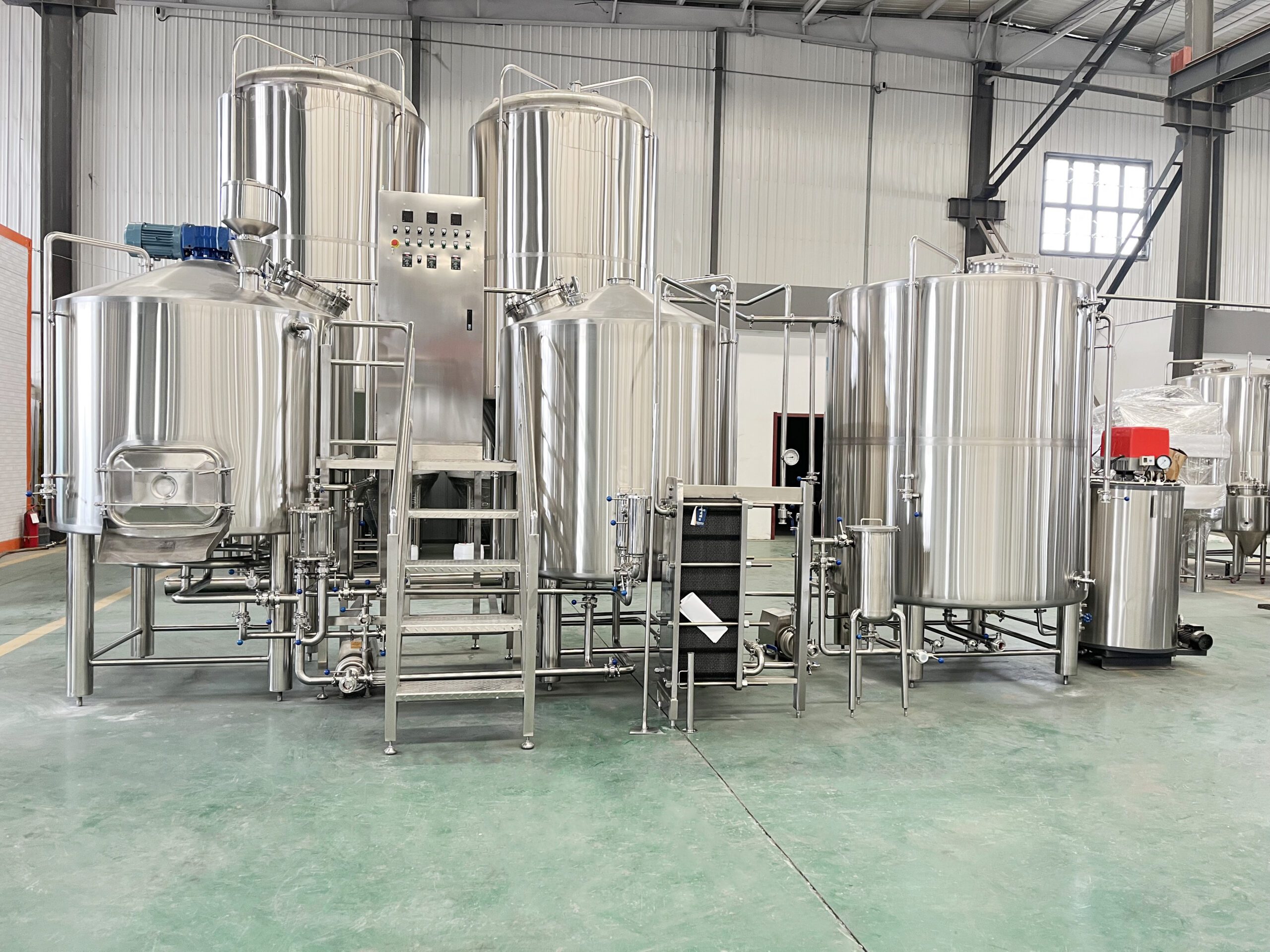
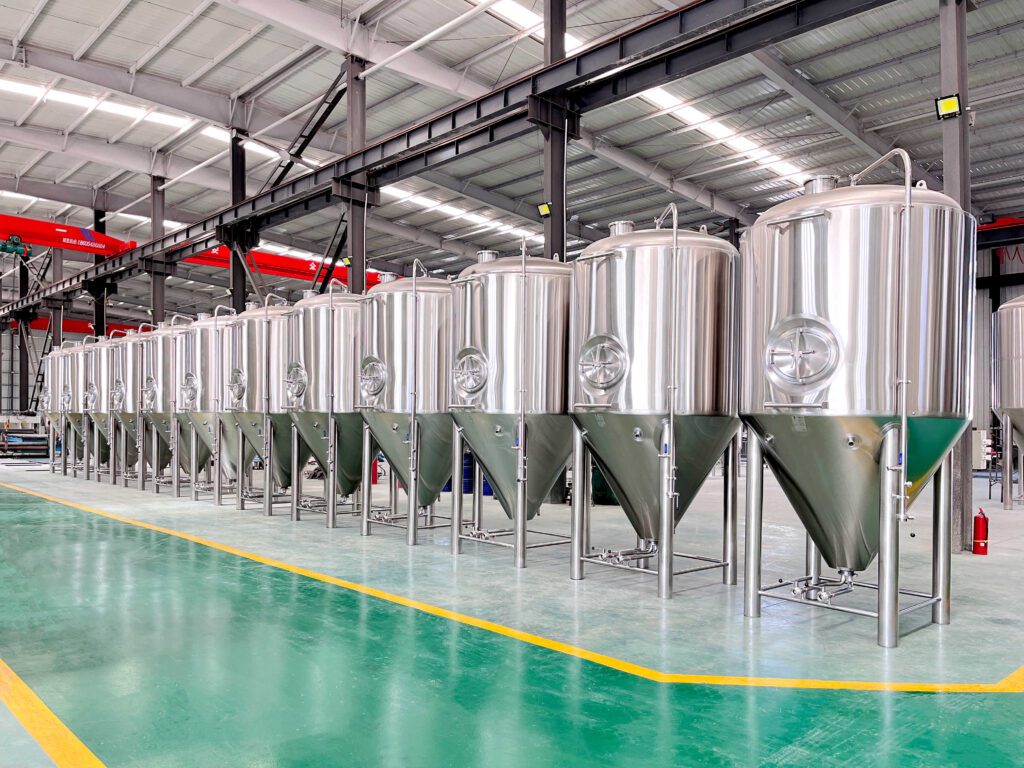
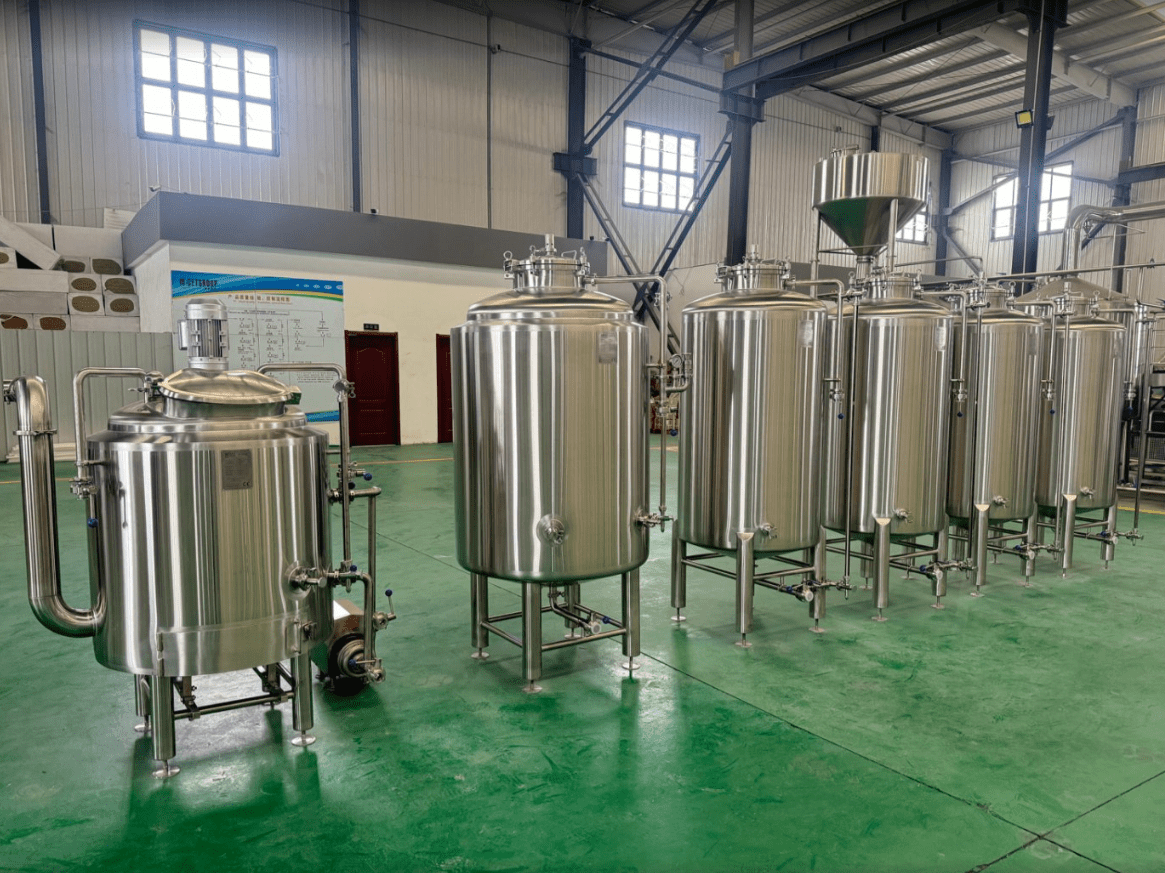
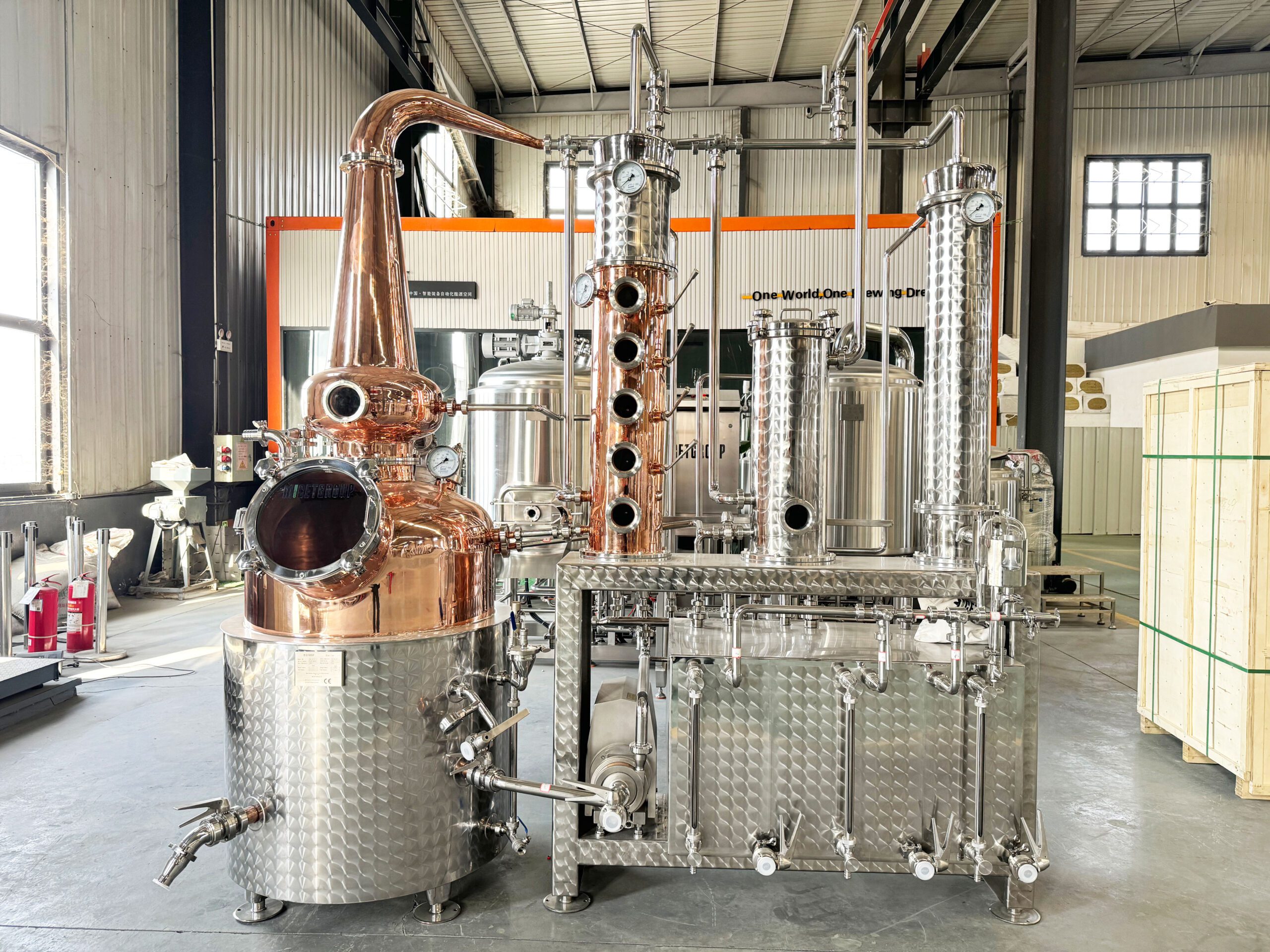

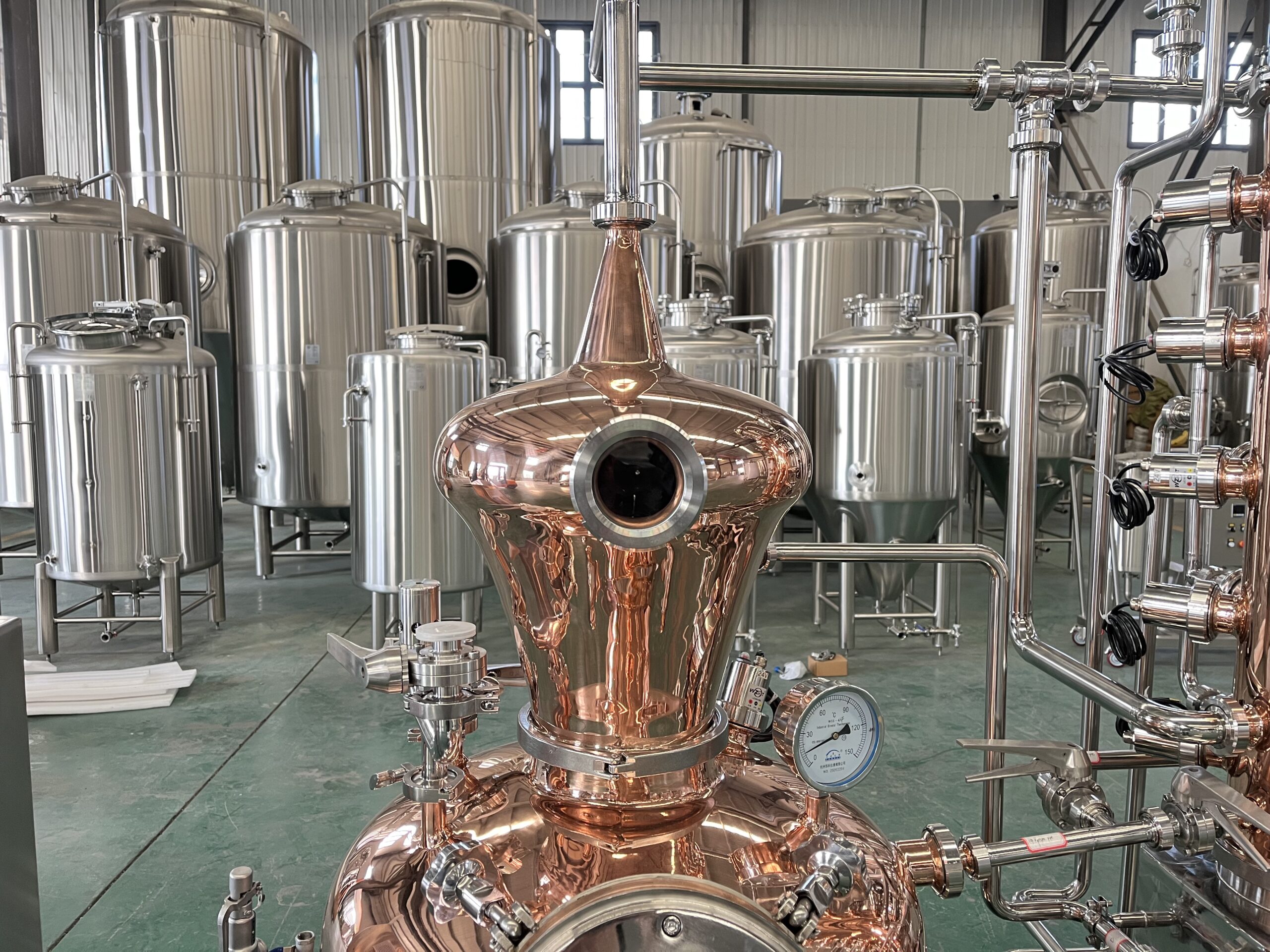
What Distillery Equipment Is Used to Distill Spirits? A Complete Guide to Commercial Distilling Equipment
Starting a distillery without the right equipment can waste raw ingredients, reduce spirit quality, and create serious safety risks. Distillation needs more than a still. A complete distillery needs fermentation, heating, vapor control, condensation, storage, cleaning, testing, and packaging equipment.
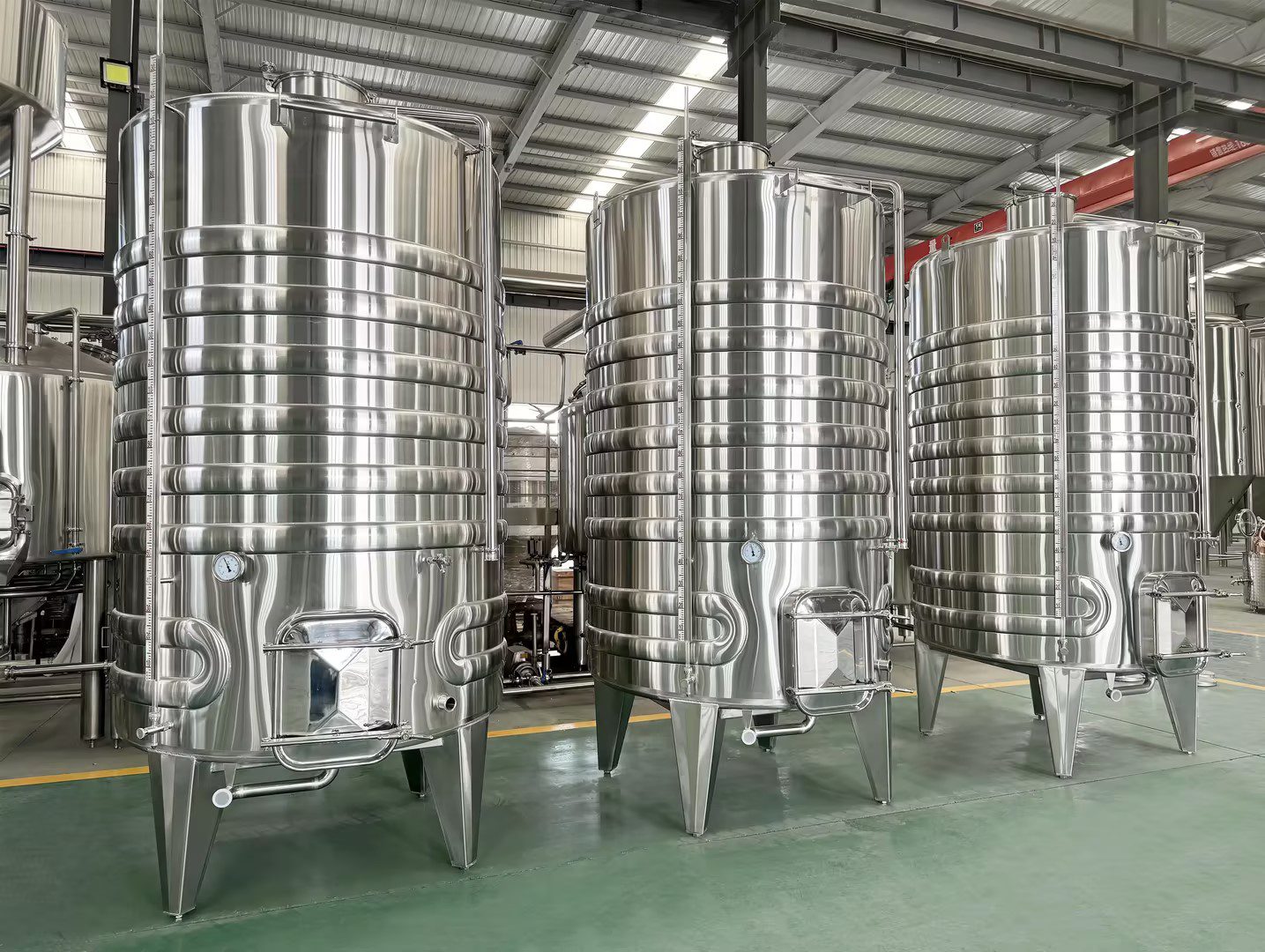
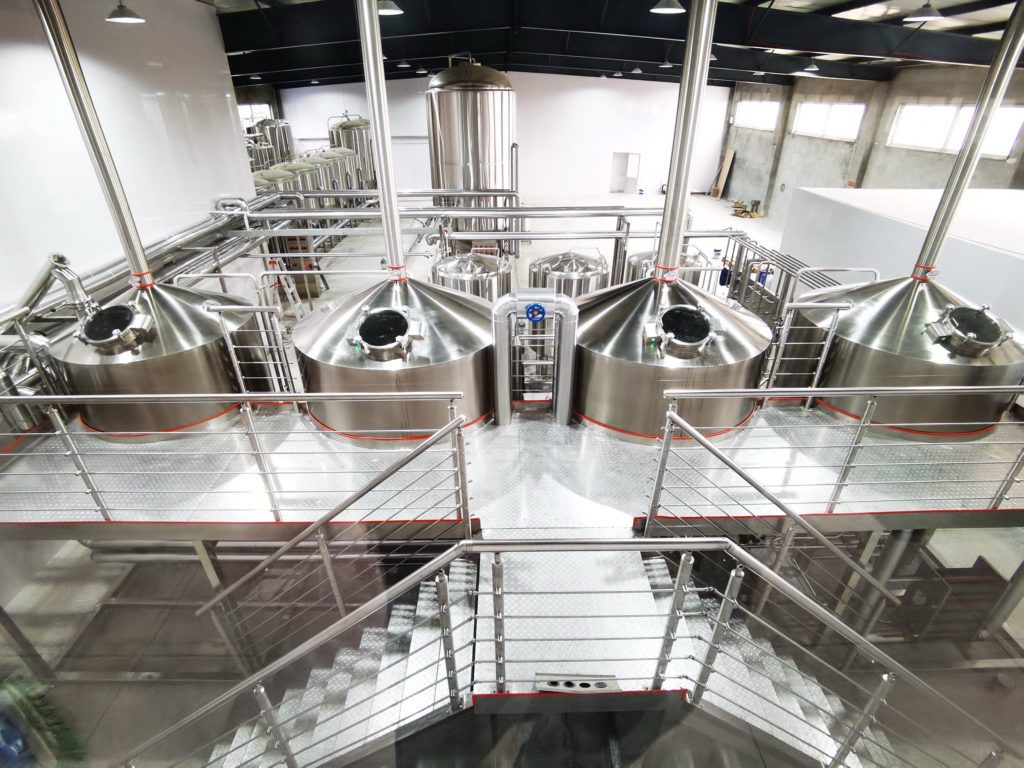
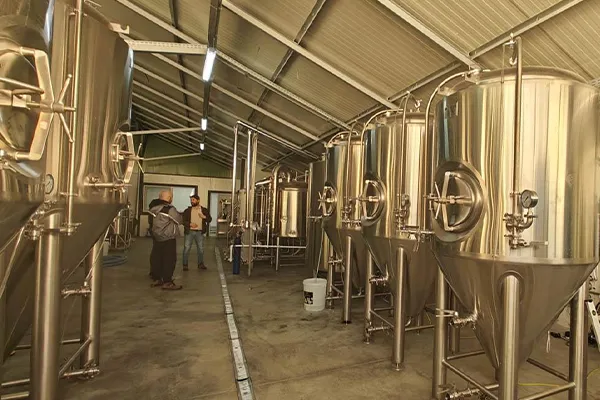
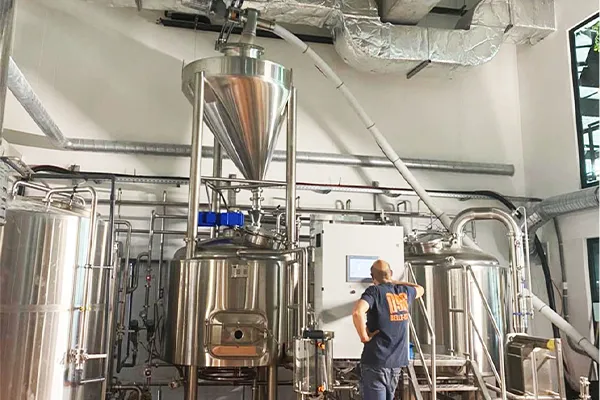
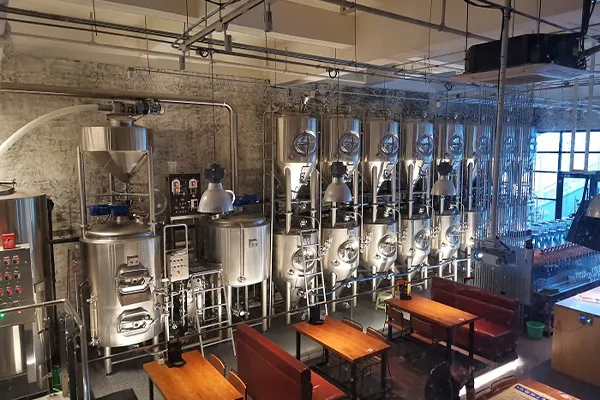
A distillery usually uses mash equipment, a mash tun, fermenter, pot still or column still, condenser, reflux system, receiving tank, storage tanks, filtration equipment, proofing tools, CIP cleaning equipment, pumps, valves, piping, and bottling equipment. Commercial distilling also requires safety controls, ventilation, temperature control, hygienic design, and legal compliance.
Resumen ejecutivo
Distillery equipment is not only the still. A complete system includes mash preparation, fermentation, distillation, condensation, spirit collection, storage, filtration, proofing, cleaning, and packaging.
Distillation separates liquid mixtures by vapor behavior, then condenses vapor back into liquid distillate.
In the United States, a distilled spirits plant can produce, bottle, process, rectify, or store beverage spirits such as vodka, whiskey, gin, brandy, rum, and liqueurs, but approval and compliance are required.
Ethanol vapor and flammable liquid handling require serious engineering controls, including controlling vapor release and eliminating ignition sources.
Copper contact is often used in whiskey distilling because copper surfaces can help reduce sulfur compounds in spirit production, although the effect depends on still design and contact area.
The right distillation equipment depends on spirit type, batch size, heating method, hygiene requirements, local regulations, and the size of your business.
Article Outline
What equipment is used in any distillery?
What does a still do in the distillation process?
Pot still vs column still: which distillation equipment is right?
Why are mash tun, fermentation tank, and fermenter important?
How do condenser, vapor path, and reflux affect distillate quality?
What storage tanks, proofing tools, and filtration equipment are needed?
What cleaning equipment supports hygiene within a distillery?
What equipment is needed for whiskey, vodka, gin, brandy, and essential oils?
What safety and compliance equipment should commercial distilling projects consider?
How should B2B buyers choose commercial distillery equipment?
What Equipment Is Used in Any Distillery?
The basic equipment in any distillery includes raw material handling tools, mash equipment, fermentation tanks, a still, condenser, receiving tank, storage tanks, pumps, valves, piping, cleaning equipment, testing tools, and packaging equipment. The exact system depends on whether the distiller makes whiskey, vodka, gin, brandy, rum, neutral spirits, or other distilled spirit products.
A simple distillery flow looks like this:
| Process Stage | Main Equipment Used |
|---|---|
| Raw ingredient preparation | Grain mill, fruit crusher, sugar mixing tank, water treatment |
| Mash preparation | Mash tun, cooker, agitator, heating system |
| Fermentación | Fermenter, cooling jacket, yeast handling, temperature control |
| Distillation | Pot still, column still, heating system, reflux system |
| Condensation | Condenser, cooling water system, distillate outlet |
| Collection | Spirit receiver, alcohol pipeline, hydrometer, proofing tools |
| Aging or storage | Stainless steel storage tanks, barrels, blending tanks |
| Filtration | Good filtration system, activated carbon filters where suitable |
| Cleaning | CIP pump, spray balls, cleaning tanks, sanitary piping |
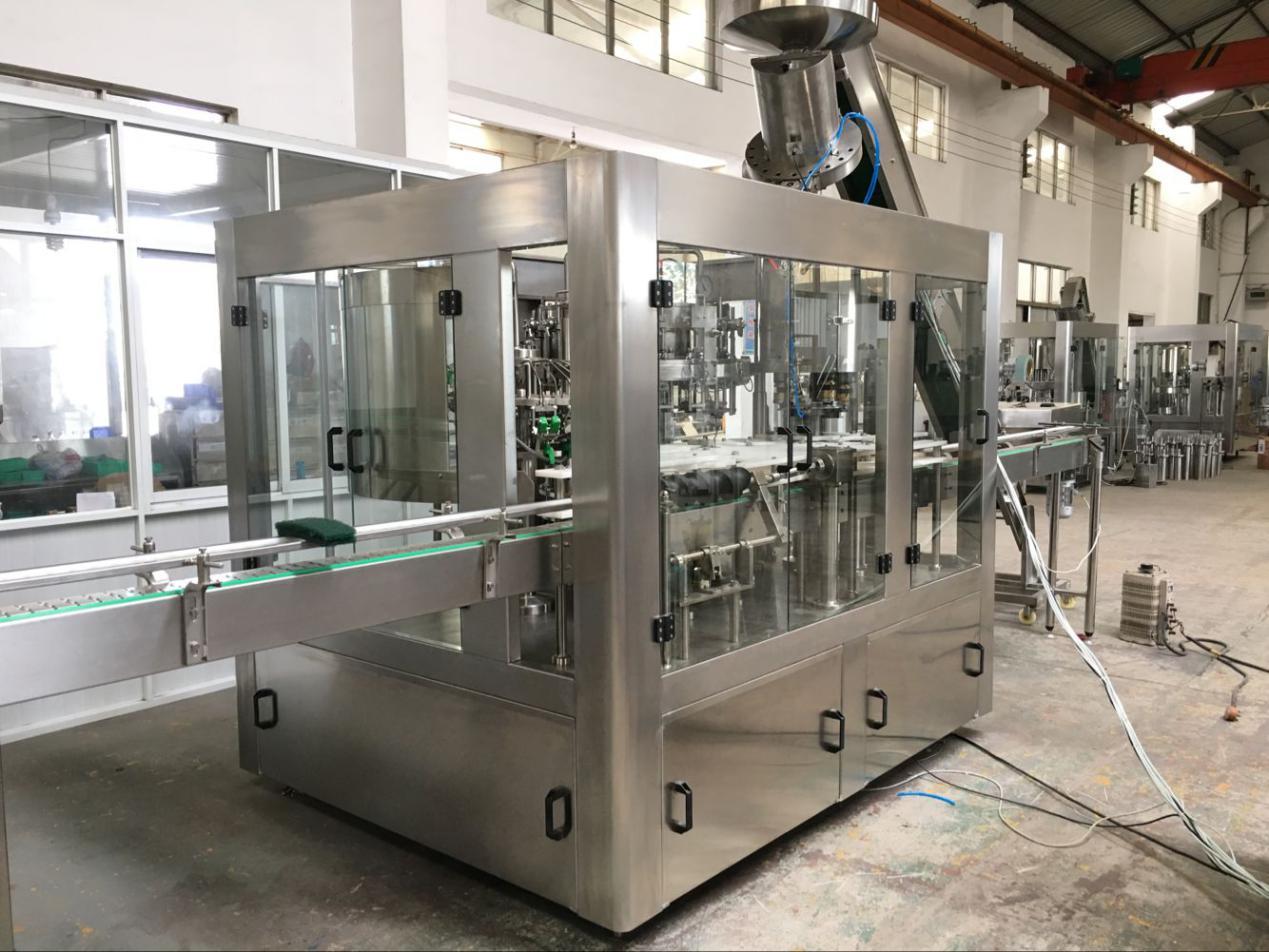
| Packaging | Manual bottling line, filling machine, corker, capper, labeler |
For commercial projects, I do not recommend choosing equipment piece by piece without a production plan. Distilling alcohol involves heat, ethanol vapor, pressure, cooling, cleaning, and regulation. The equipment should be planned as one system.
As a professional brewery, distillery, winery, kombucha, and beverage equipment manufacturer, we usually begin by asking: What spirit do you want to distill, what batch size do you need, and how will the product be packaged or aged? Those answers shape the whole system.
What Does a Still Do in the Distillation Process?
A still is the core distillation equipment used to heat fermented liquid and separate alcohol vapor from the mixture. During distillation, components with different vapor behavior separate as the liquid is heated. The vapor travels through the still system, enters a condenser, cools, and returns to liquid form as distillate.
In spirit production, the still does not create alcohol by itself. Alcohol comes from fermentation, where yeast converts fermentable sugars into ethanol. The still then concentrates and separates the alcohol and flavor compounds from the fermented wash, wine, mash, or beer-like liquid.
A distiller controls several factors during the distilling process:
- Heating rate
- Vapor path
- Copper or stainless steel contact
- Reflux level
- Condenser efficiency
- Collection method
- Cut points
- Cooling water flow
- Product proof target
A small change in still design can change flavor, yield, and working efficiency. A tall neck may create more reflux. A traditional pot still may keep heavier flavor. A column still may produce cleaner, lighter spirit. The right choice depends on the spirit style.
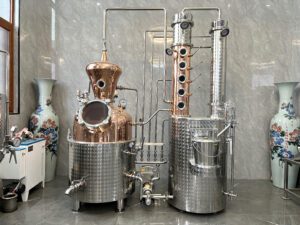
Pot Still vs Column Still: Which Distillation Equipment Is Right?
A pot still is commonly used for flavorful batch distillation. It is often selected for whiskey distilling, brandy, rum, and craft spirits where aroma and body matter. A traditional pot still usually has a pot, head or helmet, lyne arm, condenser, and collection outlet.
A column still uses plates or packing to create repeated vapor-liquid contact inside the column. This helps increase separation and can produce higher-proof spirit. Column still systems are often used for vodka, gin base spirit, neutral spirit, and operations that need more control over purity and proof.
| Equipment Type | Main Strength | Common Use |
|---|---|---|
| Pot still | Richer flavor, batch control, traditional character | Whiskey, brandy, rum, craft spirits |
| Column still | Higher proof, cleaner separation, more reflux control | Vodka, gin base, neutral alcohol |
| Hybrid still | Combines pot and column features | Craft distilleries with multiple products |
| Reflux column | Better separation and cleaner output | Vodka or high-proof spirits |
| Botanical gin still | Adds vapor or liquid infusion options | Gin and flavoring products |
The trade-off is simple. A pot still often gives more character but may need more time and more cuts. A column still gives more control and higher proof but may remove some heavier flavor. For a multi-product distillery, a hybrid pot-column system can be practical.
Why Are Mash Tun, Fermentation Tank, and Fermenter Important?
Before a distillery can distill, it needs fermentable alcohol. For grain spirits, the process often starts with milling and mashing. A mash tun or cooker mixes grain and water under controlled temperature and mixing. This helps convert starch into fermentable sugars, depending on the raw ingredients and recipe.
After mashing, the liquid moves to a fermenter. Yeast is added, and fermentation begins. The fermenter must support temperature control, cleaning, safe transfer, and proper working volume. For fruit spirits or brandy, fermentation may start with juice or crushed fruit instead of grain mash.
A commercial fermenter should be:
- Made of stainless steel or suitable food-grade material
- Easy to clean
- Designed with sanitary valves
- Sized for the batch plan
- Equipped with temperature control mechanisms
- Compatible with CIP cleaning where needed
- Built with safe access and drain points
If fermentation is unstable, distillation cannot fix everything. Poor fermentation can create off-flavors, low alcohol yield, microbial problems, or inconsistent distillate. Good spirits begin before the still.
How Do Condenser, Vapor Path, and Reflux Affect Distillate Quality?
The condenser cools alcohol vapor and turns it back into liquid distillate. Without a good condenser, vapor may not fully condense, collection becomes unstable, and safety risk increases. Condenser design must match the still size, heating power, cooling water supply, and expected vapor flow.
The vapor path also matters. Vapor may pass through copper, stainless steel, a helmet, a swan neck, a column, plates, packing, or a reflux section. More reflux means some vapor condenses and returns to the still or column before being collected. This repeated contact can make the spirit cleaner and higher in proof.
Copper deserves special attention. Research on whiskey sulfur compounds notes that copper still surfaces have been reported to remove sulfur compounds, although the chemistry is complex and not every copper position has the same effect.
For whiskey, brandy, and some craft spirits, copper contact can help shape aroma. For vodka or gin, stainless steel systems with copper sections may be used depending on the desired spirit style. The best design is not “all copper” or “all stainless” by default. It should match product quality and yield goals.
What Storage Tanks, Proofing Tools, and Filtration Equipment Are Needed?
After distillation, the distillate may need temporary holding, proof adjustment, blending, filtration, aging, or bottling. Storage tanks are used for spirit collection, blending, dilution, resting, or bulk storage. They are usually made of stainless steel and fitted with sanitary valves, level indicators, vents, manways, and cleaning connections.
Proofing tools help the distiller check alcohol strength. A hydrometer or alcoholmeter is used to measure proof or ABV, usually with temperature correction. Professional operations may also use lab testing for accuracy, especially for tax, labeling, and compliance.
Filtration depends on the spirit. Vodka may use activated carbon filters to improve clarity and smoothness. Gin may need botanical particle removal. Brandy and whiskey may need less filtration if flavor retention is the goal. A good filtration system should improve product quality without stripping the desired character.
| Equipment | Purpose |
|---|---|
| Spirit receiver | Collects distillate from condenser |
| Storage tank | Holds spirit before blending or packaging |
| Proofing tank | Supports dilution and proof adjustment |
| Hydrometer / alcoholmeter | Checks alcohol strength |
| Activated carbon filters | Common for vodka polishing |
| Cartridge or plate filtration | Removes particles before bottling |
| Blending tank | Mixes batches or adjusts flavor |
| Manual bottling line | Suitable for small craft production |
What Cleaning Equipment Supports Hygiene Within a Distillery?
Hygiene within a distillery affects flavor, safety, and production efficiency. Cleaning equipment may include CIP systems, spray balls, cleaning pumps, chemical tanks, hoses, drain systems, and sanitary fittings. CIP means clean in place. It allows tanks and pipes to be cleaned without full disassembly.
Distillery cleaning is different from simple rinsing. Mash residue, yeast, fruit pulp, sugar deposits, botanical oils, and mineral scale can build up in equipment. If these residues stay inside the system, they may affect the next batch.
A well-designed cleaning setup should support:
- Safe chemical circulation
- Easy drainage
- No dead corners
- Smooth internal surfaces
- Accessible valves
- Removable filters where needed
- Regular inspection
- Documented cleaning steps
For B2B buyers, this is one of the biggest differences between low-cost equipment and professional distillery equipment. A still or tank that is difficult to clean will become expensive through downtime, labor, and quality issues.
What Equipment Is Needed for Whiskey, Vodka, Gin, Brandy, and Essential Oils?
Different products need different distilling equipment. Whiskey distilling often uses mash cooking, fermentation tanks, pot stills or hybrid stills, condensers, spirit receivers, barrels, and storage areas. Brandy needs fruit processing, fermentation, distillation, and often aging.
Vodka or gin requires a different plan. Vodka usually needs a cleaner, higher-proof spirit, so column distillation, reflux control, proofing, and filtration may matter more. Gin may require botanical flavoring, which can happen through maceration, vapor infusion, or a gin basket depending on the distiller’s style.
Essential oils are not beverage alcohol, but some equipment principles overlap. Essential oil distillation often uses steam distillation, plant material baskets, condensers, oil-water separators, and stainless steel vessels. The design focus is aroma capture, plant material handling, and separation.
| Product | Common Equipment Focus |
|---|---|
| Whiskey | Mash tun, fermenter, pot still, condenser, barrel aging |
| Vodka | Column still, reflux, filtration, proofing tank |
| Gin | Neutral spirit system, botanical basket, flavoring control |
| Brandy | Fruit fermentation, pot still, storage tanks |
| Rum | Molasses handling, fermentation, pot or column distillation |
| Essential oils | Steam generator, plant basket, condenser, separator |
A 1000L distillery system may be suitable for a growing craft distillery, but size alone is not enough. The heating method, condenser capacity, column design, cleaning access, and building utilities must match the product.
What Safety and Compliance Equipment Should Commercial Distilling Projects Consider?
Commercial distilling involves flammable liquids and ethanol vapor. OSHA guidance explains that engineering controls for flammable liquids such as ethanol focus on preventing or controlling flammable vapor release and eliminating ignition sources.
A distillery should consider safety equipment and design features such as:
- Proper ventilation
- Explosion-proof electrical components where required
- Grounding and bonding
- Safe alcohol storage
- Temperature and pressure monitoring
- Emergency shutoff
- Fire protection
- Spill control
- Clear drainage
- Safe access platforms
- Local code-compliant room design
Legal compliance also matters. In the United States, TTB rules cover distilled spirits plant operations, permits, registration, production, bottling, processing, storage, and related compliance topics. A beverage distilled spirits plant may produce, bottle, rectify, process, or store spirits, but operators must follow the applicable rules.
This article is not legal advice. Every commercial distillery should check local laws, alcohol licensing rules, fire codes, electrical codes, and environmental requirements before purchasing or installing equipment.
How Should B2B Buyers Choose Commercial Distillery Equipment?
B2B buyers should choose commercial distilling equipment by process, not by catalog photo. A startup craft distillery, established distillery, restaurant chain, beverage co-packer, distributor, or project investor may need very different equipment even if the product name sounds similar.
A practical purchasing checklist:
| Question | Why It Matters |
|---|---|
| What spirit will you produce? | Whiskey, vodka, gin, brandy, rum, or essential oils need different systems |
| What batch size do you need? | Defines still volume, fermenter size, and heating load |
| What raw ingredients will you use? | Grain, fruit, molasses, or botanicals affect mash and cleaning |
| Pot still or column still? | Controls flavor, proof, and production style |
| What heating method is available? | Steam, electric, gas, or thermal oil affects layout and cost |
| Do you need copper contact? | Important for some spirit styles and aroma targets |
| What proof target is required? | Affects reflux, column design, and collection strategy |
| How will you clean the system? | Determines CIP, access, valves, and downtime |
| What packaging method is planned? | Manual bottling line or automated filling affects layout |
| What support is needed? | CAD/3D layout, installation guidance, and technical service reduce risk |
From our professional experience, many distillery projects fail at the planning stage because buyers focus only on the still. The still matters, but the fermenter, condenser, cooling system, cleaning plan, storage tanks, and safety design matter just as much.
What Recommendations Do Not Apply to Every Distillery?
Not every distillery needs the same system. A small craft distiller may need flexibility more than high automation. A vodka producer may need a column still and filtration. A whiskey producer may prefer traditional pot still character. A brandy producer may focus on fruit handling and gentle distillation. A co-packer may need repeatable cleaning, fast changeover, and batch documentation.
Important trade-offs include:
- Pot still vs column still: Flavor character vs higher proof and separation.
- Copper vs stainless steel: Aroma management vs cleaning, cost, and durability.
- Manual vs automated control: Lower upfront cost vs repeatable operation.
- Small batch vs large batch: Product flexibility vs economies of scale.
- Open layout vs compact layout: Easy service access vs limited building space.
- Basic filtration vs advanced filtration: Flavor retention vs clarity and smoothness.
The best system is not the most expensive one. It is the system that matches your product, production capacity, safety requirements, and long-term business plan.
Practical Case Study: Planning a 1000L Craft Distillery System
A startup distillery wanted a 1000L system for whiskey and gin. At first, the buyer asked only for a still price. After reviewing the project, we found that the facility also needed fermentation capacity, cooling, botanical handling, proofing, storage, cleaning, and a practical manual bottling line.
The final equipment plan included:
| Need | Equipment Solution |
|---|---|
| Whiskey mash preparation | Mash tun with temperature and mixing control |
| Fermentación | Stainless steel fermenters sized for batch schedule |
| Whiskey distillation | Pot still with copper contact and condenser |
| Gin flexibility | Botanical basket and controlled vapor path |
| Refrigeración | Condenser cooling water system |
| Spirit handling | Receiving tank, proofing tank, storage tanks |
| Cleaning | CIP pump and sanitary spray connections |
| Packaging | Manual bottling line for small-batch releases |
| Layout | CAD/3D plan for workflow and utility access |
This project showed a common lesson: good distillery equipment should support the whole production chain, not just the moment of distillation.
FAQs About Distilling Equipment
What equipment is used in a distillery?
A distillery uses mash equipment, fermenters, stills, condensers, reflux systems, spirit receivers, storage tanks, pumps, valves, piping, filtration systems, proofing tools, cleaning equipment, and bottling equipment.
What is the most important piece of distillery equipment?
The still is the most visible piece of equipment, but the fermenter, condenser, cooling system, and cleaning system are also essential. Poor fermentation or poor condensation can damage quality even if the still is well made.
What is the difference between a pot still and a column still?
A pot still is usually used for batch distillation and flavorful spirits such as whiskey, rum, and brandy. A column still uses plates or packing for stronger separation and higher proof, making it useful for vodka, gin base spirit, and neutral alcohol.
Is stainless steel or copper better for distillation equipment?
Both can be useful. Stainless steel is durable, hygienic, and easy to clean. Copper can help manage sulfur compounds and is traditional for many whiskey and brandy stills. Many commercial systems combine stainless steel with copper contact sections.
Do I need a mash tun for a distillery?
You need a mash tun if your spirit production starts from grain or other starch-based raw ingredients. If you distill from wine, cider, fruit wash, or purchased neutral spirit, your mash equipment needs may be different.
What equipment is needed for vodka or gin?
Vodka usually needs column distillation, reflux control, proofing, filtration, and clean storage. Gin may need neutral spirit handling, botanical flavoring, a gin basket or maceration tank, condenser, storage, filtration, and bottling equipment.
Is distilling alcohol at home legal?
Laws vary by country and region. In the United States, beverage distilled spirits production is regulated, and commercial operations require proper approval and compliance. Always check local alcohol laws before distilling.
Key Takeaways
Distillery equipment includes much more than a still.
A complete system may include mash tun, fermenter, still, condenser, reflux column, receiving tank, storage tanks, filtration, proofing, CIP cleaning, and bottling equipment.
Pot stills are often used for flavorful spirits such as whiskey and brandy.
Column stills are often used for higher-proof spirits such as vodka or neutral alcohol.
Fermentation quality strongly affects distillate quality and yield.
Condenser sizing and cooling water supply are critical for safe vapor control.
Copper contact can influence sulfur compound reduction in some distilling systems.
Stainless steel is widely used because it is hygienic, durable, and easy to clean.
Commercial distilling requires serious safety planning because ethanol and alcohol vapor are flammable.
The best distillery equipment plan should match spirit type, batch size, building layout, heating method, cleaning workflow, legal requirements, and future growth.
For a distillery project, the safest next step is a process review: confirm the spirit type, batch capacity, heating source, building utilities, cleaning plan, packaging method, and local compliance needs before choosing the still size or full equipment layout.
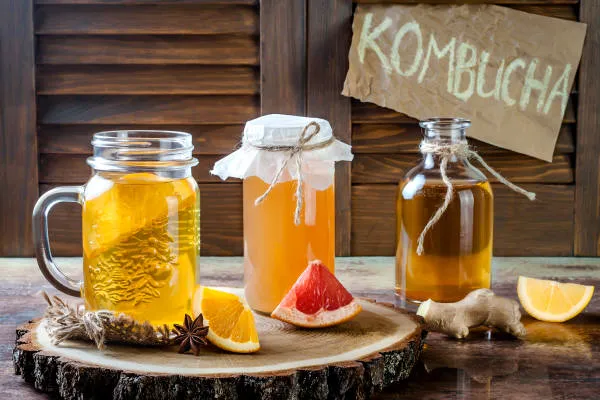
What Equipment Is Needed to Make Kombucha? A Practical Guide to Kombucha Brewing at Home and Commercial Scale
Bad kombucha equipment can lead to weak fermentation, mold risk, flat flavor, messy bottling, or unsafe pressure in bottles. Whether you brew kombucha at home or plan commercial production, the right tools help you control taste, safety, fizz, and repeatable quality.
To make kombucha, you need tea, cane sugar, water, a SCOBY, starter tea, a clean glass jar or stainless steel fermentation tank, breathable cover, rubber band, thermometer, pH test strips or meter, strainer, bottles for second fermentation, and cleaning tools. Commercial kombucha brewing also needs sanitary tanks, CIP cleaning, cooling, filtration, carbonation, filling, and quality control equipment.
Resumen ejecutivo
Kombucha is a fermented tea made with sweetened tea and a SCOBY, a culture of bacteria and yeast that drives fermentation.
For safe homemade kombucha, pH control matters. Colorado State University notes kombucha should be below pH 4.2 but not below pH 2.5 for safe consumption.
A homebrew setup can start with a glass jar, coffee filter or tea towel, rubber band, starter tea, kombucha SCOBY, thermometer, test strips, and glass bottles.
Second fermentation creates carbonation, but pressure can build in bottles, so bottle choice and monitoring matter.
Commercial kombucha production requires stainless steel fermentation tanks, hygienic design, temperature control, pH/TA testing, safe packaging, and process records.
The best equipment depends on your goal: homemade kombucha, taproom-style batches, beverage co-packing, or scalable factory production.
Article Outline
What is kombucha brewing, and why does equipment matter?
What basic equipment do you need to make kombucha at home?
Why are SCOBY, starter tea, and sweetened tea essential?
What jar, cover, rubber band, and brewing vessel should you use?
What tools help control fermentation, temp, and pH?
What bottles are needed for second fermentation and carbonation?
How do you make kombucha with a simple 1-gallon recipe?
What equipment is needed for commercial kombucha brewing?
What are the trade-offs between DIY kombucha kits and professional systems?
How should beverage businesses choose kombucha equipment?
What Is Kombucha Brewing, and Why Does Equipment Matter?
Kombucha brewing is the process of fermenting sweetened tea with a SCOBY. The word SCOBY means symbiotic culture of bacteria and yeast. During fermentation, yeast and bacteria work together to change sugar and tea into a tart, lightly fizzy fermented tea. Research describes kombucha as sugared tea fermented at ambient temperature with a cellulose pellicle made up of acetic acid bacteria and yeast.
Equipment matters because kombucha is alive. It needs air during the first fermentation, clean tools, the right room temperature, enough starter tea, and a safe vessel. Poor tools can slow the brew, invite fruit flies, increase contamination risk, or create inconsistent flavor. This is true whether you make kombucha at home in a wide-mouth jar or produce it in a commercial beverage facility.
From my experience as a brewery, distillery, winery, kombucha, and beverage equipment manufacturer, I usually tell buyers one thing first: kombucha equipment should support clean fermentation before it supports high output. A bigger tank is not useful if the process is hard to clean, hard to test, or hard to repeat.
What Basic Equipment Do You Need to Make Kombucha at Home?
To make kombucha at home, you need simple but clean tools. A beginner homebrew setup usually includes a glass jar, tea, organic cane sugar or cane sugar, starter liquid, a kombucha SCOBY, a breathable cover, rubber band, thermometer, pH test strips, strainer, and glass bottles for second fermentation.
A basic homemade kombucha equipment list looks like this:
| Equipment | Why You Need It |
|---|---|
| Glass jar or brewing jar | Holds the sweet tea, starter, and SCOBY |
| SCOBY | Starts the fermentation process |
| Starter tea | Acidifies the brew and protects the batch |
| Tea bags or loose leaf tea | Provides nutrients and flavor |
| Cane sugar | Feeds yeast and bacteria |
| Coffee filter or tea towel | Covers the jar while allowing airflow |
| Rubber band | Secures the cover and keeps fruit flies out |
| Thermometer | Helps monitor room temperature |
| pH test strips or meter | Checks acidity and safety range |
| Strainer | Removes tea leaves or fruit pieces |
| Glass bottles | Used for second fermentation and fizz |
For beginners, this setup is enough to start brewing. A DIY kombucha kit may include many of these items, but you should still check the quality of the jar, bottles, and test strips. Cheap bottles may not handle pressure well during bottle conditioning.
Why Are SCOBY, Starter Tea, and Sweetened Tea Essential?
The SCOBY is the heart of kombucha brewing. It often looks like a pale, rubbery layer called a pellicle. This pellicle forms on the surface as the culture ferments sweet tea. Studies of SCOBY cultures show that kombucha communities commonly include yeast and acetic acid bacteria, with common genera such as Brettanomyces and Komagataeibacter found in many samples.
Starter tea is just as important as the SCOBY. It lowers the pH of the new batch at the start. This makes the brew less friendly to unwanted microbes. Colorado State University explains that acidification helps kombucha reach a safe pH and reduce contamination risk.
Sweetened tea provides food. You can use black tea, green tea, or a blend of black and green tea. The yeast consumes sugar and produces compounds that bacteria convert into organic acids. Without enough sugar, the kombucha may become sluggish. Without enough starter, the batch may not acidify fast enough.
What Jar, Cover, Rubber Band, and Brewing Vessel Should You Use?
For kombucha at home, a wide-mouth glass jar is usually the easiest choice. Glass is easy to see through, easy to clean, and does not react with acidic kombucha. A 1 gallon jar is common for a small batch of kombucha. A half-gallon jar is also useful when testing a new kombucha recipe or different flavors.
You should cover the jar with a coffee filter, tea towel, or tightly woven breathable cloth. The cover should allow oxygen to enter but keep fruit flies, dust, and insects out. A rubber band keeps the cover tight around the jar. Do not seal the first fermentation with an airtight lid because the SCOBY needs oxygen.
For commercial production, food-grade stainless steel is normally preferred. It is stronger, more hygienic, easier to clean, and better for controlled production. A commercial kombucha tank may include a manway, sanitary valves, CIP spray ball, cooling jacket, sample valve, temperature probe, and optional spigot or racking outlet.
What Tools Help Control Fermentation, Temp, and pH?
Kombucha fermentation depends on temperature, time, acidity, starter strength, and culture health. A simple thermometer helps you check room temperature. Kombucha usually ferments at room-temperature conditions, but very cold rooms can slow the process, while overly warm rooms can push faster acid production.
pH test strips or a pH meter help you monitor acidity. Colorado State University states that safe kombucha should be below pH 4.2 and not lower than pH 2.5. This is why test strips are not just “extra tools.” They help you know whether the brew is moving in the right direction.
For home use, test strips are usually enough. For professional beverage production, a pH meter, titratable acidity testing, alcohol testing, temperature logs, batch records, and sanitation checks become more important. Kombucha that rises above 0.5% ABV may be regulated as an alcoholic beverage in the United States, so commercial producers should test alcohol carefully.
What Bottles Are Needed for Second Fermentation and Carbonation?
After the first fermentation, many brewers move finished kombucha into bottles for second fermentation. This stage adds flavoring and carbonation. Fruit juice, herbs, ginger, berries, citrus, or other flavoring ingredients can create different flavors. The yeast consumes small amounts of sugar and produces carbon dioxide, which creates fizz.
Use strong glass bottles made for pressure, such as flip-top bottles designed for fermented drinks. Do not use weak decorative bottles. Pressure can build during second fermentation. If bottles are too weak, overfilled, or left too long at warm temperature, they may leak or break.
Second fermentation needs careful control. Use clean bottles, leave headspace, do not overdo sugar, and refrigerate when carbonation is ready. For commercial kombucha, carbonation can be controlled more safely with brite tanks, carbonation stones, pressure-rated vessels, and filling systems.
How Do You Make Kombucha With a Simple 1-Gallon Recipe?
A simple 1 gallon kombucha recipe usually starts with brewed tea, sugar, starter tea, and a SCOBY. Exact ratios vary by recipe and culture strength, but the basic process is easy to understand.
A beginner process may look like this:
- Brew tea with tea bags or loose leaf tea.
- Add cane sugar while the tea is hot and stir until dissolved.
- Cool the sweet tea to room temperature.
- Pour it into a clean glass jar.
- Add starter tea and the kombucha scoby.
- Cover the jar with a coffee filter or tea towel.
- Secure it with a rubber band.
- Let it ferment at room temperature.
- Taste after several days.
- Bottle the finished kombucha for flavoring or second fermentation.
- Save starter tea and SCOBY for the next batch.
Colorado State University notes that kombucha is often fermented for 7–10 days, though timing can vary based on conditions and desired taste. A shorter brew may taste sweeter. A longer brew may taste more sour or vinegary. If the batch smells rotten, grows fuzzy mold, or looks unsafe, discard it.
What Equipment Is Needed for Commercial Kombucha Brewing?
Commercial kombucha brewing needs stronger, cleaner, and more controlled equipment than homemade kombucha. A beverage producer needs to repeat the same taste, acidity, carbonation, and package quality across every batch. This requires more than a glass jar.
A commercial kombucha line may include:
| Process Stage | Professional Equipment |
|---|---|
| Tea brewing | Hot water tank, tea extraction vessel, filter or strainer |
| Sugar mixing | Mixing tank, agitator, dosing system |
| Refrigeración | Plate heat exchanger or jacketed cooling tank |
| Fermentación | Stainless steel fermentation tank with sanitary fittings |
| Culture handling | SCOBY handling tools, starter tank, sanitary transfer |
| Prueba | pH meter, thermometer, alcohol testing, acidity testing |
| Flavoring | Mixing tank, fruit juice dosing, ingredient filtration |
| Carbonation | Brite tank, carbonation stone, CO₂ control |
| Filtration | Strainer, membrane filter, or product-specific filtration |
| Packaging | Bottle filler, canning line, keg filler, labeling machine |
| Cleaning | CIP pump, CIP tank, spray balls, sanitary valves |
For a startup kombucha brand, not every item must be fully automatic on day one. But the equipment should be hygienic, scalable, and easy to clean. A poor layout can waste labor every day. A good layout supports smooth movement from tea brewing to fermentation, flavoring, carbonation, and filling.
What Are the Trade-Offs Between DIY Kombucha Kits and Professional Systems?
A DIY kombucha kit is good for learning. It is affordable, small, and easy to use. You can test black tea, green tea, fruit juice, loose leaf tea, and different flavors without much investment. But a DIY kit does not offer strong process control or commercial capacity.
Professional kombucha systems cost more, but they provide better sanitation, repeatability, temperature control, and production planning. They also reduce manual handling. For beverage co-packers, kombucha producers, brewpub chains, and project investors, these benefits can reduce long-term risk.
| Option | Advantage | Limitation |
|---|---|---|
| DIY kombucha kit | Low cost, easy to start | Small volume, less control |
| Glass jar homebrew | Simple and visible | Not scalable |
| Small stainless tank | More durable, cleaner | Higher upfront cost |
| Jacketed fermenter | Better temp control | Needs utilities |
| Full commercial line | Scalable and efficient | Requires planning and capital |
The right choice depends on your goal. If you only want homemade kombucha, use simple tools. If you want a beverage business, plan for hygiene, testing, filling, cooling, and repeatable production.
How Should Beverage Businesses Choose Kombucha Equipment?
B2B buyers should not choose kombucha equipment only by tank volume. Start with the business model. Will you sell fresh kombucha on tap, bottled kombucha, canned kombucha, flavored kombucha, hard kombucha, or co-packed products for other brands? Each model needs different equipment.
A practical buyer checklist:
| Question | Why It Matters |
|---|---|
| What is the target batch size? | Defines tank volume and production plan |
| How many SKUs or flavors? | Affects flavoring tanks and scheduling |
| Do you need carbonation? | Requires pressure-rated equipment |
| Bottle, can, keg, or bulk pack? | Defines filling and packaging line |
| What is the target pH and acidity? | Defines testing and quality control |
| Do you need alcohol control? | Important for compliance and labeling |
| How will tanks be cleaned? | Determines CIP design |
| Is expansion planned? | Affects layout and utility sizing |
| What is the building layout? | Impacts workflow and installation |
| What technical support is needed? | Reduces startup and commissioning risk |
As a professional brewery, distillery, winery, kombucha, and beverage equipment manufacturer, we often review the buyer’s process before recommending tanks. For global projects, we may support factory-direct supply, CAD/3D layout planning, sanitary stainless steel equipment, installation guidance, and long-term technical service.
What Recommendations Do Not Apply to Every Kombucha Project?
Not every kombucha project needs the same equipment. A home brewer does not need a stainless steel CIP system. A small taproom may not need a high-speed canning line. A large beverage co-packer should not rely on open jars or manual bottling.
Some trade-offs are important:
- Glass jars are good for learning, but not for scalable commercial output.
- Open fermentation can support oxygen exposure, but it must be protected from insects and contamination.
- Second fermentation can make kombucha fizzy, but pressure risk must be managed.
- More automation saves labor, but it increases upfront investment.
- Filtration improves clarity, but it may change live culture profile.
- Forced carbonation improves consistency, but it changes the craft-style bottle conditioning approach.
Professional advice should always match the real process, local rules, and market plan. Kombucha for a restaurant chain, kombucha for retail shelves, and kombucha for a small tasting room are different projects.
Practical Case Study: From Homemade Kombucha to Small Commercial Production
A startup beverage team came to us after making successful homemade kombucha in glass jars. Their flavor was good, but they had three problems: inconsistent acidity, slow bottling, and limited batch volume. They wanted to scale without losing the fresh fermented tea character.
We suggested a staged equipment plan:
| Problem | Equipment-Based Improvement |
|---|---|
| Inconsistent pH | Add pH meter, batch records, controlled starter ratio |
| Small batch size | Move from jars to stainless steel fermentation tanks |
| Slow bottling | Use semi-automatic bottle filling |
| Messy flavoring | Add small mixing tank for fruit juice and flavoring |
| Unclear layout | Create CAD/3D flow from tea brewing to packaging |
| Cleaning risk | Add sanitary valves and CIP-ready tank design |
The result was a more reliable kombucha brewing process. The team could still make your own kombucha-style product, but with better hygiene, clearer workflow, and stronger commercial control.
FAQs About Kombucha Equipment
What equipment do I need to make kombucha at home?
You need a glass jar, SCOBY, starter tea, sweetened tea, breathable cover, rubber band, thermometer, pH test strips, strainer, and glass bottles for second fermentation.
Can I brew kombucha without a SCOBY?
You usually need a kombucha SCOBY or strong starter from a previous batch. Store-bought kombucha may work only if it is raw, unflavored, and contains live culture, but results can be slower or less reliable.
What kind of jar is best for kombucha?
A wide-mouth glass jar is best for home kombucha. It is easy to clean, easy to cover, and does not react with acidic fermented tea.
Do I need pH test strips for homemade kombucha?
They are strongly recommended. pH strips or a pH meter help you check whether the fermentation is becoming acidic enough and not becoming too acidic.
What bottles are best for second fermentation?
Use strong pressure-rated glass bottles, such as flip-top bottles designed for fermented drinks. Avoid weak bottles because carbonation can build pressure.
What equipment is needed for commercial kombucha brewing?
Commercial kombucha production may need stainless steel fermentation tanks, tea brewing tanks, mixing tanks, cooling, pH and alcohol testing, carbonation equipment, filtration, filling machines, CIP cleaning, and sanitary piping.
How long does kombucha fermentation take?
Many home batches ferment around 7–10 days, but time depends on temperature, starter strength, sugar, tea, SCOBY health, and preferred taste.
Key Takeaways
To make kombucha, you need tea, sugar, water, SCOBY, starter tea, a clean jar or tank, breathable cover, testing tools, and bottles.
The SCOBY and starter tea are essential for stable fermentation.
A glass jar works well for homemade kombucha, while stainless steel tanks are better for commercial brewing.
pH control is important because kombucha must become acidic enough to reduce contamination risk.
Second fermentation creates fizz, but bottle pressure must be managed carefully.
A DIY kombucha kit is good for learning, but commercial projects need hygienic, scalable equipment.
Beverage businesses should plan equipment around batch size, flavoring, carbonation, packaging, cleaning, and compliance.
Good kombucha equipment should make the process cleaner, safer, easier to repeat, and easier to scale.
For startup kombucha brands, brewpubs, beverage co-packers, wineries, distilleries, and project investors, a professional equipment review can help match the process, layout, and budget before purchasing.
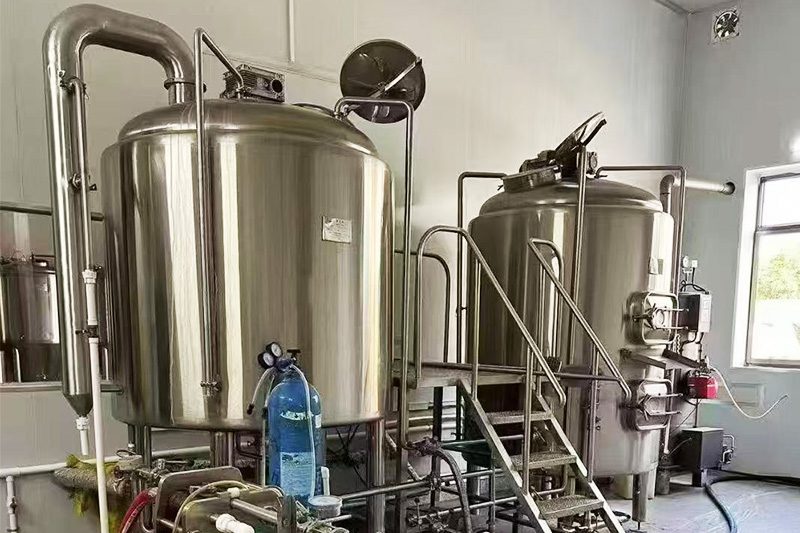
Used 1000L Beer Brewing Equipment
Este used 1000L beer brewing equipment is an excellent choice for craft breweries, brewpubs, restaurants, and startup brewing projects looking for a reliable and affordable brewing solution. The system is designed to provide stable brewing performance while significantly reducing initial investment costs compared to brand-new brewery equipment.
The complete 1000L brewing system is manufactured with high-quality stainless steel, ensuring durability, hygienic brewing conditions, and long service life. The equipment typically includes a brewhouse system, fermentation tanks, glycol cooling system, control system, pumps, and related brewery accessories. With a compact structure and user-friendly operation, it is suitable for both experienced brewers and new brewery investors.
This second-hand brewery equipment has been professionally maintained and remains in good working condition. The tanks feature sanitary polishing, reliable welding, and efficient temperature control performance, helping breweries produce consistent craft beer quality. The 1000L capacity is ideal for medium-scale beer production and can support multiple beer styles such as lager, ale, IPA, stout, and wheat beer.
Compared with purchasing new equipo de cervecería, used brewing systems offer faster delivery times and a more economical investment option, making them increasingly popular in the global craft beer market. Many breweries choose second-hand equipment to expand production capacity while controlling startup and operational costs.
Our used 1000L beer brewing equipment can also be customized according to customer requirements, including voltage, heating method, tank quantity, and brewery layout design. Before shipment, the equipment can be inspected and tested to ensure stable operation.
Whether you are starting a new craft brewery or upgrading your current brewing capacity, this used 1000L brewery equipment provides a practical, efficient, and budget-friendly solution for professional beer production.
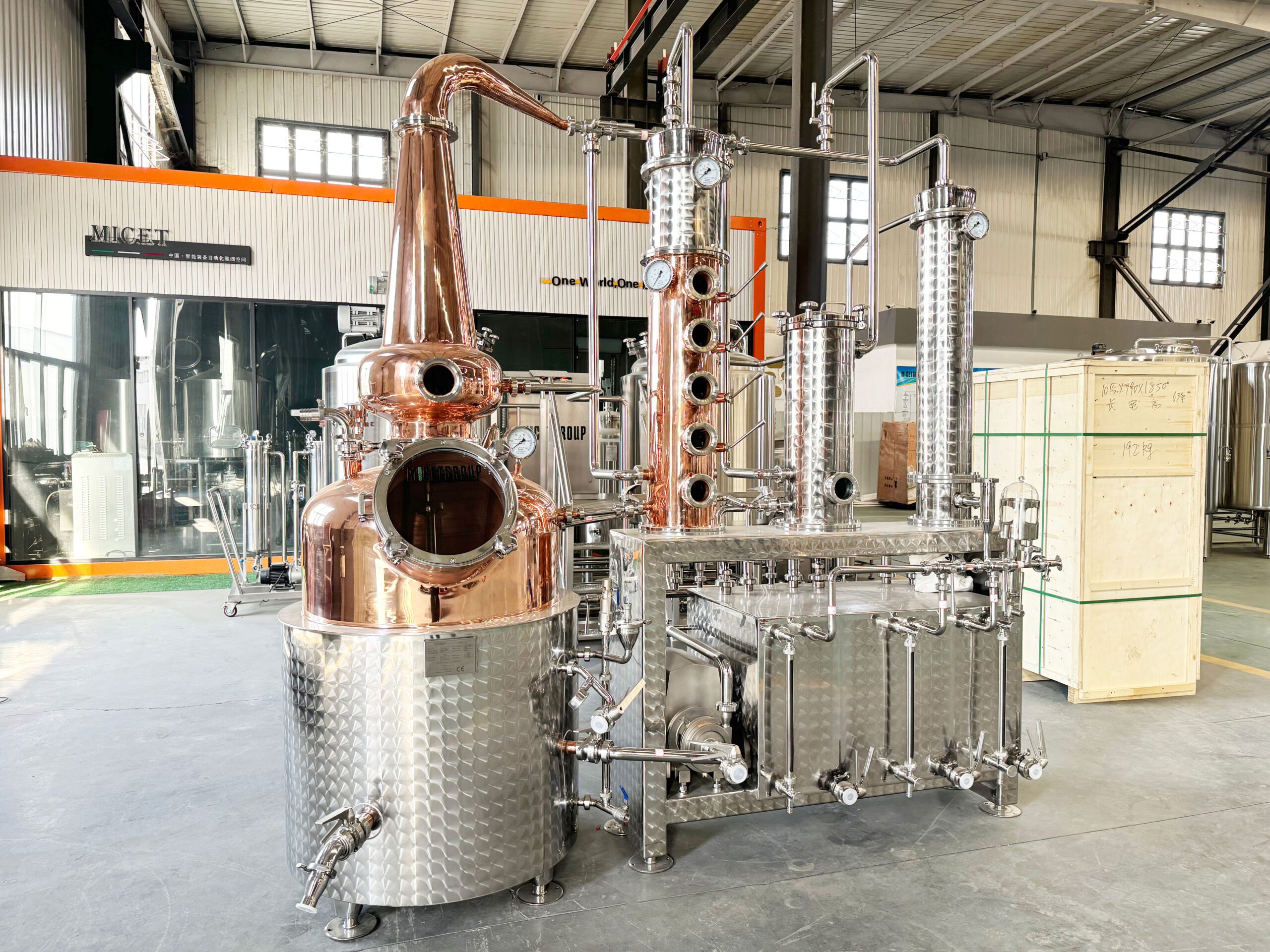
Distillery Equipment & Turnkey Solutions: A Practical Guide to Choosing the Right Still, Distilling System, and Complete Production Line
Starting a distillery without the right equipment can create delays, safety risks, poor spirit quality, and wasted investment. A beautiful still is not enough. You need a complete process plan, compliant design, reliable utilities, and a supplier who understands real production.
Distillery equipment includes the mash system, fermenter, pot still or column still, condenser, cooling equipment, spirit receiver, tanks, pumps, piping, controls, and cleaning support used to produce spirits such as whisky, gin, rum, vodka, and brandy. A turnkey distillery solution covers layout, equipment design, manufacturing, installation guidance, commissioning support, and long-term technical service.
Resumen ejecutivo
Distillery equipment should be selected by spirit type, batch size, heating method, distillation style, utility conditions, compliance needs, and future expansion.
A pot still is commonly used for whisky, brandy, rum, and flavorful spirits, while column stills and continuous stills are often used when higher efficiency or lighter spirit style is needed.
In the United States, a commercial distilled spirits business must first qualify with TTB by applying for a permit to operate; this is a regulatory step, not an equipment choice.
U.S. regulations for distilled spirits plants are covered under 27 CFR Part 19, including permits, production, storage, processing, records, and tax-related operations.
ASME’s Boiler and Pressure Vessel Certification Program covers design, fabrication, assembly, and inspection rules for pressure equipment; buyers should review pressure vessels carefully when selecting tanks and heated systems.
A reliable supplier should support CAD/3D layout, custom distillation equipment, sanitary fabrication, installation guidance, training, spare parts, and after-sales service.
Article Outline
What Is Distillery Equipment?
What Equipment Is Needed for a Turnkey Distillery?
How Does a Still Work in a Distillation System?
Pot Still vs Column Still: Which Distilling Equipment Is Right?
What Spirits Can You Produce: Gin, Whisky, Rum, Vodka, and Brandy?
Why Do Materials Matter: Copper, Stainless Steel, or Both?
What Is Included in a Turnkey Distillery Solution?
How Do Capacity, Layout, and Utilities Affect Distillery Design?
What Safety, Compliance, and Pressure Vessel Details Matter?
How Should B2B Buyers Choose Distillation Equipment Manufacturers?
What Is Distillery Equipment?
Distillery equipment is the full set of machines, tanks, vessels, piping, and controls used to produce distilled spirits. It may include a mash tun, fermenter, distillation kettle, pot still, distillation column, condenser, spirit receiver, storage tanks, pumps, heat exchangers, cooling equipment, control cabinet, and cleaning accessories.
In simple words, the equipment helps turn a fermented liquid into a spirit. First, raw materials are prepared and fermented. Then the fermented liquid is heated in the still. Alcohol and aroma compounds vaporize, move through the system, condense, and are collected. The exact design changes depending on whether the distiller wants whisky, gin, rum, vodka, brandy, or another spirit.
For B2B buyers, the key point is this: distilling equipment should not be purchased as isolated parts. A still, fermenter, cooling system, piping layout, and control system must work together. If one part is poorly matched, the whole production process becomes harder to control.
What Equipment Is Needed for a Turnkey Distillery?
A turnkey distillery normally includes both production equipment and project support. The equipment side may include mashing, fermentation, distillation, cooling, receiving, storage, cleaning, and control systems. The project side may include layout planning, equipment manufacturing, installation guidance, commissioning support, operator training, and long-term service.
A typical turnkey distillery equipment list may include:
| System Area | Main Equipment | Purpose |
|---|---|---|
| Raw material preparation | Milling or material handling equipment | Prepare grain, fruit, molasses, or other base materials |
| Mashing | Mash tun, hot water tank, agitator | Convert or mix fermentable materials |
| Fermentación | Fermentation tanks, cooling jacket, valves | Convert sugar into alcohol |
| Distillation | Pot still, column stills, condenser | Separate and concentrate alcohol and aroma compounds |
| Refrigeración | Chiller, cooling water system, heat exchangers | Support condensation and temperature control |
| Receiving | Spirit receiver, safe collection tank | Collect distillate |
| Storage | Stainless storage tanks or spirit tanks | Hold product before blending or aging |
| Cleaning | CIP pump, spray balls, cleaning tanks | Improve hygiene and maintenance |
| Controlar | PLC/HMI or manual control panel | Monitor heating, pumps, and process points |
For a startup craft distillery, a compact system ranging from 150L to several hundred liters may be enough for trial production or local sales. For a larger project, equipment may range from 1000L to 3000L or more, depending on spirit type, production goals, building size, and budget.
How Does a Still Work in a Distillation System?
A still is the core of a distillation system. It heats fermented liquid so alcohol and volatile compounds rise as vapor. The vapor then moves through a head, column, lyne arm, or condenser, depending on the design. After cooling, the vapor becomes liquid distillate.
A pot still is often valued for flavor retention. It is widely used in craft distilleries because it gives the distiller more character and batch control. A distillation column can provide more separation and higher purity, which is useful for spirits such as vodka or neutral spirit production.
The still must match the spirit style. A whisky producer may want copper contact and flavor complexity. A vodka producer may need stronger rectification. A gin producer may need botanical baskets or vapor infusion options. A rum producer may prefer equipment that supports molasses wash and flavor development.
Pot Still vs Column Still: Which Distilling Equipment Is Right?
A pot still is a batch distillation system. It is commonly used for whisky, brandy, rum, and craft spirits where aroma and body matter. It is simple in concept, but the shape, copper contact, heating method, and condenser design all affect final character.
A column still uses trays or packing to improve separation. It can create a lighter, cleaner spirit and can support higher efficiency. Continuous stills are suitable for some large-scale production needs where output and consistency are priorities.
| Artículo | Pot Still | Column Still |
|---|---|---|
| Operation Style | Batch distillation | Batch or continuous distillation |
| Common Spirits | Whisky, rum, brandy, craft gin base | Vodka, neutral spirit, light rum, high-volume spirits |
| Flavor Profile | Richer, heavier, more character | Cleaner, lighter, more refined |
| Control Level | More hands-on | More technical control |
| Best For | Craft distilleries and premium spirits | Larger output and high-purity spirit |
| Equipment Cost | Can be lower for small systems | Usually higher for advanced systems |
| Flexibility | Good for small-batch products | Good for efficiency and repeatability |
A practical trade-off is clear. If you want a rich, craft-style spirit, a pot still may be better. If you need high-purity vodka or larger production efficiency, a column system may be better. Many distilleries combine both.
What Spirits Can You Produce: Gin, Whisky, Rum, Vodka, and Brandy?
Different spirits need different process planning. The Distilled Spirits Council tracks spirit categories such as American whiskey, brandy and cognac, gin, rum, vodka, tequila/mezcal, Scotch, Irish whiskey, and other categories, which shows the wide commercial range of the distillation industry.
Gin production may use neutral spirit plus botanicals. The equipment may include a gin basket, vapor infusion path, or botanical maceration tank. Buyers planning gin should discuss botanical loading, cleaning access, aroma control, and recipe flexibility.
Whisky requires mashing, fermentation, distillation, and usually aging. A whisky system may include mash tuns, fermenters, copper pot stills, spirit receivers, and storage support. Rum may start from molasses or sugarcane-based material and often benefits from fermentation and distillation choices that keep flavor depth. Vodka usually needs cleaner separation and higher rectification. Brandy is commonly linked to fruit or wine distillation and may require gentle heating and aroma protection.
For buyers, the lesson is simple: do not buy “one standard still” before defining the spirit. The best distillery equipment depends on your product, market, and production needs.
Why Do Materials Matter: Copper, Stainless Steel, or Both?
Distilling equipment is commonly made from stainless steel and copper. Each material has a role. Stainless steel is strong, cleanable, durable, and widely used for tanks, piping, platforms, and processing equipment. Copper is often used in stills because it supports traditional appearance and can influence spirit character.
A copper pot still offers visual appeal and process value for many craft spirits. Buyers often choose copper pot stills for whisky, brandy, and premium craft products. A stainless system with copper sections can also be a practical option. It may reduce cost and maintenance while still allowing copper contact where needed.
| Material | Main Benefits | Common Use |
|---|---|---|
| Copper | Traditional appearance, flavor-related contact, premium look | Pot still, helmet, column sections, gin basket |
| Stainless steel | Durable, easier maintenance, strong hygiene performance | Fermenter, tank, piping, frame, storage tanks |
| Copper and stainless steel | Balanced cost, hygiene, and copper contact | Hybrid distilling systems |
The right choice depends on spirit style, budget, cleaning method, local water, maintenance ability, and brand image. A full copper still may look impressive, but it also needs proper care. A hybrid design can be easier for some operators.
What Is Included in a Turnkey Distillery Solution?
A turnkey solution is more than equipment delivery. It should help the buyer move from concept to operation with fewer mistakes. A strong turnkey distillery solution includes technical review, layout planning, equipment matching, fabrication, packing, shipping support, installation guidance, commissioning advice, and long-term service.
A good supplier should help review:
- Spirit type and target product
- Batch size and annual output
- Building height and floor space
- Heating method
- Cooling water demand
- Fermentation capacity
- Local compliance needs
- Packaging plan
- Utilities and drainage
- Operator workflow
- Future expansion
As a professional brewery, distillery, winery, kombucha, and beverage equipment manufacturer, we support buyers with factory-direct supply, CAD/3D layout, turnkey engineering, installation guidance, and global technical service. We also support used brewing systems when buyers need cost-effective project options.
A real turnkey distillery solution should reduce project risk. It should not lock buyers into unnecessary equipment. It should help them choose what fits.
How Do Capacity, Layout, and Utilities Affect Distillery Design?
Capacity is not only about still volume. A 500L still may not produce efficiently if the fermenters, mash tun, cooling equipment, and receiving tanks are too small. A distillery is a system. The slowest part becomes the bottleneck.
Layout also matters. Operators need space to move, clean, load material, access valves, inspect the still, connect hoses, and maintain equipment. A poor layout can make daily work slower and less safe.
Utilities can decide whether a project runs smoothly. Heating may be electric, steam, direct fire, or an electrically heated bain-marie system. Cooling may require chilled water, city water, or a closed-loop system. The building must support drainage, ventilation, power, water, and safe workflow.
Distillery Planning Checklist
| Planning Point | Why It Matters |
|---|---|
| Product type | Determines still design and process flow |
| Batch volume | Determines still, fermenter, and tank size |
| Fermentation time | Determines number of fermentation tanks |
| Heating method | Affects energy, control, and building requirements |
| Cooling system | Affects condensation and output stability |
| Building height | Determines still and column size limits |
| Floor load | Affects tank and platform placement |
| Drainage | Supports cleaning and safe operation |
| Ventilation | Supports safer working conditions |
| Expansion plan | Avoids early capacity limits |
For both craft distilleries and large-scale plants, layout planning should happen before final manufacturing. CAD and 3D layout support can prevent many costly changes.
What Safety, Compliance, and Pressure Vessel Details Matter?
Distilleries handle flammable alcohol vapor, heated vessels, pumps, electrical systems, and cleaning chemicals. Safety must be built into the project from the beginning. Equipment design alone does not replace local codes, permits, fire review, ventilation planning, or operator training.
In the United States, TTB requires businesses that engage in distilled spirits operations to qualify by applying for a permit to operate. U.S. distilled spirits plant rules also cover production, storage, processing, records, and other operational requirements under 27 CFR Part 19.
Pressure vessels also deserve attention. ASME states that its Boiler and Pressure Vessel Certification Program conforms to rules governing design, fabrication, assembly, and inspection of boiler and pressure vessel components during construction. Buyers should confirm when equipment must meet ASME, CE, PED, or other local requirements.
Key safety and compliance points include:
- Local alcohol production permit
- Fire and explosion risk review
- Ventilation and vapor management
- Electrical classification
- Pressure relief devices
- Vacuum protection where needed
- Safe heating system design
- Proper grounding and bonding
- Operator training
- Cleaning chemical handling
- Local inspection requirements
This section is not legal advice. Requirements change by country and region. Buyers should work with local authorities, licensed engineers, and compliance professionals before installation.
How Should B2B Buyers Choose Distillation Equipment Manufacturers?
Choosing distillation equipment manufacturers is a major decision. Buyers may compare known industry names such as ABE Equipment or Vendome Copper with international manufacturers and custom distillation equipment suppliers. The best choice depends on budget, design needs, delivery time, technical support, and after-sales expectations.
A serious supplier should not only sell a still. They should understand fermentation, distillation, utilities, layout, shipping, installation, and maintenance. They should also explain trade-offs clearly.
Supplier Evaluation Table
| Evaluation Area | What to Ask |
|---|---|
| Experience | Have they supplied craft distilleries and large-scale projects? |
| Product Range | Do they offer pot still, column stills, fermenters, mash tuns, storage tanks, and cooling equipment? |
| Customization | Can they meet your specific needs for gin, whisky, rum, vodka, or brandy? |
| Materials | Can they provide copper equipment, stainless steel tanks, or hybrid designs? |
| Engineering | Do they provide CAD/3D layout and process review? |
| Fabrication | Are welds, polishing, fittings, and pressure vessels properly controlled? |
| Controls | Can they support manual, semi-auto, or PLC control? |
| Service | Do they provide installation guidance and maintenance and repair services? |
| Export | Can they support packing, shipping, and documentation? |
| After-sales | Are spare parts and remote support available? |
For B2B buyers, the best distillery equipment is not simply the cheapest system. It is high-quality equipment designed for your product, building, and production plan.
What Are Common Mistakes When Buying Distilling Equipment?
One common mistake is buying by still volume only. A buyer may choose a 1000L still but forget that fermentation capacity, cooling water, and storage tanks must also match. This creates bottlenecks.
Another mistake is ignoring cleaning and maintenance. Distilling systems need access points, drainability, cleanable surfaces, safe valves, and service-friendly design. A beautiful copper still that is hard to clean can become a daily problem.
A third mistake is overlooking local compliance. Equipment may be well made, but installation still needs to satisfy local rules. Permit, fire, electrical, pressure, ventilation, and alcohol regulations should be reviewed early.
- Mistakes to Avoid
- Choosing equipment only by price
- Buying before defining spirit type
- Ignoring building height
- Underestimating cooling needs
- Forgetting fermentation capacity
- Overlooking pressure vessel requirements
- Selecting materials without maintenance planning
- Ignoring operator workflow
- Skipping layout review
- Assuming one still can fit every product
Good project planning saves money before the equipment is manufactured.
When Does a Turnkey Distillery Solution Make Sense?
A turnkey distillery solution makes sense when the buyer wants coordinated support instead of managing every detail alone. It is especially helpful for startup distilleries, international projects, restaurant or hospitality groups, investors, and buyers entering distilling from brewing or beverage production.
Turnkey support is useful when:
- You need help matching equipment to spirit type.
- You want CAD or 3D layout before purchase.
- You need a complete production line.
- You need new and used equipment comparison.
- You need export packing and shipping support.
- You want installation guidance.
- You need training and after-sales service.
However, turnkey may not be necessary for every buyer. An experienced distiller expanding a known system may only need one custom copper pot still, one fermenter, or one replacement tank. The right service level should match the buyer’s experience and project complexity.
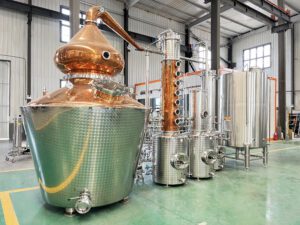
FAQ About Distillery Equipment and Turnkey Solutions
What equipment is needed to start a distillery?
A distillery usually needs raw material preparation equipment, mash tun, fermenter, still, condenser, cooling system, spirit receiver, storage tanks, pumps, piping, controls, and cleaning support. The exact equipment depends on the spirit type and production scale.
What is the difference between a pot still and a column still?
A pot still is usually used for batch distillation and is common for whisky, rum, brandy, and craft spirits. A column still provides more separation and efficiency, making it useful for vodka, neutral spirit, and larger production systems.
Can one distillation system make gin, whisky, rum, vodka, and brandy?
One system may support multiple spirits if designed with flexibility, but not every system is ideal for every spirit. Gin may need botanical features, vodka may need higher rectification, and whisky may need copper contact and suitable fermentation planning.
What is a turnkey distillery?
A turnkey distillery is a complete project solution that may include equipment design, manufacturing, layout planning, shipping support, installation guidance, commissioning support, and technical service. It helps buyers reduce coordination risk.
Is copper or stainless steel better for distillery equipment?
Both materials have value. Copper is often used in stills for traditional appearance and spirit character. Stainless steel is widely used for tanks, frames, piping, and storage because it is durable and cleanable. Many systems use both.
What size distillery equipment should I choose?
Choose size based on target spirit, batch volume, fermentation time, daily output, building space, utilities, budget, and future expansion. Common craft systems may range from 150L to 3000L, but the right size depends on your production plan.
Do I need permits before buying distilling equipment?
For commercial alcohol production, permits and local approvals are usually required. In the United States, TTB requires distilled spirits businesses to qualify by applying for a permit to operate. Always check local rules before installation.
Key Takeaways
Distillery equipment includes mashing, fermentation, distillation, cooling, receiving, storage, control, and cleaning systems.
A still must be selected based on spirit type, production process, flavor target, and capacity.
Pot stills are common for whisky, rum, brandy, and craft spirits.
Column stills and continuous stills are useful for higher purity or larger output.
Gin, vodka, rum, whisky, and brandy may require different equipment details.
Copper and stainless steel both have important roles in distilling equipment.
A turnkey distillery solution should include layout, equipment matching, manufacturing, shipping, installation guidance, and service.
Safety, local permits, fire review, pressure vessels, and ventilation should be considered early.
The best distillery equipment supplier should understand both production process and project execution.
Do not choose equipment only by price or still volume; choose based on complete production needs.
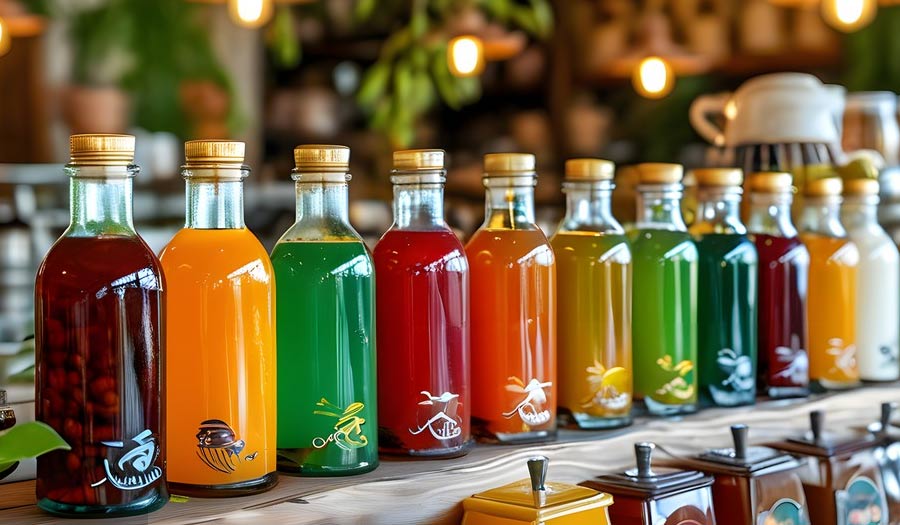
Kombucha Brewing Equipment: A Practical Guide to Choosing the Right Kit, Fermenter, Tank, and Commercial Kombucha Production System
A poor kombucha setup can cause weak flavor, unstable fermentation, contamination risk, or slow production. For home brewers, that is frustrating. For a business, it costs money. The solution is to choose the right equipment for your batch size, hygiene needs, and growth plan.
Kombucha brewing equipment includes the tools and vessels used to brew sweet tea, ferment it with SCOBY culture, monitor pH and temperature, add flavoring, bottle or keg the beverage, and maintain clean production. Basic home kits may use glass jars and bottles, while commercial kombucha production usually requires stainless steel tanks, sanitary fittings, CIP cleaning, cooling, filtration, and packaging systems.

Resumen ejecutivo
Kombucha brewing equipment ranges from a simple home kit with a jar, cloth lid, SCOBY, tea, sugar, pH strip, and bottles to professional-grade stainless steel tanks and packaging lines.
Kombucha is made by fermenting sweet tea with a SCOBY, a symbiotic culture of bacteria and yeast; Colorado State University explains that the culture acidifies the tea and helps minimize contamination.
Finished kombucha is commonly acidic. Colorado State University states that safe consumption requires pH below 4.2 but not lower than 2.5.
Kombucha Brewers International describes kombucha as a fermented tea beverage that typically has a pH range of 2.3 to 3.8 and naturally contains organic acids, trace alcohol, and some carbonation.
In the United States, TTB alcohol regulations do not apply only when kombucha is never at or above 0.5% ABV during production, bottling, or after bottling.
For B2B projects, the right system should match batch volume, fermentation cycle, hygiene design, cooling needs, packaging format, space, utilities, and future expansion.
Article Outline
What Is Kombucha Brewing Equipment?
What Equipment Do You Need to Brew Kombucha at Home?
What Is Included in a Basic Kombucha Brewing Kit?
What Equipment Is Needed for Commercial Kombucha Production?
Why Are Stainless Steel Kombucha Tanks Important for Scaling Up?
How Do You Control Fermentation, pH, and Temperature?
What Bottling, Kegging, and Packaging Equipment Do You Need?
How Do Cleaning, Sanitation, and CIP Affect Kombucha Quality?
Home Kit vs Commercial Kombucha Brewery System: What Is the Difference?
How Should B2B Buyers Choose the Right Kombucha Brewing Equipment Supplier?
What Is Kombucha Brewing Equipment?
Kombucha brewing equipment refers to the tools, vessels, tanks, and accessories used to make kombucha from tea, sugar, water, and kombucha culture. At a basic level, it helps you brew sweet tea, cool it, add SCOBY and starter liquid, allow fermentation, check pH, add flavor, and package the finished beverage.
For home brewing, the setup can be very simple. A glass jar, cloth cover, rubber band, pH strip, thermometer, funnel, and bottle may be enough for a small batch. For commercial kombucha, the equipment becomes more serious. You may need a stainless steel tank, sanitary pump, filter, cooling system, CIP cleaning unit, flavoring tank, carbonation control, and filling line.
In my work with beverage equipment projects, I often tell buyers this: kombucha is simple in theory, but professional production is not casual. The process must protect the scoby, control the fermentation environment, and keep every product contact surface clean.
What Equipment Do You Need to Brew Kombucha at Home?
For a home brewer, the basic goal is to brew a safe, clean, and tasty batch in a small volume. Most people start with a 1 gallon glass jar, a breathable cloth lid, tea, sugar, starter liquid, a SCOBY, and bottles for secondary fermentation.
Colorado State University explains that SCOBY and liquid are added to a food-grade vessel of brewed, cooled, sugar-sweetened tea, then lightly covered and fermented at room temperature, often for 7–10 days but sometimes longer.
A simple home setup may include:
| Home Kombucha Tool | Purpose |
|---|---|
| Glass jar | Main fermentation vessel |
| Cloth lid or coffee filter | Keeps dust and insects out while allowing airflow |
| Rubber band | Holds the cover in place |
| Tea kettle | Used to brew tea |
| Thermometer | Helps check cooling and room temperature |
| pH strips or meter | Helps monitor acidity |
| Funnel | Helps transfer liquid into bottles |
| Swing top bottles | Used for carbonation and serving |
| Fine filter | Removes loose tea or fruit pieces |
| Labels | Helps track batch date and flavor |
For home use, glass jars are common because they are easy to clean and easy to inspect. Michigan State University Extension notes that because kombucha has low pH, it is recommended to make and store it in glass containers or food-grade containers to reduce chemical hazard risks from unsuitable materials.
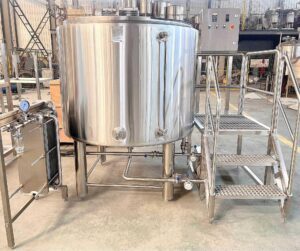
What Is Included in a Basic Kombucha Brewing Kit?
A basic kombucha brewing kit usually includes the essential items needed to start brewing kombucha. It may include a jar, SCOBY, starter liquid, tea, sugar, cloth cover, rubber band, pH strips, and instructions. Some kits may also include bottles, flavoring ideas, a thermometer, or a small filter.
A good kit should make the process easy for beginners. It should help the brewer understand the basics: make sweet tea, cool it, add the culture, cover the jar, wait for fermentation, measure pH, taste carefully, and bottle only when the beverage is ready.
For small users, a kit is enough. For a brand or café, a kit is not enough. Once the goal is to produce kombucha for sale, the process needs stronger equipment, better records, and repeatable control. That is when buyers move from jars and bottles to tanks, pumps, valves, temperature control, and packaging systems.
What Equipment Is Needed for Commercial Kombucha Production?
Commercial kombucha production needs more than a bigger jar. It needs a controlled process. A professional setup may include tea brewing equipment, sugar mixing tanks, cooling equipment, fermentation tanks, sanitary transfer pumps, filters, blending tanks, flavoring tanks, carbonation equipment, kegging or bottling lines, and cleaning systems.
A practical commercial kombucha production flow may look like this:
| Production Stage | Equipment Needed | Main Purpose |
|---|---|---|
| Tea brewing | Kettle or hot water system | Extract tea flavor |
| Sugar mixing | Mixing tank | Dissolve sugar evenly |
| Refrigeración | Heat exchanger or cooling tank | Cool sweet tea before culture addition |
| Primary fermentation | Fermentation tank | Ferment tea with SCOBY and starter |
| pH monitoring | pH meter or strip | Measure acidity |
| Flavoring | Blending tank | Add fruit, juice, herbs, or botanicals |
| Filtration | Filter or screen | Remove fruit particles or loose solids |
| Carbonation | Carbonation stone or pressure tank | Add or manage bubbles |
| Packaging | Bottle filler, kegging system, canning line | Prepare final product |
| Cleaning | CIP system | Clean tanks and pipelines |
Kombucha Brewers International describes kombucha as a fermented beverage made with tea leaves, water, natural sweetener, and SCOBY or pellicle; the organization also notes that pH and fermentation characteristics are part of the beverage identity.
As a professional brewery, kombucha, winery, distillery, and beverage equipment manufacturer, we usually start by asking buyers about capacity, product style, packaging format, and market rules. A 50-liter pilot system and a 5,000-liter commercial kombucha line require very different planning.
Why Are Stainless Steel Kombucha Tanks Important for Scaling Up?
When a kombucha business grows, stainless steel equipment becomes important. A stainless steel kombucha tank is stronger, easier to clean, more durable, and better suited for professional production than many small containers.
A commercial fermenter can be designed with sanitary fittings, temperature control, sampling valves, spray balls, manways, and bottom outlets. These features help the brewer monitor, clean, and transfer product more efficiently.
For kombucha, material selection matters because the beverage is acidic. Food-grade stainless steel is commonly used in beverage plants because it supports hygienic design and long service life. However, buyers should confirm material grade, weld quality, internal polishing, fitting standards, and chemical compatibility before ordering.
Common Stainless Steel Kombucha Tank Features
| Feature | Why It Matters |
|---|---|
| 304 stainless steel | Common beverage-grade material |
| Internal polishing | Helps reduce residue and cleaning difficulty |
| Sanitary fittings | Supports clean transfer and easy connection |
| Sampling valve | Allows testing without opening the tank |
| Spray ball | Supports CIP cleaning |
| Cooling jacket | Helps manage fermentation temperature |
| Entrada de hombre | Allows access for inspection and cleaning |
| Bottom outlet | Helps drain product and cleaning solution |
| Thermowell | Supports temperature monitoring |
For B2B buyers, the right equipment is not simply the largest tank. It is the tank that matches fermentation style, cleaning method, building height, floor load, batch size, utility supply, and packaging plan.
How Do You Control Fermentation, pH, and Temperature?
Kombucha fermentation is driven by bacteria and yeast in the culture. The yeast helps break down sugar, while bacteria help create beneficial acids. The result is a tart, lightly sweet, acidic beverage with complex flavor.
pH control is one of the most important safety and quality checks. Colorado State University states that safe consumption requires pH below 4.2 but not lower than 2.5. Pennsylvania’s kombucha brewing guidance also states that producers of unpasteurized bottled kombucha or other fermented beverages should aim for pH 4.2 or below and monitor pH as a preventive control.
Temperature also affects fermentation speed and flavor. If the environment is too cold, fermentation may be slow. If it is too warm, the brew may acidify too quickly or develop unwanted character. For commercial systems, temperature control can help create a more consistent and high-quality kombucha product.
Kombucha Monitoring Checklist
| Control Point | What to Measure | Why It Matters |
|---|---|---|
| pH | Acidity level | Helps manage safety and taste |
| Temperature | Fermentation environment | Affects fermentation speed |
| Time | Batch duration | Helps repeat flavor profile |
| Sugar level | Remaining sweetness | Affects taste and carbonation |
| Alcohol | ABV level | Important for regulatory compliance |
| Aroma and taste | Sensory quality | Confirms product target |
| Visual condition | Mold, contamination, SCOBY health | Helps catch problems early |
In the United States, alcohol level matters because kombucha at or above 0.5% ABV can fall under alcohol regulatory requirements; TTB explains that regulations do not apply only when kombucha is never at or above 0.5% ABV during production, bottling, or after bottling.
What Bottling, Kegging, and Packaging Equipment Do You Need?
After fermentation, kombucha may be filtered, flavored, carbonated, and packaged. Small brewers often use swing top bottles. Larger operations may use bottle fillers, canning lines, kegging systems, or bag-in-box solutions.
Colorado State University notes that fruit juice or other flavorings may be added after fermentation, and the beverage can then be carbonated for a bubbly character. This is where packaging choices become important.
For small batches, bottles may work well. For cafés, restaurants, and taprooms, kegging can reduce packaging waste and support draft service. For retail brands, bottles or cans may be better for distribution.
Packaging Options for Kombucha
| Packaging Format | Best Use | Key Consideration |
|---|---|---|
| Swing top bottles | Home and small craft batches | Pressure buildup must be managed |
| Glass bottles | Retail and premium products | Breakage and shipping weight |
| Aluminum cans | Retail and distribution | Requires suitable filling line |
| Kegs | Taproom, restaurant, café | Needs draft system and cold storage |
| PET bottles | Some regional markets | Must match pressure and food safety needs |
Kombucha packaging must manage carbonation and ongoing fermentation. If fermentation continues strongly after bottling, pressure can build. This is why pH, sugar, temperature, alcohol, carbonation, and cold storage all need professional control in commercial operations.
How Do Cleaning, Sanitation, and CIP Affect Kombucha Quality?
Cleaning is not optional. Kombucha is acidic, alive, and sensitive to unwanted contamination. Poor cleaning can damage flavor, shorten shelf life, and create safety issues.
For small-batch kombucha making, cleaning may involve washing jars, funnels, bottles, and cloth covers carefully. For commercial operations, cleaning usually requires CIP, sanitary piping, spray balls, pumps, and proper cleaning procedures.
A professional-grade system should reduce dead corners, rough welds, and hard-to-clean surfaces. This is why tank design, valve selection, hose quality, gasket material, and piping layout matter. A beautiful tank with poor sanitary design can still create problems.
CIP and Cleaning Design Checklist
| Cleaning Item | Why It Matters |
|---|---|
| Spray ball coverage | Helps clean tank surfaces |
| Smooth welds | Reduces residue buildup |
| Sanitary valves | Improves cleanability |
| Drainability | Prevents standing liquid |
| Correct chemical use | Protects stainless steel |
| Separate tools | Reduces cross-contamination |
| Cleaning records | Supports quality control |
| Inspection access | Helps verify cleaning results |
As a beverage equipment manufacturer, we design systems with cleaning in mind. A good tank should not only hold product. It should also be easy to clean, inspect, and maintain.
Home Kit vs Commercial Kombucha Brewery System: What Is the Difference?
A home kit is designed for learning and personal use. A commercial kombucha brewery system is designed for repeatable production, controlled quality, and business operation.
| Artículo | Home Kombucha Kit | Commercial Kombucha System |
|---|---|---|
| Batch size | Often 1 gallon or small batches | Dozens to thousands of liters |
| Vessel | Glass jar or small container | Stainless steel tank or fermenter |
| Monitoring | pH strip, thermometer | pH meter, temperature control, records |
| Cleaning | Manual cleaning | CIP and sanitary process |
| Transfer | Hand pouring or siphon | Sanitary pump and piping |
| Flavoring | Manual fruit or juice addition | Blending tank and measured dosing |
| Packaging | Hand bottle filling | Bottle, can, or kegging line |
| Controlar | Basic instructions | SOP, QC, batch records |
| Goal | Personal brewing kombucha | Commercial kombucha production |
The trade-off is clear. A kit is affordable and simple. A commercial system costs more but supports hygiene, efficiency, and scale. If you sell kombucha, equipment selection should support legal compliance, stable production, and repeatable product quality.
What Ingredients and Accessories Should Buyers Prepare?
Kombucha starts with a few core ingredients: water, tea, sugar, starter liquid, and SCOBY. Some producers use black tea, green tea, or blends. Some use organic ingredients for brand positioning. For flavoring, brands may use fruit, herbs, spices, botanicals, or juice.
Accessories also matter. A small operation may need pH strips, a thermometer, a funnel, a filter, a spigot, labels, bottles, and cleaning tools. A commercial plant may need flow meters, pressure gauges, sanitary hoses, clamps, gaskets, sample valves, and spare parts.
Ingredient and Accessory Checklist
| Category | Examples |
|---|---|
| Core ingredient | Tea, sugar, starter, SCOBY |
| Monitoring accessory | pH strip, pH meter, thermometer, gauge |
| Transfer accessory | Hose, pump, filter, funnel |
| Packaging accessory | Bottle, cap, keg, label |
| Cleaning accessory | CIP spray ball, cleaning chemicals, brushes |
| Quality accessory | Sample valve, testing tools, batch records |
The best accessory is the one that reduces risk. In professional kombucha production, every small item should support cleanliness, repeatability, and operator safety.
How Should B2B Buyers Choose the Right Kombucha Brewing Equipment Supplier?
For B2B buyers, the supplier should understand both beverage process and equipment manufacturing. Buying tanks from a general fabricator may look cheaper, but kombucha production has special needs: acidity, culture management, hygiene, flavoring, packaging, and possible alcohol control.
As a professional brewery, distillery, winery, kombucha, and beverage equipment manufacturer, we support global projects with factory-direct supply, turnkey engineering, CAD/3D layout support, installation guidance, and long-term technical service. We also supply used brewing systems when buyers need a cost-effective option.
When choosing a supplier, check:
- Does the supplier understand kombucha production?
- Can they design stainless steel fermentation tanks for acidic beverage use?
- Can they support tea brewing, sugar mixing, fermentation, flavoring, cooling, and packaging?
- Can they provide CAD or 3D layout support?
- Can they help compare new and used equipment?
- Do they understand sanitary fittings and CIP?
- Can they support global shipping and installation guidance?
- Can they customize tank size, port position, and control level?
- Do they provide after-sales service and spare parts?
For startup craft beverage brands, restaurant chains, kombucha producers, beverage co-packers, distributors, agents, and project investors, equipment should not be bought as isolated parts. It should be planned as a complete production flow.

Common Mistakes When Buying Kombucha Brewing Equipment
One common mistake is starting with tank size before defining the process. A buyer may ask for a large tank, but the real issue may be cooling, packaging speed, or fermentation cycle. Capacity should be calculated from daily output, batch time, and market demand.
Another mistake is using beer equipment without checking kombucha requirements. Beer and kombucha share some stainless steel hardware, but kombucha has different acidity, culture, flavoring, and packaging concerns.
A third mistake is ignoring cleaning. If the tank, valves, or hoses are hard to clean, the operation becomes risky. Good production needs good cleaning.
- Mistakes to Avoid
- Buying only by price
- Choosing the wrong material
- Ignoring pH and alcohol monitoring
- Underestimating packaging pressure
- Forgetting cold storage needs
- Using a poor cleaning design
- Skipping layout review
- Buying tanks that do not fit the building
- Ignoring future expansion
A careful review before purchase can save months of trouble after installation.
When Do These Recommendations Not Apply?
Not every kombucha project needs a full stainless steel production line. A small test kitchen, product development room, or educational setup may only need jars, a small kettle, bottles, and a basic kit. If you are testing recipes, keep the system simple.
A large retail brand, however, should not rely on home-style equipment. Once product is sold widely, the operation needs stronger controls, better sanitation, batch records, stable packaging, and compliance planning.
The right answer depends on your stage:
| Business Stage | Recommended Approach |
|---|---|
| Home learning | Basic kombucha kit |
| Small café test | Small fermenter and manual bottling |
| Taproom or restaurant | Stainless tank and kegging |
| Local retail brand | Controlled fermentation and bottle/can filling |
| Regional commercial brand | Full kombucha production line |
| Co-packer | Flexible tanks, CIP, blending, filtration, packaging |
So, do not overbuy too early. But do not underbuild when the business depends on consistent output.
FAQ About Kombucha Brewing Equipment
What equipment do I need to brew kombucha?
To brew kombucha at home, you need a glass jar, tea, sugar, SCOBY, starter liquid, cloth cover, pH strips, thermometer, funnel, and bottles. For commercial production, you may need stainless steel tanks, pumps, filters, cooling, CIP, flavoring tanks, and packaging equipment.
What is the best vessel for kombucha fermentation?
For home use, a clean food-grade glass jar is common. For commercial use, a stainless steel fermentation tank is usually better because it is durable, cleanable, and suitable for professional operation.
Can kombucha be brewed in stainless steel?
Yes, commercial kombucha is often produced in stainless steel equipment. Buyers should choose food-grade stainless steel, proper internal finishing, sanitary fittings, and a design suitable for acidic beverage production.
What size kombucha tank should I choose?
Tank size depends on batch volume, fermentation time, daily demand, packaging speed, and space. A small café may need a small fermenter, while a commercial kombucha brand may need multiple large tanks.
Do I need pH strips or a pH meter for kombucha?
Yes. pH monitoring is important for kombucha safety and quality. Home brewers may use pH strips, while commercial producers usually use a calibrated pH meter and batch records.
Is kegging kombucha better than bottling?
Kegging is useful for taprooms, cafés, restaurants, and draft service. Bottling or canning is better for retail distribution. The best choice depends on your sales channel and packaging plan.
What is the difference between a kombucha kit and commercial kombucha brewing equipment?
A kit is for small home batches and learning. Commercial equipment is designed for larger batches, sanitation, temperature control, transfer, flavoring, packaging, and consistent production.
Can kombucha equipment be customized?
Yes. Tanks, ports, valves, cooling jackets, platforms, control systems, and packaging lines can be customized based on capacity, process, layout, and market needs.
Key Takeaways
Kombucha brewing equipment can be simple for home use or highly professional for commercial production.
A basic kit usually includes a jar, SCOBY, starter, tea, sugar, cover, pH strip, and bottle.
Commercial kombucha production needs tanks, pumps, cooling, filtration, flavoring, CIP, and packaging systems.
pH and temperature monitoring are essential for quality control.
Stainless steel kombucha tanks are better suited for scalable production.
Bottling, canning, and kegging each fit different business models.
Cleaning and sanitary design directly affect product quality.
Do not choose equipment only by tank size or price.
The right equipment should match batch size, fermentation cycle, packaging format, utilities, floor space, and expansion plan.
A reliable beverage equipment manufacturer can help review your process, compare options, and design a practical system.
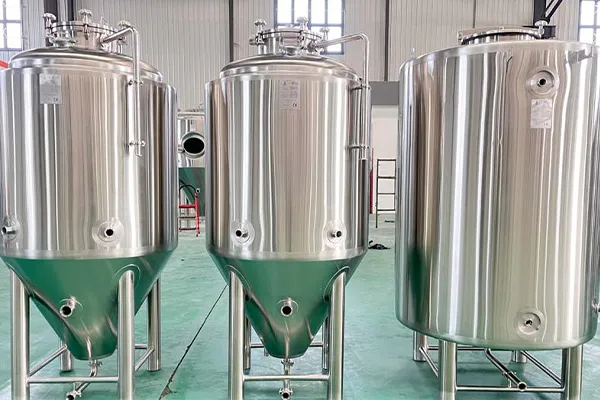
Used Fermentation Tanks For Sale: How to Choose the Right Stainless Steel Fermenter for Your Brewery or Beverage Project
Buying the wrong used tank can turn a good deal into a costly mistake. Hidden damage, poor sanitation, wrong pressure rating, or missing fittings can delay production. The smart approach is to inspect the fermenter, confirm specifications, and match the equipment to your real process.
Used fermentation tanks for sale can be a cost-effective choice for breweries, wineries, kombucha producers, cider makers, and beverage projects when the tank is stainless steel, properly inspected, pressure-suitable, hygienic, and matched to batch size, cooling needs, fittings, shipping limits, and future scale-up plans.
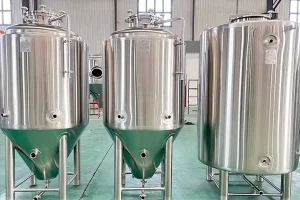
Resumen ejecutivo
Used fermentation tanks can reduce project cost and shorten lead time, but only if the vessel condition, fittings, cooling jacket, pressure rating, and cleaning history are checked carefully.
A stainless steel fermenter is usually preferred for professional beer and beverage production because it supports hygienic cleaning, durability, and long-term commercial use.
For any process above 15 psi, the Brewers Association Maintenance and Engineering Subcommittee recommends using an ASME-rated tank.
Sanitation must be treated seriously. Brewery sanitation involves more than basic CIP, and multiple items in the production environment can support or harm clean beer production.
Stainless steel can be damaged by unsuitable chemicals. The Brewers Association Draught Beer Quality Manual warns that hydrochloric acid corrodes stainless steel and should not be used for cleaning draught lines.
A reliable used tank supplier should help buyers review drawings, photos, specifications, accessories, loading, shipping, and installation needs before purchase.
Article Outline
What Are Used Fermentation Tanks?
Why Do Breweries Buy Used Fermenters?
What Types of Fermentation Tanks Are Available?
How Do You Inspect a Used Stainless Steel Tank?
What Size Fermenter Should You Choose?
What Pressure Rating and Safety Details Matter?
How Do Cleaning, Sanitation, and Passivation Affect Tank Value?
Used Fermenter vs New Fermenter: Which Is Better?
What Should Be Included in a Used Tank Purchase?
How Can B2B Buyers Find a Reliable Manufacturer or Supplier?
What Are Used Fermentation Tanks?
Used fermentation tanks are previously owned vessels designed for controlled fermentation. In a brewery, the tank is where yeast converts wort into beer. In other beverage projects, a fermenter may also be used for wine, cider, kombucha, or other fermented drinks. The key job is simple: hold product safely while supporting temperature control, hygiene, and process stability.
A professional fermentation tank is usually made from stainless steel. Many beer fermenters use a conical bottom because yeast and sediment can collect at the bottom and be removed through the outlet. This helps brewers manage yeast harvesting, clarification, and cleaning.
For B2B buyers, a used fermenter is not just second-hand equipment. It is a production asset. If the tank is well built and properly maintained, it can continue serving for many years. If it has hidden defects, it may create quality problems, repair costs, or installation delays.
Why Do Breweries Buy Used Fermenters?
Many startup brewery owners look for used equipment because the early budget is tight. A new brewhouse, glycol system, fermenters, bright tanks, packaging line, and installation work can become expensive quickly. Buying a used tank can help reduce initial investment and leave more budget for raw materials, taproom buildout, staff training, and marketing.
Established breweries may also buy used fermenters when they need quick capacity expansion. If beer demand grows faster than expected, waiting for new custom tanks may slow production. A good used fermenter can sometimes enter the project faster, especially when the tank is already available in inventory.
However, a low price is not the only goal. The best deal is the tank that fits your batch size, floor height, cooling system, process pressure, cleaning method, and beverage type. A tank that is cheap but wrong is not affordable. It is a delay waiting to happen.
What Types of Fermentation Tanks Are Available?
There are several common types of tanks used in beverage production. The best selection depends on the product, process, and building layout.
| Tank Type | Common Use | Main Benefit |
|---|---|---|
| Conical fermenter | Beer, cider, kombucha | Easy yeast and sediment removal |
| Cylindrical fermenter | Wine, beverage storage, fermentation | Simple design and flexible use |
| Unitank | Beer fermentation and carbonation | Can ferment and condition in one tank |
| Bright beer tank | Beer conditioning and serving | Supports carbonation and clear beer |
| Storage tanks | Wine, water, beverage base, finished liquid | Flexible holding and buffering |
| Jacketed tank | Beer, kombucha, wine, beverage production | Control de la temperatura |
| Insulated tank | Cold storage or controlled fermentation | Reduces temperature loss |
For beer production, a conical fermenter is often the most common choice. For kombucha, wine, cider, and juice projects, the tank design may be different. Some producers need top manways. Some need side manways. Some need cooling jackets. Some need sanitary spray balls, racking arms, carbonation stones, sampling valves, or CIP ports.
As a professional brewery, distillery, winery, kombucha, and beverage equipment manufacturer, we usually ask buyers about the product first. A tank for lager beer is not always the same as a tank for kombucha. A wine storage tank is not always the same as a pressure-rated beer fermenter.
How Do You Inspect a Used Stainless Steel Tank?
Before buying any used tank, inspection is essential. Photos alone are not enough. A buyer should check the inside, outside, welds, fittings, legs, jacket, manway, valves, and pressure label if available.
Start with the internal surface. The inside should be smooth, clean, and free from deep scratches, dents, rust, heavy beerstone, pitting, or chemical damage. Light marks may be normal, but deep damage can affect cleaning and sanitation.
Then check the external body. Look at insulation panels, cooling jacket connections, dimple jacket condition, legs, footpads, lifting points, and support structure. A tank that looks fine from the front may have damage near the back, bottom, or jacket ports.
Used Tank Inspection Checklist
| Inspection Point | What to Check | Why It Matters |
|---|---|---|
| Inner surface | Scratches, rust, pitting, residue | Affects hygiene and cleaning |
| Welds | Cracks, rough welds, repair marks | Affects strength and sanitation |
| Cooling jacket | Leaks, pressure test history, fittings | Affects temperature control |
| Entrada de hombre | Seal condition, hinge, pressure rating | Affects safety and operation |
| Valves and ports | Size, thread, clamp standard, missing parts | Affects installation cost |
| Legs and base | Bent legs, weld damage, leveling feet | Affects stability |
| Pressure label | Rating, certification, test record | Affects safe use |
| Tank size | Diameter, height, working volume | Affects layout and batch planning |
| Shipping condition | Loading method, packaging, container fit | Affects landed cost |
A used tank should be inspected with both production needs and shipping needs in mind. A large tank may be a good price but expensive to move. Always check total cost, not only the listed price.
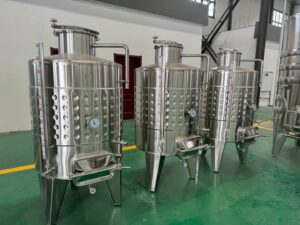
What Size Fermenter Should You Choose?
Tank size should match your brewing system and production plan. If your brewhouse makes 10 barrels per batch, your fermenter should normally support that batch volume with enough headspace. If you plan double batching, you may need a larger vessel.
A common planning mistake is buying tanks only for today’s output. A startup brewery may begin small, but if sales grow, fermentation capacity can become the first bottleneck. On the other hand, buying tanks that are too large can waste floor space, cooling energy, and cash.
For beer, buyers often consider:
- Brewhouse batch size
- Fermentation time
- Number of batches per week
- Product mix
- Lagering time
- Dry hopping needs
- Cleaning schedule
- Available cellar space
- Future expansion plan
For kombucha, wine, cider, and other beverage projects, tank sizing depends on fermentation cycle, blending process, storage time, packaging speed, and product demand.
A good rule is to plan the cellar as a system. The fermenter, storage tanks, cooling unit, CIP station, piping, platform, and packaging equipment should work together.
What Pressure Rating and Safety Details Matter?
Pressure is one of the most important details in a used fermenter purchase. Some tanks are atmospheric. Some are low-pressure. Some are designed for fermentation pressure, carbonation, or serving. Never assume that a tank can safely hold pressure just because it looks strong.
The Brewers Association Maintenance and Engineering Subcommittee recommends brewers use an ASME-rated tank for any process requiring pressure above 15 psi. This matters for unitanks, bright beer tanks, pressure fermentation, carbonation, and any process where the vessel may be pressurized.
ASME explains that its certification programs are connected to public safety and quality, and buyers can use ASME certificate holder resources to verify certified companies.
For used tanks, buyers should check:
- Pressure rating
- Design standard
- Safety valve condition
- Pressure relief setting
- Vacuum relief protection
- Manway pressure compatibility
- Previous pressure test record
- Any repair or modification history
- Local code requirements
Do not use a non-rated tank for pressure work. That is not a place to save money.
How Do Cleaning, Sanitation, and Passivation Affect Tank Value?
A fermentation tank must be cleanable. A shiny outside does not guarantee a hygienic inside. In beverage production, sanitation affects flavor, shelf life, and product safety.
The Brewers Association notes that sanitation in a brewery involves more than good CIP practices because many items can work for or against clean beer production. The Brewers Association Draught Beer Quality Manual also warns that some acid cleaners can harm stainless steel; for example, hydrochloric acid corrodes stainless steel and should not be used for cleaning draught lines.
Passivation is another important topic. Stainless steel depends on a protective passive layer. When a tank has been repaired, scratched, aggressively cleaned, or exposed to hard water or acidic products, it may need proper cleaning and passivation. The American Homebrewers Association provides practical guidance on cleaning and passivating stainless brewing equipment, including sanitizing or final rinsing after cleaning steps.
For used tanks, buyers should ask:
- What product was previously used in the tank?
- Was it used for beer, wine, sour beer, kombucha, or another product?
- Was the tank cleaned with proper chemicals?
- Are there signs of pitting or corrosion?
- Has the tank been passivated?
- Can the supplier provide internal photos or inspection video?
- Are spray balls and CIP fittings included?
A used tank that was properly cleaned and maintained has higher value than a cheaper vessel with unknown history.
Used Fermenter vs New Fermenter: Which Is Better?
A used fermenter and a new fermenter each have advantages. The right choice depends on budget, timing, customization needs, and risk tolerance.
| Decision Point | Used Fermenter | New Fermenter |
|---|---|---|
| Cost | Usually lower upfront cost | Higher upfront cost |
| Lead time | Often faster if in stock | Longer if custom manufactured |
| Customization | Limited to existing design | Fully customizable |
| Condition | Must be inspected carefully | New production condition |
| Garantía | May be limited | Usually clearer warranty terms |
| Fittings | Existing ports may not match your system | Can be designed to your process |
| Appearance | May show wear | New finish |
| Best for | Budget-sensitive expansion | Long-term custom projects |
Used tanks are attractive when the buyer needs an affordable and fast solution. New tanks are better when the buyer needs exact dimensions, specific ports, custom pressure rating, special jacket design, or brand-new appearance.
In our professional experience, many buyers use a mixed strategy. They may buy used fermentation tanks for quick capacity expansion and order new customized tanks for long-term growth. This can be a practical way to control cash flow while building production strength.
What Should Be Included in a Used Tank Purchase?
A used tank purchase should be clear. Before you pay a deposit or place a bid, confirm exactly what is included. A tank without valves, gaskets, fittings, or legs may cost more after replacement.
A good listing should include:
- Tank volume
- Working capacity and total capacity
- Material grade
- Tank diameter and height
- Jacket type
- Insulation information
- Pressure rating
- Manway type
- Valve and port list
- Cooling inlet and outlet size
- CIP spray ball
- Sampling valve
- Racking arm
- Thermowell
- Temperature sensor compatibility
- Photos and video
- Loading method
- Packing method
- Shipping dimensions
- Condition notes
If a seller only says “fermentation tanks for sale” without clear specifications, be careful. A professional supplier should be able to provide a structured specification sheet.
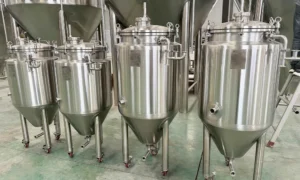
How Can B2B Buyers Find a Reliable Manufacturer or Supplier?
When buyers search for tanks for sale, they often compare price first. That is understandable. But for professional beverage projects, the supplier’s ability matters just as much as the tank price.
A reliable used tank supplier should help you find the right match, not only push available inventory. They should understand beer production, beverage fermentation, sanitary fittings, container loading, international shipping, and installation planning.
As a professional brewery, distillery, winery, kombucha, and beverage equipment manufacturer, as well as a trusted used brewing system supplier, we support buyers with both standard and customized solutions. Our work covers brewery systems, fermentation tanks, conical beer fermenters, storage tanks, used brewing systems, turnkey engineering, CAD/3D layout support, installation guidance, and long-term global technical service.
For importers, distributors, brewery owners, brewpub chains, cider producers, wineries, kombucha brands, beverage co-packers, project investors, and agents, a good supplier should support:
- Technical consultation
- Tank matching
- New and used equipment comparison
- Layout review
- Photos and inspection support
- Fittings verification
- Export packing
- Container loading
- International shipping support
- Spare parts and after-sales service
A cheap listing with “unbeatable prices” may look exciting, but professional buyers should still ask for specifications, inspection details, and total landed cost.
What Trade-Offs Should Buyers Understand Before Purchase?
Used tanks can be a smart purchase, but they are not perfect for every project. The biggest trade-off is flexibility. A used tank already has a fixed height, diameter, port position, jacket design, pressure rating, and appearance. You must adapt your layout and process to the tank.
Another trade-off is inspection effort. New equipment follows a fresh production process. Used equipment needs more checking. You may need extra cleaning, passivation, valve replacement, gasket replacement, or port modification.
A third trade-off is shipping. Sometimes a low-cost tank located far away becomes expensive after freight, loading, customs, and inland transport. This is especially true for large tanks that require special handling.
Used tanks work best when:
- The size matches your process.
- The condition is clearly verified.
- The pressure rating is suitable.
- The fittings match your system.
- The shipping cost is reasonable.
- The supplier can support inspection and export.
Used tanks may not be suitable when:
- You need exact custom dimensions.
- Your ceiling height is limited.
- You need special port positions.
- Your local code requires new certified vessels.
- You need a highly polished showroom appearance.
- The tank history is unclear.
Practical Case Study: Expanding a Craft Brewery with Used Fermentation Tanks
Imagine a craft brewery with a 10 bbl brewhouse. Demand for its IPA and lager grows faster than expected. The owner does not want to replace the whole brewing system. The main problem is cellar capacity.
In this case, used fermentation tanks may be the fastest way to increase output. The brewery can add two or three conical fermenters, connect them to the existing glycol system, and improve weekly production capacity.
But the buyer must check details. Do the tanks fit through the door? Are they too tall for the cellar? Do the jackets match the existing glycol chiller? Are the valves compatible? Can the floor support the weight? Does the pressure rating match the planned beer process?
A careful review can turn a used tank purchase into a successful expansion. A rushed purchase can create installation problems.
FAQ About Used Fermentation Tanks For Sale
Are used fermentation tanks a good choice for a startup brewery?
Yes, used fermentation tanks can be a good choice for a startup brewery when the tank is properly inspected, reasonably priced, and suitable for the planned beer production. They can reduce upfront cost and help the project start faster.
What is the best material for a beer fermenter?
Stainless steel is the most common professional material for a beer fermenter because it is strong, cleanable, durable, and suitable for commercial brewing. Buyers should still confirm material grade, weld quality, and internal surface condition.
Can a used tank be used for kombucha or wine?
Yes, some used tanks can be used for kombucha or wine, but the buyer should check previous use, cleaning history, fittings, pressure needs, and material compatibility. Kombucha and acidic beverages may require extra attention to cleaning and stainless steel condition.
What is a conical fermenter?
A conical fermenter is a fermentation tank with a cone-shaped bottom. In beer production, the conical bottom helps collect yeast and sediment, making yeast removal, cleaning, and product handling easier.
¿Debo comprar un fermentador usado o uno nuevo?
Buy a used fermenter if you need faster delivery and lower cost, and the tank specifications match your project. Choose a new fermenter if you need exact customization, special fittings, new appearance, or specific certification requirements.
What should I inspect before buying a used tank?
Inspect internal surface condition, welds, cooling jacket, pressure rating, manway, ports, valves, legs, previous use, cleaning history, and shipping dimensions. Also confirm whether fittings, gaskets, and accessories are included.
Can used tanks be shipped internationally?
Yes, used tanks can be shipped internationally, but the supplier must confirm dimensions, packaging, loading method, container fit, and export documentation. Shipping cost should be included in the total purchase evaluation.
Key Takeaways
Used fermentation tanks for sale can be a smart option for breweries and beverage producers that need cost-effective capacity.
A good used tank should be inspected for internal condition, weld quality, pressure rating, cooling jacket, ports, fittings, and shipping dimensions.
A stainless steel fermenter is usually preferred for commercial beer and beverage production.
A conical fermenter is especially common in beer brewing because it helps manage yeast and sediment.
Do not use a tank above its safe pressure rating.
Cleaning, sanitation, and passivation history affect tank value.
Used tanks are more affordable but less customizable than new tanks.
New tanks are better when exact dimensions, custom fittings, or specific certification is required.
A reliable supplier should help compare used and new options, review layout, confirm accessories, and support shipping.
The best purchase is not the cheapest tank. It is the tank that fits your process, building, budget, and growth plan.
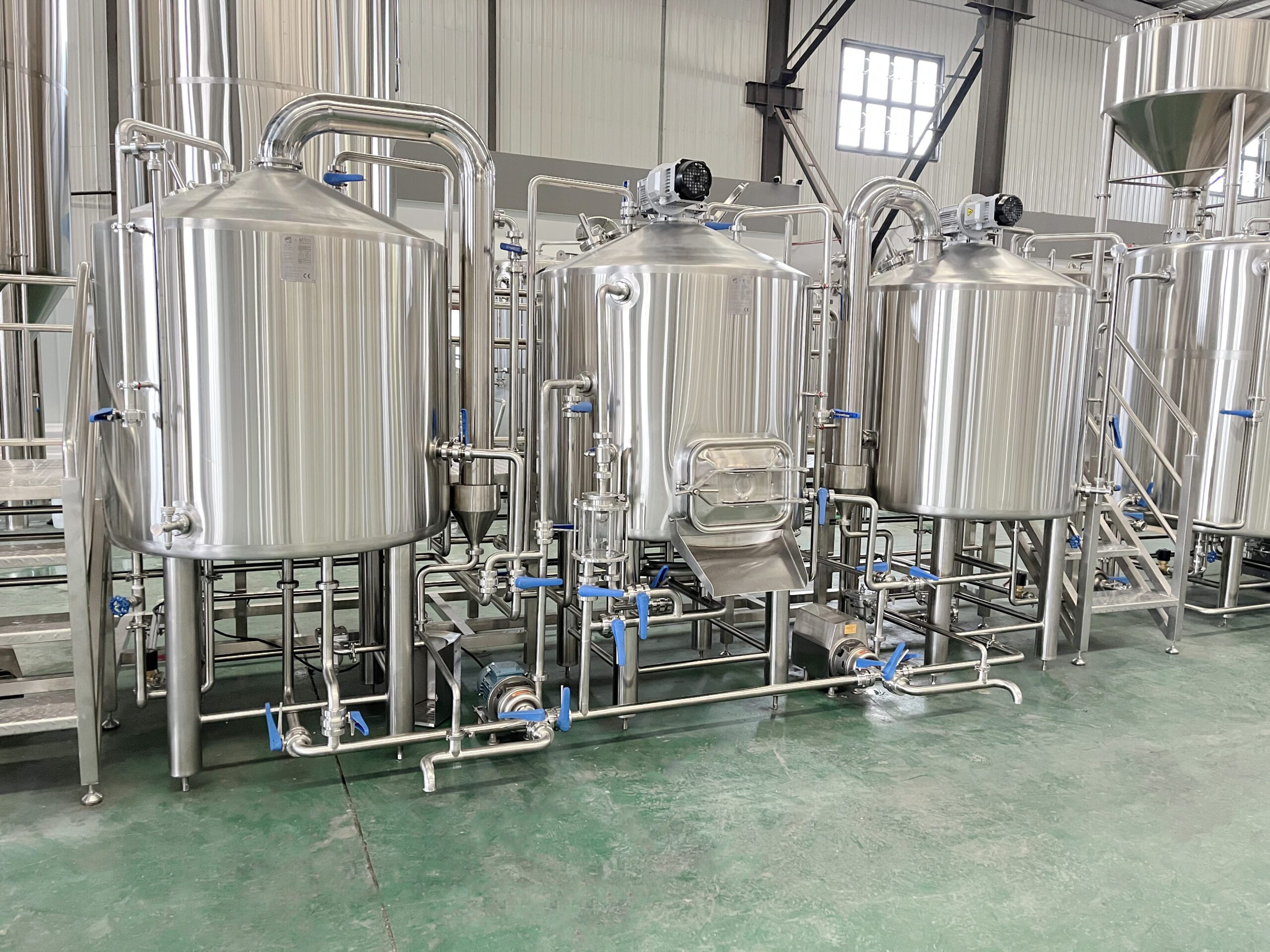
Venta de equipos de cervecería usados: Cómo comprar equipo cervecero que le ayude a elaborar mejor cerveza
Los márgenes se estrechan rápidamente cuando una fábrica de cerveza compra el sistema equivocado. Un precio bajo puede ocultar piezas que faltan, soldaduras en mal estado, controles deficientes o un reinicio costoso. El camino más inteligente es sencillo: adapte el equipo adecuado a su proceso, verifique su estado y compre con un plan.
Los equipos de cervecería usados pueden ser una opción excelente cuando el sistema es higiénico, adecuado para la presión, suficientemente completo para su proceso y está respaldado por un plan de instalación y servicio realista. Suele ser la mejor opción para salas de cocción, tanques, utilidades y algunos activos de envasado, pero no siempre para líneas de automatización pesadas o recipientes de presión desconocida.
Resumen ejecutivo
El mercado de segunda mano está activo porque el sector cervecero estadounidense sigue siendo amplio y dinámico. La Brewers Association informó de la existencia de 9.736 cervecerías pequeñas e independientes en funcionamiento en 2024, con 335 aperturas y 399 cierres, lo que ayuda a explicar por qué el inventario de segunda mano sigue moviéndose por el mercado.
En 2024, las cerveceras artesanales produjeron 23,1 millones de barriles y la cuota de mercado de la cerveza artesanal en EE.UU. por volumen fue del 13,3%. Esa combinación de escala y crecimiento más lento tiende a crear más actividad de reventa, consolidación y actualización.
Si un tanque de proceso va a funcionar a más de 15 psi, la revisión del código de presión no es negociable. Tanto la Brewers Association como la OSHA señalan requisitos de seguridad especiales para recipientes a presión en ese rango.
Para la cerveza, la kombucha, el vino y otros líquidos de uso alimentario, la facilidad de limpieza es tan importante como el coste de compra. Los marcos cGMP y FSMA de la FDA hacen hincapié en el diseño higiénico, las operaciones sanitarias y los controles preventivos.
A menudo, lo mejor es un modelo híbrido: comprar recipientes centrales y utilidades de segunda mano y, a continuación, adquirir nuevos controles, juntas, algunas válvulas, sensores y módulos de envasado seleccionados.
Mi regla profesional es la siguiente: nunca compres equipo cervecero usado porque es barato; cómprelo porque es el proceso adecuado, con un riesgo gestionable y unos pasos claros para volver a ponerlo en marcha.
Esquema
¿Por qué se presta más atención a la venta de equipos de cervecería usados?
¿Cuándo tiene sentido utilizar equipos de cervecería usados y cuándo es mejor comprarlos nuevos?
¿Qué equipos debería comprar primero de segunda mano?
¿Qué debe inspeccionar en una sala de cocción, un tanque, un filtro, una llenadora y un enfriador?
¿Cómo se compara el precio, el coste total y la calidad del presupuesto de un vendedor?
¿Qué normas son importantes para el acero inoxidable, la presión y la higiene?
¿Qué tamaño de sistema se adapta a una nueva empresa, un productor regional o un coenvasador?
¿Dónde debe buscar un comprador serio: mercado, subasta, vendedor directo o proveedor llave en mano?
¿Pueden funcionar los sistemas usados para kombucha, vino, licores, sidra y café preparado en frío?
¿Cómo reducir el riesgo de nueva puesta en servicio en proyectos globales?
¿Por qué se presta más atención a la venta de equipos de cervecería usados?
La respuesta corta es la presión del mercado. En el segmento de la artesanía estadounidense y norteamericana, la demanda no ha desaparecido, pero el crecimiento se ha ralentizado. Eso cambia el comportamiento de compra. Cada vez son más los propietarios que prefieren una ampliación de bajo coste, una reconversión parcial o una solución híbrida de nuevo más usado. Al mismo tiempo, más activos vuelven al mercado tras cierres de cervecerías, cambios de capacidad, fusiones y retrasos de proyectos.
Lo veo cada vez que reviso una sala de cocción o una línea de envasado de segunda mano. Los compradores más fuertes no persiguen el bombo publicitario. Quieren una forma asequible de empezar, ampliar o sustituir capacidad sin congelar el efectivo. Para muchas cervecerías artesanales, eso significa una combinación práctica: una caldera de maceración de segunda mano, un tanque de licor caliente usado, un fermentador reacondicionado y controles nuevos o un nuevo patín CIP.
Por eso, el mercado de segunda mano ya no se limita a la fabricación de cerveza. Los productores de bebidas serios buscan ahora activos que puedan adaptarse a la producción de kombucha, sidra, RTD, vino, licores, café y bebidas artesanales en general. Portland Kettle Works dice que su división de segunda mano apoya la reventa y la puesta en servicio de cerveza, café, destilación, kombucha, refrescos, CBD y vino, a menudo después de ampliaciones, cierres, adquisiciones, embargos y cierres patronales.
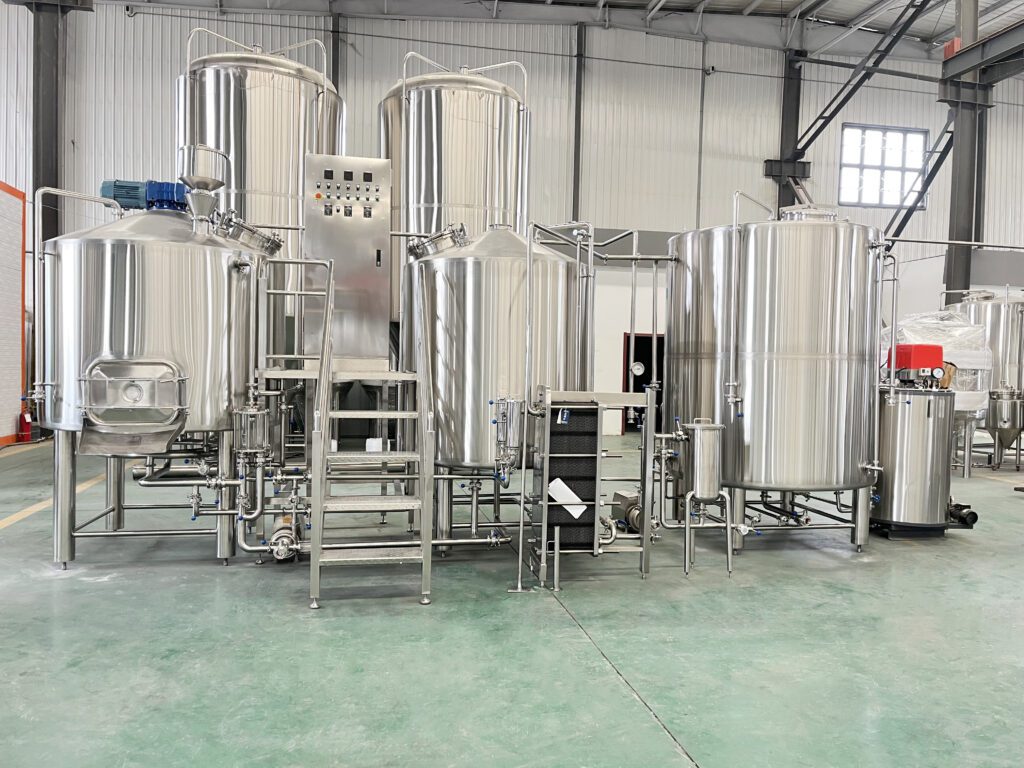
¿Cuándo tiene sentido utilizar equipos de cervecería usados y cuándo es mejor comprarlos nuevos?
Según mi experiencia, equipos usados tiene más sentido cuando el proceso es estable, la geometría es fácil de inspeccionar y el riesgo de pérdida de valor es bajo. Por lo general, esto incluye recipientes de uso general, muchos tanques de bodega, algunas salas de cocción, sistemas de molinos y sinfines, patines de glicol y equipos básicos de manipulación de barriles. También puede servir para determinados equipos de fabricación de cerveza en diseños de procesos maduros.
Un equipo nuevo suele ser mejor cuando el producto es delicado, la lógica de control es compleja o las especificaciones de envasado son estrictas. Una llenadora de 4 cabezales usada puede parecer atractiva en un anuncio de venta, pero si no hay repuestos disponibles, los sensores están obsoletos o los objetivos de oxígeno disuelto son estrictos, el coste total puede superar rápidamente el de un módulo nuevo. La misma precaución se aplica a las líneas de enlatado más antiguas, a algunos pasteurizadores de túnel y a las configuraciones avanzadas de filtrado en línea o pasteurización flash.
Esta es la tabla de decisiones que utilizo con mis clientes:
Opción Mejor Para Principal Ventaja Principal Riesgo
Sólo se utiliza Presupuestos ajustados, proceso sencillo, diseño probado Precio inicial más bajo Coste oculto de reparación e integración
Sólo nuevo Nuevas plantas insignia, estrictos KPI de envasado Garantía, coherencia, documentación Mayor capex
Híbrido Proyectos B2B más serios Mejor equilibrio entre coste y control Requiere una buena revisión de ingeniería
Para la mayoría de los proyectos, recomiendo la vía híbrida. Comprar activos pesados de acero inoxidable usados. Comprar nuevas piezas de desgaste, juntas, algunos controles, sensores críticos y componentes de embalaje seleccionados. Este enfoque suele ser más eficaz que comprar todo nuevo o todo usado.
¿Qué equipos debería comprar primero de segunda mano?
Cuando priorizo los activos usados, empiezo por las piezas que son caras de fabricar pero sencillas de inspeccionar. Esa lista suele incluir una cuba de maceración, una cuba de filtración, un hervidor de mosto, un whirlpool, un depósito de licor caliente, un depósito de licor frío, un depósito de bodega y patines de transferencia no complejos. Si las superficies están en buen estado y la documentación es fidedigna, estos activos pueden ofrecer un valor muy elevado.
A fermentador usado también pueden ser una buena compra, pero sólo si se verifica el estado de la camisa, la calidad del revestimiento, la integridad del aislamiento, los accesorios, las bocas de acceso, la configuración de la válvula de presión y el acabado interno. Lo mismo cabe decir de los tanques de salmuera, los tanques de levadura y los equipos de manipulación de barriles de cerveza. Un precio de etiqueta bajo no significa un coste de ciclo de vida bajo.
El envasado es donde soy más selectivo. Trato cada llenadora, despaletizadora, enjuagadora, etiquetadora y línea de botellas o latas usada como una cuestión de control y piezas en primer lugar, no como una cuestión de acero. Si la línea depende de un hardware de PLC descatalogado, de una lógica de servo personalizada o de piezas de recambio difíciles de conseguir, puede que no encaje bien aunque parezca limpia.
Una lista práctica para comprar primero lo usado
Recipientes y servicios de la sala de cocción
Tanques de bodega y algunas salas de cocción completas
Enfriadoras de glicol
Lavadores de barriles básicos y paneles de transferencia
Patines estructurales, plataformas y soportes para tuberías
Algunas máquinas de manipulación a granel y no sensibles
Una lista de compra nueva o híbrida
Envasado de alta velocidad
Sistemas avanzados de filtrado en línea
Automatización crítica y control de recetas
Líneas de envases de cambio rápido
Subconjuntos exclusivos para fabricantes de equipos originales
¿Qué debe inspeccionar en una sala de cocción, un tanque, un filtro, una llenadora y un enfriador?
Esta es la sección que los compradores se saltan con demasiada frecuencia. Nunca reviso equipos de cervecería usados sólo con fotos. Quiero planos, placas de características, datos de presión, fotos de soldaduras, fotos de la superficie interior, requisitos de servicios, opciones instaladas y una lista de piezas. Si es posible, quiero ver el historial de funcionamiento y el motivo de la parada o el cierre.
Para una sala de cocción, compruebe el estado del falso fondo, la función de rastrillo si existe, la alineación de las bocas de acceso, la integridad de la calefacción eléctrica o de vapor, el historial de la bomba, los daños en la plataforma y la cobertura de la pulverización CIP. Para cada tanque, inspeccione las abolladuras de la carcasa, las zonas de la camisa, las manchas de humedad del aislamiento, los accesorios de las válvulas de presión, las válvulas de muestreo, los termopozos y el acabado interior. Un filtro usado necesita una revisión de la compatibilidad de los medios, una inspección de la carcasa y un historial de saneamiento claro. Una llenadora necesita piezas de recambio, una copia de seguridad de la lógica de control, una revisión de la calibración y una prueba en seco o en húmedo, si está disponible.
Para una enfriadora, me fijo en las horas del compresor, el estado del refrigerante, el estado del panel de control, el estado de la bomba, la suciedad del intercambiador de calor y si la unidad cumple las normas eléctricas locales. En los proyectos de exportación, el transporte, la tensión de la red local y el suministro de piezas de repuesto son tan importantes como las toneladas indicadas en la placa de características.
Mi lista de comprobación de equipos usados
Verifique los números de serie y los valores nominales de presión
Confirme el año de fabricación original y las reparaciones importantes
Revisión de soldaduras, bocas de acceso, boquillas, camisas y aislamiento
Comprobación de válvulas, juntas, retenes y todos los asientos de válvula críticos
Confirme la ruta CIP, la compatibilidad química y la drenabilidad
Revisar los archivos de automatización, las copias de seguridad de la HMI y la lista de E/S.
Confirme las piezas de repuesto, los manuales y la asistencia para la puesta en marcha
Pregunte qué está excluido de la venta
También les digo a mis clientes que miren más allá del acero. La falta de abrazaderas, sensores, cables, puertos de muestreo, un variador de frecuencia o un pequeño conjunto de bombas montadas sobre patines puede retrasar la puesta en marcha mucho más que una abolladura visible.
¿Cómo se compara el precio, el coste total y la calidad del presupuesto de un vendedor?
Una decisión de compra real nunca se basa únicamente en el precio de catálogo. Se trata del coste total en destino, el coste de la nueva puesta en servicio, la conformidad local y la velocidad de puesta en marcha. Pido a los vendedores un presupuesto detallado que separe el coste de los activos, la carga, el embalaje, la puesta fuera de servicio, las dimensiones del flete, las piezas que faltan, el estado de limpieza y si se incluye algún trabajo de reacondicionamiento.
Esto es importante porque muchos anuncios prometen precios imbatibles, pero las cuentas cambian cuando se añaden los gastos de transporte, impuestos, fabricación local, actualización de controles, tuberías, trabajos eléctricos y retrasos en la puesta en marcha. Una línea de paquetes usada y barata puede salir cara si hay que reconstruir protecciones, sustituir actuadores y reescribir la lógica del PLC.
Utilizo este sencillo modelo de comparación:
| Coste Partida | Activo usado | Nuevo activo | Lo que los compradores pasan por alto |
|---|---|---|---|
| Precio de compra | Baja | Más alto | Componentes que faltan |
| Carga y aparejos | Variable | Variable | Sobredimensionamiento y límites de acceso |
| Renovación | A menudo moderado/alto | Bajo | Sustitución de juntas, bombas y controles |
| Tiempo de arranque | Puede ser rápido o lento | Normalmente predecible | Riesgo de calendario oculto |
| Garantía | Limitado | Más fuerte | La respuesta real del servicio importa |
Mi consejo: pida tres cifras, no una. Pida el precio, el coste de reinicio y el coste total del proyecto. Así es como se fundamentan las decisiones profesionales de compra y venta.
¿Qué normas son importantes para el acero inoxidable, la presión y la higiene?
Para las plantas de alimentos y bebidas, el diseño sanitario no es opcional. La FDA afirma que las cGMP abarcan el diseño de plantas y equipos, las operaciones sanitarias, el saneamiento de las instalaciones y los controles de producción/proceso. Las normas de controles preventivos de la FSMA también exigen que las instalaciones alimentarias cubiertas mantengan un plan de seguridad alimentaria basado en el análisis de peligros y en controles basados en el riesgo.
Para aplicaciones altamente higiénicas, ASME BPE es una referencia importante. Abarca materiales, diseño, fabricación, inspección, pruebas y certificación para sistemas de procesamiento de fluidos con requisitos higiénicos más estrictos. No le digo a todas las cervecerías que construyan según las normas farmacéuticas, pero sí utilizo el concepto BPE cuando el producto es sensible, el riesgo de limpieza es alto o el sistema puede servir más adelante para kombucha, bebidas poco ácidas o fermentaciones especiales.
La presión es un tema aparte. La Asociación de Cerveceros señala que un tanque de proceso de elaboración de cerveza con clasificación ASME es relevante cuando la presión de trabajo supera los 15 psi, y la OSHA advierte de que los recipientes a presión agrietados o dañados pueden tener fugas o romperse. Si un tanque de bodega, tanque brillante o recipiente de carbonatación va a funcionar por encima de ese umbral, la revisión del código de presión debe realizarse antes de la compra, no después.
Un punto más: la higiene no es sólo una cuestión de buques. La norma de transporte sanitario de la FDA establece que los vehículos y el equipo de transporte deben ser adecuados, poder limpiarse adecuadamente y mantener unas condiciones seguras cuando sea necesario. Esto es importante cuando se trasladan activos usados a otros países o se trasladan artículos en contacto con el producto de una planta a otra.
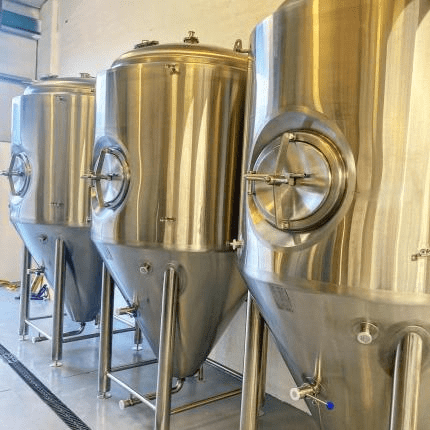
¿Qué tamaño de sistema se adapta a una nueva empresa, un productor regional o un coenvasador?
El tamaño adecuado no sólo depende de la producción deseada. Depende del número de referencias, de los días de bodega, del formato de envasado, del modelo de mano de obra y de si va a elaborar cerveza para su propia marca o para clientes contratados. Una empresa nueva puede funcionar muy bien con una sala de cocción modesta y fermentación adicional. Un productor regional puede necesitar una relación bodega-cervecería más agresiva y un mejor flujo de envasado.
En proyectos reales, a menudo veo que los primeros compradores se centran en la sala de cocción y subestiman la fermentación y el envasado. Una sala de cocción de 15 bbl con un equilibrio de bodega inteligente puede superar a un sistema más grande mal planificado. Una planta de 20 bbl también puede ser la respuesta equivocada si el vendedor no incluye suficiente glicol, capacidad de control o lógica de espacio por lote.
Una sencilla guía de tallas
Cervecerías artesanales incipientes: comprar suficiente capacidad de sala de cocción para lanzarse, luego proteger la flexibilidad de la fermentación
Brewpub o cadena de restaurantes: cervecerías más pequeñas, mayor fiabilidad en caliente, presentación pulida en bodega
Productor comercial: diseño en torno al envasado, el tiempo de actividad y la rotación de SKU
Coenvasadora: priorizar el espacio de cambio, saneamiento, CIP y QA
Destilería, productor de sidra, vino o kombucha: validar la compatibilidad de materiales, la química CIP, la manipulación de gases y el perfil de temperatura.
Para carteras mixtas, prefiero un enfoque modular. Una sala de cocción usada y unos controles de bodega nuevos suelen ser una respuesta mejor que una sola línea usada sobredimensionada con una documentación deficiente.
¿Dónde debe buscar un comprador serio: mercado, subasta, vendedor directo o proveedor llave en mano?
Los compradores disponen ahora de más canales que nunca. Pueden encontrar activos a través de un vendedor directo, un intermediario, una subasta, un mercado general, una plataforma especializada en bebidas o un proveedor de ingeniería que compre, reacondicione y vuelva a poner en servicio sistemas. El canal importa porque cambia el riesgo.
Los canales especializados suelen entender lo que realmente necesitan los cerveceros. Portland Kettle Works afirma que su división de segunda mano y Used-Brewing-Equipment.com se encargan de la tasación, retirada, reacondicionamiento, transferencia, venta y nueva puesta en servicio de los activos de bebidas. Esto es muy valioso, porque el vendedor no sólo ofrece acero, sino que también se ocupa del contexto del proceso.
Las plataformas industriales generales también pueden importar. EquipNet se describe a sí misma como una importante plataforma en línea para activos de fabricación y envasado de segunda mano, y también promueve la venta de excedentes de activos a través de canales de venta directa y subastas globales. Esto la hace relevante cuando las cerveceras compran a industrias de transformación más amplias, no sólo a vendedores específicos de cerveza.
También es posible que veas anuncios de grandes marcas o nombres conocidos como GEA, Tiantai, Portland Kettle Works o integradores privados. Mi consejo es sencillo: trate cada plataforma como una fuente de contactos, no como una prueba de calidad. El anuncio llama su atención. La revisión de ingeniería se gana la compra.
¿Pueden funcionar los sistemas usados para kombucha, vino, licores, sidra y café preparado en frío?
Sí, pero sólo cuando se respetan las diferencias de proceso. Un recipiente de cerveza usado puede servir para kombucha, vino, RTD o café en frío, pero no automáticamente. La acidez del producto, el gas disuelto, el comportamiento de la levadura o la SCOBY, el perfil de temperatura, la exposición al oxígeno y la compatibilidad de los productos químicos de limpieza modifican el perfil de riesgo.
Aquí es donde un fabricante profesional o un ingeniero de proyectos añade valor. Trabajo con clientes que no son sólo fabricantes de cerveza. Entre ellos hay destilerías, sidrerías, bodegas, productores de café, grupos de restauración y productores mundiales de bebidas. A menudo, la respuesta correcta no es “¿Puede funcionar este tanque de cerveza usado?”, sino “¿Qué juntas, controles, tuberías, normas de acabado, pasos CIP y servicios públicos deben cambiar para que este activo funcione de forma segura y rentable?”.”
La buena noticia es que muchos sistemas basados en recipientes son flexibles. La misma base de acero inoxidable puede servir a veces para cerveza, sidra o vino, kombucha, u otras aplicaciones de equipos de bebidas tras la revisión y modificación adecuadas. Esto es especialmente cierto cuando se compra a un fabricante directo de fábrica que puede añadir los patines que faltan, revisar las boquillas, proporcionar diseños CAD/3D y ofrecer orientación para la instalación.
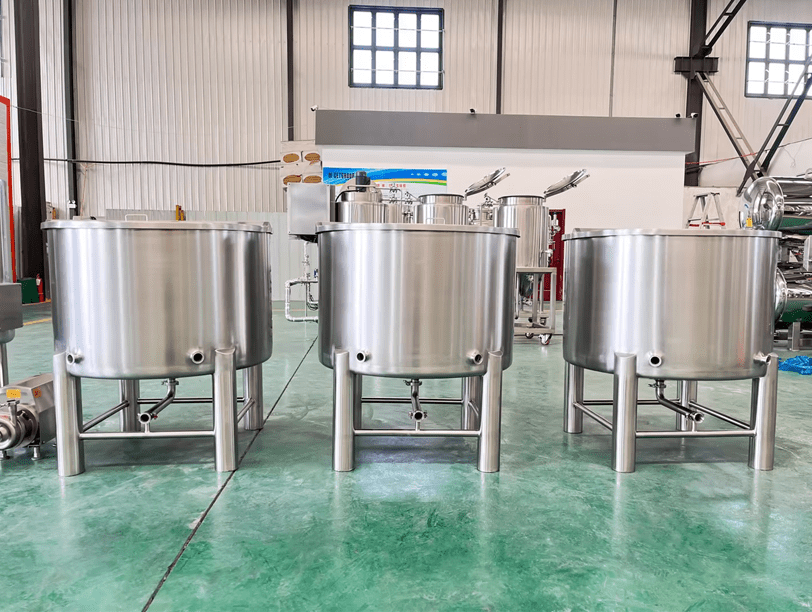
¿Cómo reducir el riesgo de nueva puesta en servicio en proyectos globales?
Aquí es donde muchos tratos ganan o fracasan. Un sistema usado no se compra realmente cuando se efectúa el pago. Se compra cuando funciona de forma limpia, segura y rentable en sus instalaciones. Esto significa que hay que prestar atención al desmantelamiento, el embalaje, la preparación para la exportación, el ajuste del diseño, los servicios, los controles y la formación.
Recomiendo un plan de puesta en servicio por etapas:
Estudio de activos y recopilación de documentos
Revisión mecánica y sanitaria
Lista de piezas que faltan
Comprobación de compatibilidad de controles y utilidades
Trazado y modelo de tuberías
Refurb scope y lógica FAT/SAT
Guía de instalación y puesta en marcha
Plan de piezas de repuesto y servicio
También aconsejo a los compradores que prevean cambios en el inventario. Una línea que parece completa el primer día puede no estarlo el día del envío si se intercambian piezas, se venden por separado o se dañan durante el traslado. Por eso insisto en las listas de empaquetado con foto y las notas de entrega línea por línea.
La seguridad también tiene cabida aquí. El NIOSH señala que la exposición al dióxido de carbono puede causar dolor de cabeza, mareos, dificultad respiratoria y cosas peores, mientras que la Asociación de Cerveceros sigue haciendo hincapié en la concienciación sobre los peligros del CO2 en el trabajo en cervecerías. La nueva puesta en marcha no sólo tiene que ver con las válvulas y las bombas, sino también con la manipulación segura del gas, la ventilación y el procedimiento de puesta en marcha.
Preguntas frecuentes
¿Sirven los equipos de cervecería usados para una cervecería nueva?
Sí, a menudo. Para una nueva fábrica de cerveza, los sistemas usados pueden reducir los gastos de capital y acortar el tiempo de adquisición. Suelo recomendar una construcción híbrida: recipientes y utilidades usados, más piezas de desgaste, controles y elementos de embalaje nuevos.
¿Debo comprar un fermentador usado o uno nuevo?
Un usado fermentador puede ser una compra inteligente si la presión nominal, el estado de la camisa, la calidad de la soldadura y el acabado interior son correctos. Si su proceso funciona a mayor presión o la documentación es deficiente, puede ser más seguro comprar una nueva.
¿Son las subastas una buena fuente de material cervecero de segunda mano?
A veces, sí. Un subasta puede ofrecer valor, pero a menudo ofrece menos apoyo al proceso. Considero que las compras en subasta son de mayor riesgo que las ventas directas respaldadas por ingeniería, a menos que el acceso a la inspección sea excelente.
¿Pueden compartirse los equipos de una bodega y una fábrica de cerveza?
A veces. Algunos equipamiento para bodegas y equipo de cervecería Los activos se solapan, especialmente los tanques, las bombas y los patines de servicios. Pero antes hay que revisar la química del proceso, el perfil de temperatura, la exposición al oxígeno y los requisitos sanitarios.
¿Cómo puedo saber si un depósito usado es seguro por encima de 15 psi?
No haga conjeturas. Compruebe la placa de características, los documentos de diseño y las normas locales. La Asociación de Cerveceros afirma que los tanques de proceso de elaboración de cerveza de más de 15 psi suelen requerir una revisión del diseño y la fabricación conforme a ASME.
Principales conclusiones
Los equipos de cervecería de segunda mano funcionan mejor cuando se verifican la adecuación al proceso, la higiene, la presión nominal y el soporte de piezas de repuesto.
Compre primero activos pesados de acero inoxidable usados; sea más prudente con los envases pesados para automatización.
Evalúe cada activo por el coste total en destino, no sólo por el precio de venta.
Si un recipiente va a funcionar a más de 15 psi, es esencial revisar el código de presión.
Un enfoque híbrido suele ser el mejor camino para los proyectos en fase inicial y de crecimiento.
El mejor proveedor no es sólo un vendedor de acero, sino un socio técnico que puede ayudar en el diseño, la renovación, la instalación y el servicio a largo plazo.
Un siguiente paso sensato no es “comprar ahora”. Es una revisión estructurada. Si está comparando listados, planificando la ampliación de una planta o evaluando una equipo de sala de cocción usado paquete de grupo, lo más inteligente es elaborar primero una ficha de revisión técnica y, a continuación, solicitar un presupuesto detallado en función de su proceso, utilidades y plan de crecimiento reales.